
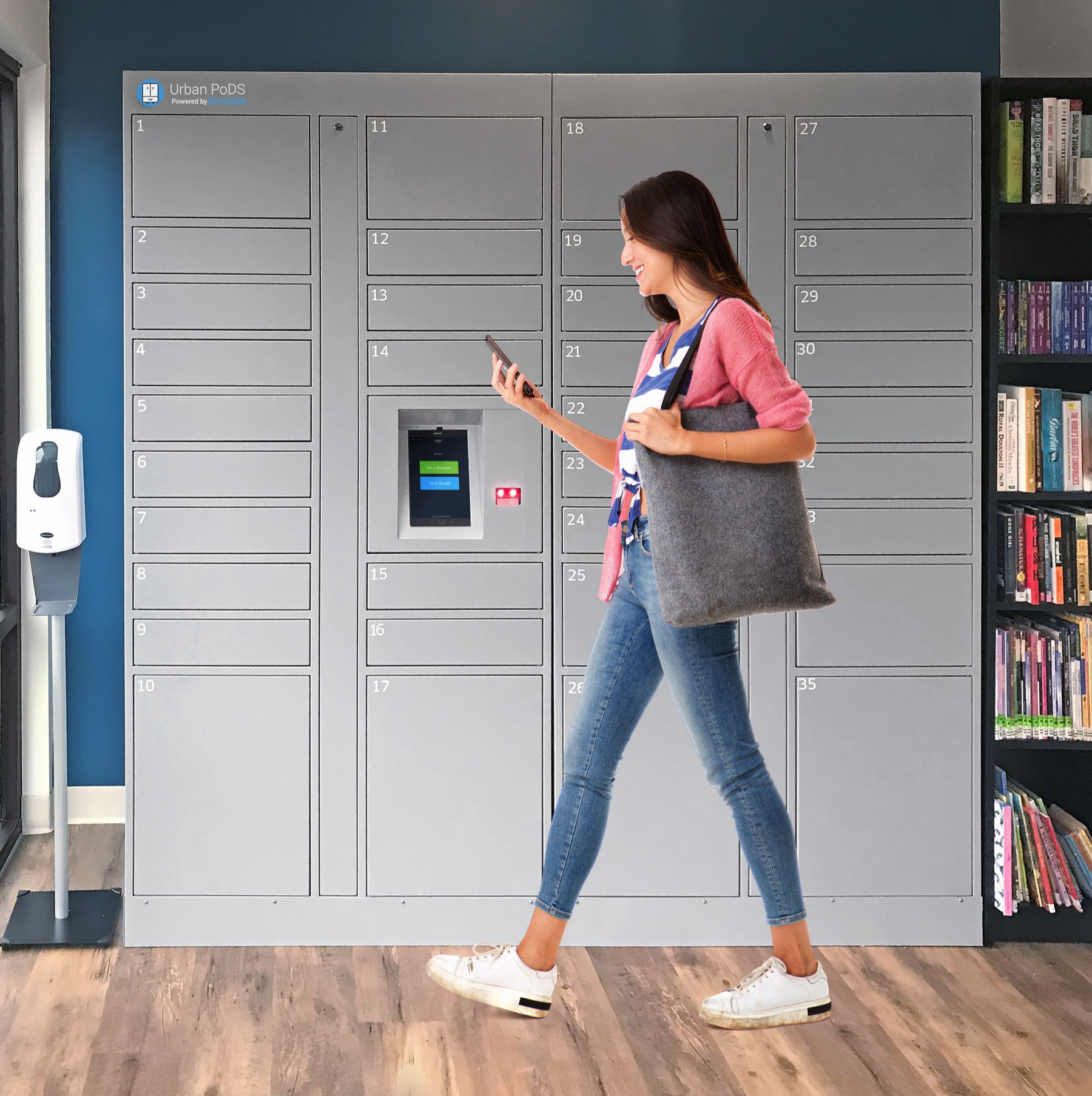
Smart Lockers for Libraries
Automate hold pickup, enable 24/7 patron access, and modernize circulation — without changing your ILS or your privacy principles. Smiota replaces the hold shelf with secure, individually addressable lockers that extend pickup hours beyond when staff are present.
Works with your ILS · patron privacy by design · ADA-compliant · indoor & outdoor
Hold pickup is one of circulation's most labor-intensive workflows. Smiota fixes it.
Items get pulled, shelved by patron name, swept when unclaimed, and reshelved — desk hours that could go to programming, reference, and outreach. Smart lockers fit your existing circulation workflow and make that labor disappear.
Hold pickup automation
Patron places a hold → staff scan the item into a locker → patron gets a pickup code → retrieves at any hour. Hold-shelf labor disappears; pickup latency drops.
24/7 patron access
Outdoor or vestibule-mounted lockers extend pickup beyond staffed hours. Libraries typically see 15–30% of pickups happen outside staffed hours.
Curbside as permanent infrastructure
The curbside service many libraries built in 2020 doesn't have to stay temporary. Lockers make it permanent, scalable, and staff-free.
Equipment lending at scale
Laptops, hotspots, cameras, maker kits — high-value circulating items that strain a traditional hold shelf are exactly what lockers handle natively.
24/7 materials returns
Secure, weather-protected returns with automatic check-in syncing back to the ILS — a better alternative to traditional book drops.
Branch-to-branch holds
Multi-branch systems can use lockers at smaller branches as 24/7 pickup points, even on days a branch isn't staffed.
Works with your ILS — no rip-and-replace.
Most modern ILS platforms integrate via SIP2, NCIP, or REST APIs. We confirm specific ILS version compatibility during the fit assessment, before any procurement decision.
The 17-Door Console — our most-ordered library unit.
Most library systems deploy the 17-Door Console: one weatherized station per branch, with a full mix of compartment sizes to fit everything from a single paperback to a stack of bundled holds. Available indoor or in a weatherized outdoor build with a weather hood, integrated lighting, and motion sensors for safe 24/7 pickup after hours.
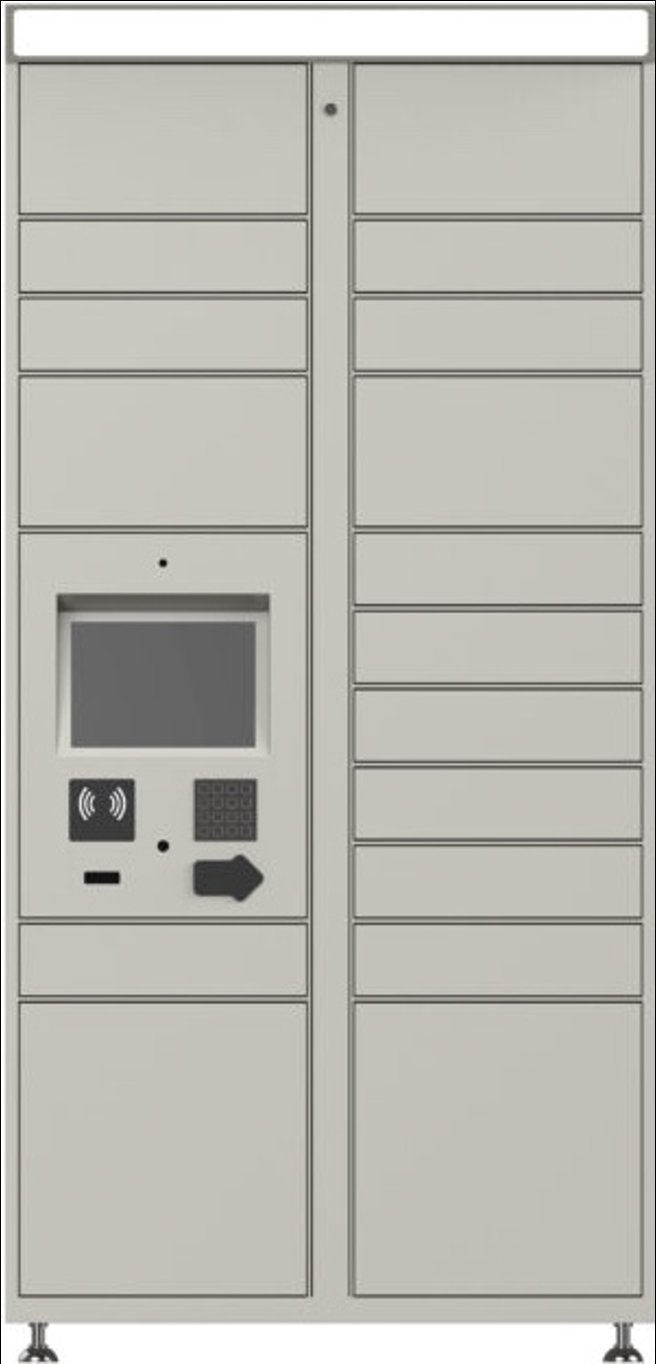
17-Door Console
The primary station — touchscreen, RFID reader, barcode/QR scanner, keypad, and a full mix of compartment sizes. Modular add-on banks are available when a branch needs more capacity, without replacing the console.
Built to library principles, not retail ones.
Patron privacy by design
Pickup codes don't expose patron identity at the locker bank. Access logs are retention-configurable to your library's policy, and data handling terms are written for review by library counsel.
ADA-compliant
Accessible-height units at every bank, screen-reader-compatible interfaces, audio cues for low-vision patrons, and ADA path-of-travel placement — verified against your site during planning.
Indoor & weatherized outdoor
Outdoor lockers are IP-rated for weather with thermal management for sensitive materials, built for true 24/7 access.
One platform, every locker solution.
See the products behind Smiota's smart lockers — and the software that runs them.
Package Lockers
Indoor smart parcel lockers with mixed compartment sizes for secure self-service pickup.
Learn more →Outdoor Lockers
Weatherproof banks for 24/7 access at entrances, courtyards, and transit hubs.
Learn more →Mailroom Software
Staff app to receive, scan, track, and route every item with full chain of custody.
Learn more →Asset & Device Lockers
Loaner and IT-device management with audit trails and automated check-in/out.
Learn more →Day-Use Lockers
On-demand personal storage for staff, students, members, and visitors.
Learn more →Smart Package Rooms
Room-scale automated access for high-volume delivery locations.
Learn more →Library smart lockers, answered.
Will Smiota work with our ILS?
Smiota supports Koha, Ex Libris Alma, Ex Libris Polaris, OCLC WorldShare, SirsiDynix Symphony, SirsiDynix Horizon, Innovative Sierra, Evergreen, and Follett Destiny. Most modern ILS platforms integrate via SIP2, NCIP, or REST APIs. We confirm specific ILS version compatibility during the fit assessment, before any procurement decision.
How does Smiota protect patron privacy?
Pickup codes don't expose patron identity at the locker bank. Locker access logs are configurable for retention period to match your library's policy. Patron data is not used for anything beyond service operation, and data handling terms are written for review by library counsel.
Are Smiota lockers ADA-compliant?
Standard configuration includes accessible-height locker units at every bank, screen-reader-compatible interfaces, audio cues for low-vision patrons, and ADA path-of-travel-compliant placement. Accessibility is verified against your specific site during planning.
Can Smiota lockers go outdoors?
Yes. Smiota's outdoor library lockers are IP-rated for weather, include thermal management for sensitive materials, and are built for 24/7 access.
How do patrons use the lockers?
Patrons receive a hold-ready notification with a pickup code and locker bank location. At the locker bank, they authenticate via library card scan, code entry, or QR code. The assigned locker opens. They retrieve the item. Pickup syncs back to the ILS.
How long do items stay in lockers?
Pickup windows are configurable, typically 3 to 7 days — often longer than traditional hold shelves because lockers don't require re-shelving labor.
Can Smiota handle returns as well as pickups?
Yes. Returns can be configured at the same locker bank or at a dedicated return-only bank, with check-in syncing back to the ILS automatically.
What does implementation look like?
Most libraries start with one branch and one use case (hold pickup or equipment lending), expand to additional use cases at that branch, then roll out to other branches. Implementation timeline is typically 8 to 16 weeks from contract to live, depending on site readiness and ILS integration scope.
Replace the hold shelf with 24/7 self-service pickup.
Request a fit assessment. We'll confirm ILS compatibility and scope a first-branch deployment — no procurement commitment required.