The post Smart Lockers and Disaster Preparedness: A Scalable Solution for Rapid Emergency Response appeared first on Smiota.
]]>Yet, time and again, we’ve seen traditional aid systems fall short. Bottlenecks, delays, and inefficient manual processes can leave affected communities waiting far too long for the essentials they need. Fortunately, technology offers new tools to rethink emergency logistics. One such tool—originally developed for retail and e-commerce—is now proving to be a game changer in disaster preparedness: smart lockers.
Smart lockers offer automated, secure, and decentralized access to critical supplies. Their flexible infrastructure, real-time tracking, and controlled access mechanisms make them an ideal solution for rapid emergency response. Let’s explore how these lockers are transforming the future of disaster relief.
The Limitations of Traditional Disaster Supply Chains
For all the good intentions behind them, conventional disaster relief systems often face serious operational hurdles. These bottlenecks can significantly hamper the delivery of timely aid, especially in large-scale or fast-moving crises. Four primary challenges have persisted across global disaster responses:
Inaccessible Distribution Centers
Disasters often damage the very roads, bridges, and airports needed to move goods. Communities get cut off, and centralized warehouses—usually located far from affected zones—become nearly impossible to access.
Labor-Intensive Manual Processes
Traditional supply chains rely heavily on people. Manual tracking, packaging, and distribution take time—resources that are in short supply during emergencies. Each extra step increases the chance of delays or errors.
Lack of Real-Time Inventory Data
Without live inventory tracking, disaster relief managers are often flying blind. Supplies may pile up in one area while another runs dry. This imbalance not only slows recovery—it can cause real harm.
Historical System Failures
Past events have highlighted these weaknesses. Hurricane Katrina, for example, revealed massive flaws in coordination, logistics, and supply delivery—leading to preventable suffering in the aftermath.
These gaps call for an updated, tech-enabled approach to disaster logistics.
Smart Lockers: Revolutionizing Emergency Logistics
Smart lockers bring a unique combination of technology, mobility, and scalability to the world of emergency response. Designed with built-in IoT connectivity, modular designs, and controlled access, they solve many of the long-standing problems in traditional supply chains. Here’s how they help in four keyways:
Accessibility at the Point of Need
Instead of relying solely on centralized distribution hubs, smart lockers can be placed closer to vulnerable or high-risk zones—before or during a crisis. These localized units ensure that essential supplies remain within reach, even if roads are blocked or buildings are damaged.
Mobile, Scalable Infrastructure
Unlike fixed facilities, smart lockers can be mobile or semi-permanent. This flexibility allows agencies to deploy them where they’re most needed, from refugee shelters to pop-up medical camps. Mobile lockers are especially valuable for first responders who need temporary access points in rapidly changing conditions.
Automation and Real-Time Monitoring
Thanks to IoT sensors and cloud connectivity, smart lockers offer features like automated inventory checks, restocking alerts, and centralized dashboards. Relief coordinators can monitor inventory levels in real-time, making informed decisions and preventing critical shortages.
Secure, Controlled Access
Only verified individuals—be it relief workers, healthcare professionals, or community leaders—can access smart lockers. PINs, QR codes, or even biometric authentication ensure that aid goes to the right hands, minimizing loss, theft, or misallocation.
Together, these capabilities create a more resilient, reliable, and equitable emergency logistics network.
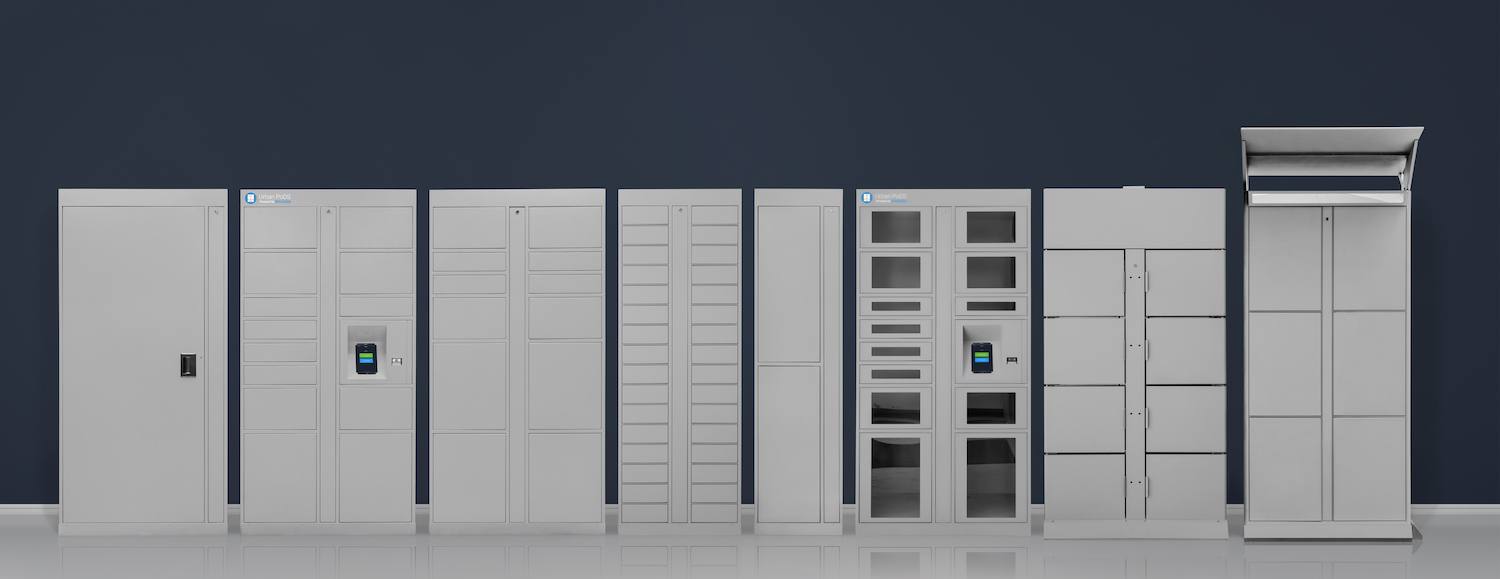
Real-World Applications of Disaster-Ready Smart Lockers
The versatility of smart lockers makes them suitable for a wide range of disaster relief operations. Some of the most promising applications include:
Emergency Supply Distribution
Lockers pre-stocked with food, water, hygiene kits, and blankets offer 24/7 access in disaster-prone areas. Whether installed permanently or deployed after an incident, these lockers provide immediate relief to affected populations.
Secure Medical Supply Stations
Healthcare workers and patients need reliable access to life-saving materials—PPE, medications, syringes, and first aid kits. Smart lockers ensure these items are stored safely, distributed efficiently, and accounted for via access logs.
Document and Equipment Storage
In evacuations, personal documents like passports or birth certificates often get left behind. Secure lockers can store or return these essentials. Relief agencies can also use them to house communication devices, repair tools, and more.
Community-Based Recovery Support
Recovery doesn’t stop after the initial wave of aid. Smart lockers can continue to serve as hubs for sharing community resources—generators, cooking supplies, construction gear—during the rebuilding phase.
These use cases show how lockers can function not just as delivery points, but as pillars of long-term recovery and resilience.
Why Smiota Smart Lockers Are Built for Crisis Readiness
Not all smart lockers are built the same. Smiota’s solutions are specifically engineered to withstand disaster scenarios while maintaining usability and security. Here’s what sets them apart:
- Weather-Resistant Materials: Designed to endure heat, cold, rain, or flooding, Smiota lockers stay functional even in extreme conditions.
- IoT-Powered Monitoring: Real-time tracking, predictive restocking alerts, and remote diagnostics ensure fast, informed action.
- Alternative Power Options: In blackout conditions, solar panels or backup batteries keep lockers running.
- Inclusive Design: ADA-compliant features and multilingual user interfaces ensure equitable access across communities.
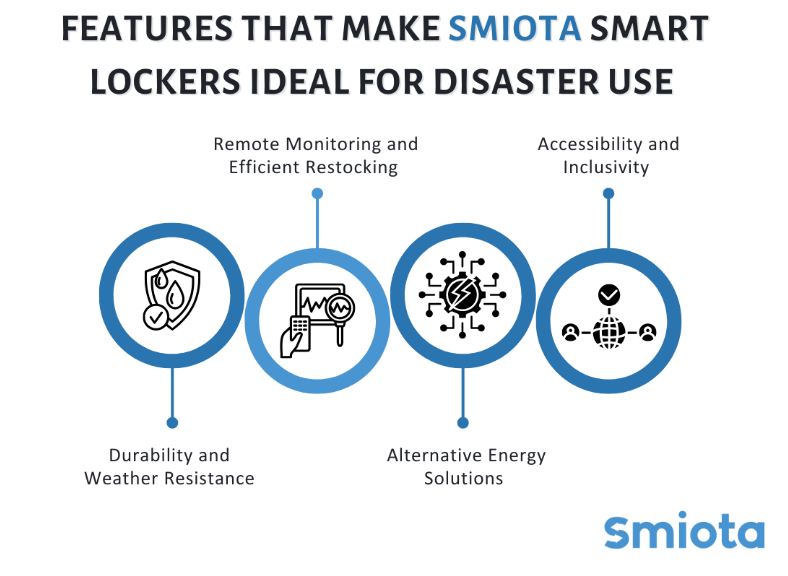
These features make Smiota lockers a reliable tool for disaster response agencies, governments, and NGOs working in challenging environments.
Disaster Use Cases in Action
The transformative power of smart lockers is already being explored and implemented in real-world scenarios:
- Flood Relief Hubs: In coastal cities prone to seasonal flooding, lockers are installed in advance and stocked with water, dry food, and sanitation kits. After a disaster, residents receive locker access codes via SMS, ensuring a safe and dignified way to collect supplies.
- Earthquake Recovery Stations: Post-quake urban areas benefit from solar-powered lockers loaded with documents, essential tools, and temporary shelter kits. These lockers help displaced residents rebuild their lives with autonomy.
- NGO Field Operations: Humanitarian groups working in conflict zones or rural regions use mobile lockers to maintain a steady flow of aid. Lockers provide dependable access without requiring fixed facilities or large local teams.
These examples reflect how smart locker technology is being adapted to serve unique geographic, cultural, and logistical needs.
Innovations in the Pipeline
Smart locker systems are evolving fast, with cutting-edge advancements that promise to reshape disaster preparedness:
- AI-Powered Forecasting: By analyzing climate data, population density, and historical trends, AI can predict demand and suggest locker deployment strategies in advance.
- Autonomous Delivery: Drones and unmanned vehicles can restock lockers in areas that remain inaccessible to traditional transport.
- Global Collaboration: Partnerships between governments, NGOs, and tech providers are enabling pre-deployment of lockers in high-risk zones, creating a proactive response model.
These innovations underscore a shift from reactive crisis response to strategic preparedness—a necessary evolution for the challenges ahead.
Conclusion: Infrastructure for Resilient Communities
Preparedness isn’t just about stockpiling resources—it’s about ensuring those resources can reach people when and where they’re needed most. In a world increasingly shaped by unpredictable disasters, traditional logistics models can no longer keep up.
Smart lockers offer a future-forward solution. Scalable, secure, and data-driven, they empower communities to act quickly, aid agencies to coordinate better, and individuals to access life-saving supplies with dignity and speed.
At Smiota, we believe in building technology that doesn’t just solve business problems—but also strengthens society. Our disaster-ready smart locker solutions are designed to meet the toughest challenges, bringing resilience and reliability to the front lines of emergency response.
As disasters become more frequent and more severe, the time to invest in smarter infrastructure is now.
The post Smart Lockers and Disaster Preparedness: A Scalable Solution for Rapid Emergency Response appeared first on Smiota.
]]>The post Why Smart Lockers Are the New Backbone of Modern Facilities Management appeared first on Smiota.
]]>Enter smart lockers—secure, connected, and remotely manageable storage solutions that align with the needs of contemporary workplaces. These systems offer measurable improvements in operational efficiency, compliance, space utilization, and user satisfaction, enabling facility managers to meet the rising demands of a digitally driven workplace. Let’s explore how.
Limitations of Traditional Locker Systems
It’s easy to overlook something as simple as a locker—until it becomes a daily headache. Traditional locker systems, once sufficient in static workplaces, have begun to show their age in today’s fast-moving, flexible environments. Conventional locker systems present several challenges for facility managers:
- Administrative Overhead: Lost keys or forgotten PINs require time-consuming interventions, increasing administrative burdens.
- Security Concerns: Mechanical locks are susceptible to tampering, compromising the safety of stored items.
- Inflexibility: Fixed locker assignments do not accommodate hybrid schedules or shared desk arrangements, leading to underutilization.
- Lack of Analytics: Traditional systems offer no insights into locker usage patterns, hindering optimization efforts.
As workplaces embrace hot desking, hybrid policies, and shared amenities, these outdated storage models can create friction for employees and inefficiencies for management.
Smart Locker Features Designed for Facility Managers
Facility managers wear many hats, from operations to employee well-being. Smart lockers are designed with these challenges in mind, offering a suite of features that reduce manual work and enhance everyday workflows.
- Keyless Access: Utilize RFID cards, mobile apps, or biometric authentication (fingerprint, facial recognition) for secure entry.
- Remote Management: Assign and control locker access from any location, reducing the need for on-site administration.
- Real-Time Tracking: Monitor usage patterns and generate operational insights to inform decision-making.
- Custom Configurations: Adapt locker setups for personal, visitor, or team use, enhancing flexibility.
- Compliance Support: Built-in privacy features and access audit trails assist in meeting GDPR and CCPA requirements.
- Maintenance Efficiency: Eliminate recurring costs associated with batteries or physical keys.
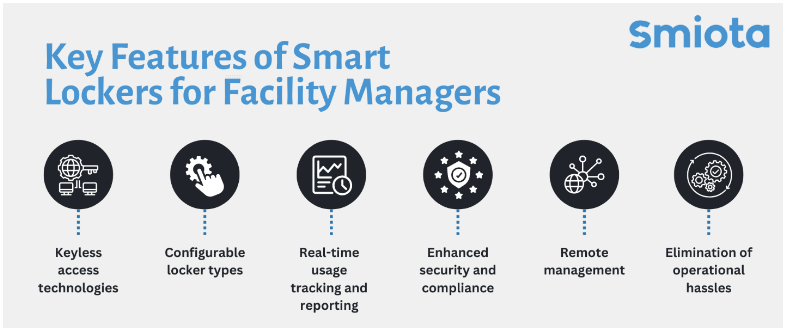
By shifting to digital-first, adaptable systems, facility managers gain more control, more insights, and more time to focus on what really matters—creating environments that work as hard as the people who use them.
Operational Benefits for Facilities Management
What makes smart lockers more than just a tech addition? The real power lies in their ability to transform day-to-day operations behind the scenes. From reducing clutter to streamlining space allocation, these lockers are built for impact.
- Streamlined Locker Administration
Automation replaces manual locker assignments, key distribution, and troubleshooting, saving time and resources. Facility managers can remotely manage locker allocations, reducing the need for physical oversight.
- Increased Space Efficiency
Data-driven dashboards highlight underutilized areas, enabling optimization of locker distribution across floors or teams. This strategic space management supports the dynamic nature of hybrid workplaces.(ricoh-europe.com)
- Seamless System Integration
Smart lockers integrate with existing building management tools and access systems, such as ID badges and facility apps, creating a cohesive infrastructure.
- Enhanced Employee Confidence
Providing secure personal storage encourages the use of amenities like gyms, cycling stations, and flexible workspaces, enhancing employee engagement and satisfaction.
- Cleaner, More Organized Workspaces
By reducing clutter and centralizing storage, smart lockers contribute to a more professional and productive office environment.
When implemented thoughtfully, smart lockers act as quiet enablers of efficiency. They reduce admin time, free up floor space, and offer real-time insights—all while improving the experience for every user who walks through your doors.
Security and Compliance Advantages
In a world of increasing data breaches and physical security concerns, lockers are no longer just about convenience—they’re about trust. Employees need to feel that their belongings are safe, and compliance teams need assurance that systems are audit-ready. Smart lockers are designed to meet both physical security standards and data privacy regulations:
- Advanced Access Controls: Utilize RFID, QR codes, or biometric systems to ensure only authorized users can access lockers.(Smiota)
- Audit Trails: Track usage events for accountability, aiding in compliance with regulatory requirements.
- Theft Deterrence: Implement time-limited access codes, auto-locking mechanisms, and alerts to minimize unauthorized access.(SquareYards)
- Regulatory Compliance: Adhere to GDPR, CCPA, and SOC 2 protocols, ensuring data privacy and security.
With smart lockers, facility managers can finally bridge the gap between usability and accountability. These systems create secure, trackable, and compliant environments—making it easier than ever to protect people, property, and data.
Integration with Smart Building Technology
Today’s buildings are smarter than ever, with IoT sensors, mobile apps, and centralized dashboards. So why should lockers be any different? To truly modernize facility operations, lockers must integrate seamlessly into the larger building ecosystem. Smart lockers are future-ready and easily connect with broader workplace technology infrastructure:
- IoT Compatibility: Sync with sensors, smart lighting, and occupancy systems to enhance building intelligence.
- Cloud-Based Control: Manage lockers remotely, with instant alerts and usage reports accessible from any location.
- API Integrations: Seamlessly work with HR platforms, ID systems, or calendar tools to streamline operations.
- Scalable Architecture: Add more lockers or update features as workplace needs evolve, ensuring long-term adaptability.
Smart lockers are no longer standalone units—they’re part of a connected workplace. By syncing with access controls, calendars, and HR systems, they help facilities teams streamline operations and stay one step ahead in their digital transformation journey.
Impact on Workplace Culture
In today’s hybrid environments, lockers serve more than just a functional role—they support employee well-being, flexibility, and a sense of ownership:
- Support for Diverse Work Arrangements: Provide secure storage for both full-time and transient staff, accommodating various work schedules.
- Reduction of Desk Clutter: Encourage clean desk policies by offering convenient storage solutions, promoting a tidy workspace.
- Accommodation for Visitors and Contractors: Facilitate temporary storage needs for non-permanent personnel, enhancing their experience.
- Inclusive Access: Reinforce accessibility with ADA-compliant and multilingual interfaces, ensuring all community members can use the system.
As a result, smart lockers contribute to happier, more organized, and more engaged workforces.
Why Facilities Managers Choose Smiota Smart Lockers
With dozens of smart locker providers on the market, what makes Smiota stand out? It’s the way we blend cutting-edge features with real-world functionality—designed specifically for the needs of facility management teams. Smiota’s smart locker systems are built with facility management challenges in mind:
- Advanced Keyless Access: Offer RFID, mobile, and biometric options to suit various security preferences.
- Modular and Scalable Designs: Tailor configurations for corporate, campus, and industrial settings, adapting to specific needs.
- Real-Time Analytics: Track trends, usage, and resource planning to inform strategic decisions.
- Security-First Architecture: Ensure full data compliance and end-to-end encryption to protect sensitive information.
- Plug-and-Play Integration: Achieve compatibility with major workplace systems for seamless implementation.
Smiota lockers empower teams to operate with agility, optimize space, and deliver modern employee experiences at scale.
Conclusion: A Strategic Tool for the Future of Work
The role of facility managers has evolved. You’re no longer just maintaining buildings—you’re shaping environments that support flexible work, keep people safe, and make daily operations seamless. In that mission, smart lockers are no longer a “nice to have”—they’re a smart, strategic necessity.
Smiota’s smart locker solutions are built to help you lead this transformation. Whether you’re supporting a hybrid workforce, optimizing space, tightening security, or simply trying to create a better experience for employees and visitors, our lockers deliver the reliability, intelligence, and flexibility you need.
With Smiota, you’re not just installing lockers. You’re unlocking a better way to run your workplace—future-ready, secure, and built around real people.
The post Why Smart Lockers Are the New Backbone of Modern Facilities Management appeared first on Smiota.
]]>The post 7 Things To Know While Selecting a Smart Locker for IT Asset Management appeared first on Smiota.
]]>This article provides insights for organizations to make informed decisions about smart locker systems, emphasizing the importance of combining physical security with digital intelligence for efficient and secure ITAM.
But first, it’s essential to understand the challenges businesses face in IT asset management. These challenges underscore the necessity for an effective solution and set the stage for why smart lockers are imperative in today’s tech-driven world.
Challenges with IT Asset Management
Asset management, particularly in IT, poses many challenges that can impede operational efficiency and asset optimization. These challenges include maintaining accurate inventory records, ensuring timely maintenance and upgrades, and safeguarding against loss or theft. The complexity increases with the scale of the organization, for instance:
Manual Processes and Errors:
- Traditional methods often rely on manual tracking, leading to time-consuming processes.
- Human errors in data entry and tracking can result in mismanagement of assets.
- Even with a ticket management software, the exchange and handover of IT assets is a tedious task.
Rapid Technological Advancements:
- Keeping up with tech evolution makes asset tracking challenging.
- New devices and software updates require frequent revisions in the asset management system.
Increasing Device Numbers:
- The growing number of IT devices in organizations complicates inventory management. This adds to the queue in the ITSM tool as well as the IT desk.
- Each device may have different management needs and lifecycle stages.
Diversity in Software and Hardware:
- Varied types of software and hardware need different management strategies.
- Compatibility issues between various assets can be challenging to resolve.
Security Concerns:
- High-value or sensitive IT assets are at risk of theft or misuse.
- Ensuring data security in these assets is crucial but challenging.
The emergence of innovative solutions like smart locker systems for ITAM and their benefits marks a transformative shift in overcoming these hurdles.
The transition from grappling with the challenges of asset management to embracing the benefits of smart lockers is a leap towards efficiency, security, and strategic asset optimization. This approach simplifies the management of IT assets. It aligns with the evolving needs of dynamic business environments, paving the way for a more organized, accountable, and efficient asset management system. It offers the following advantages:
- IoT Connectivity for Real-Time Oversight: Smart lockers integrated with the Internet of Things (IoT) provide real-time monitoring and alert systems. This connectivity ensures that any unauthorized access or security breaches are immediately detected and reported, enhancing the overall security of IT assets.
- Centralized Secure Storage: Smart lockers are typically equipped with advanced locking mechanisms and can be accessed only by authorized personnel, ensuring that sensitive items like laptops, tablets, and smartphones are securely stored when not in use.
- Chain of Custody Tracking: Smart lockers enable detailed tracking of who accessed which asset and when. This chain of custody tracking is crucial for maintaining the security of high-value or sensitive IT assets for a clear audit trail in case of any incidents.
- Improved Efficiency: Integrated with IT ticketing systems like ServiceNow, these lockers streamline asset distribution and return, offering quick access to equipment and boosting workflow productivity.
- Cost Savings: Smart lockers reduce costs by keeping precise logs of asset usage, preventing mismanagement, and lowering administrative overhead through automated check-in/check-out processes.
- Enhanced User Experience: Offering self-service access to IT assets, these lockers simplify processes and reduce downtime by facilitating quick responses to IT issues.
- Data Analytics and Reporting: They provide insights into usage patterns and allow customized reporting, aiding inventory optimization and proactive asset management.
Smart lockers bring a transformative approach to IT asset management, making them an invaluable tool in modern organizations. Now, we come to selecting the right smart locker to empower organizational ITAM.
7 Things to Consider While Selecting a Smart Locker for IT Asset Management
When selecting a smart locker for IT asset management, several critical factors must be considered to ensure efficient, secure, and user-friendly operation. Here’s a closer look at the seven key considerations:
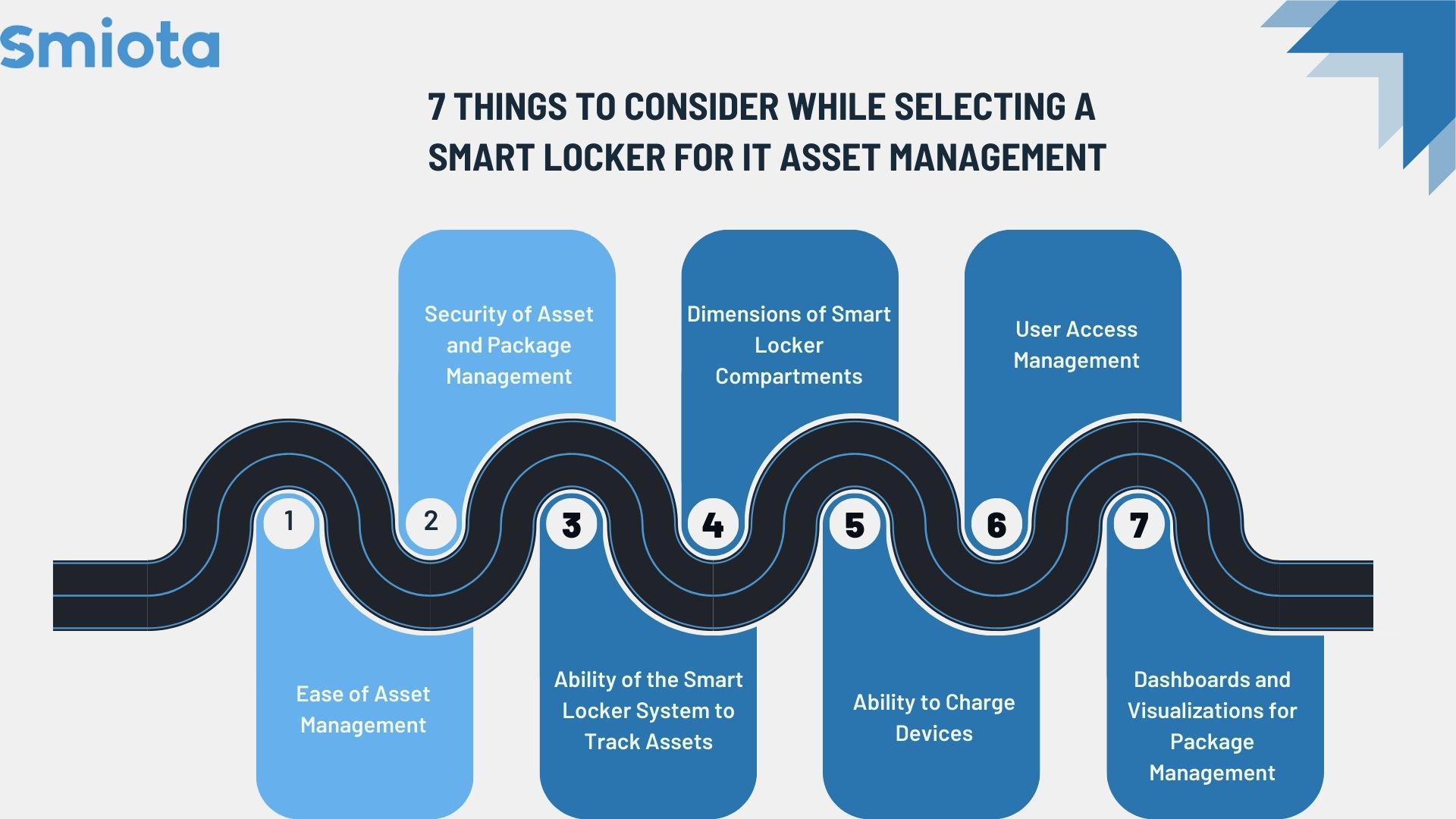
Ease of Asset Management
The primary purpose of a smart locker is to streamline the process of managing IT assets. Look for a system that simplifies the check-in and check-out processes, making it quick and easy for users to access the necessary equipment. The system should be intuitive, reducing the need for extensive training or technical support. Also, consider how well the locker integrates with existing IT asset management systems to ensure a seamless workflow.
Security of Asset and Package Management
The security features of a smart locker are paramount. It should offer robust protection against unauthorized access, with features like secure login procedures, tamper alerts, and sturdy physical construction. Additionally, consider how well the system safeguards sensitive data, adhering to compliance standards relevant to your industry. The locker should also track access logs, providing a clear audit trail of who accessed which asset and when. For instance, Smiota’s smart locker solutions for asset management come with SOC2 and ISO2700 compliance.
Ability of the Smart Locker System to Track Assets
Effective tracking is crucial for asset management. The locker should have capabilities to monitor the status of each item, whether it’s in the locker, checked out, or due for return. RFID tags, barcodes, or other tracking technologies can be used for real-time asset tracking, helping to prevent loss and manage inventory efficiently.
Dimensions of Smart Locker Compartments
The size and number of compartments in a smart locker are essential factors based on the types of devices you need to store. Ensure that the lockers can accommodate the sizes of laptops, tablets, and other IT equipment used in your organization. Adjustable shelving or customizable compartment sizes can be a significant advantage, offering flexibility as your asset inventory changes over time.
Ability to Charge Devices
Charging capabilities within the locker compartments can be a game-changer. This feature allows devices to be charged while securely stored, ensuring they are ready for use when needed. Check for the availability of various charging options, including USB ports and traditional power outlets, to cater to different device requirements.
User Access Management
Managing who has access to which assets is crucial for both security and efficiency. The smart locker system should allow for the easy assignment and modification of access rights, possibly integrating with your organization’s existing user management and ticketing systems. The ability to set different access levels based on job role or department can further enhance the system’s effectiveness. For example, Smiota offers its customers an easy-to-use admin portal to manage users without any hassle.
Dashboards and Visualizations for Package Management
A good smart locker system should offer a comprehensive dashboard for administrators, providing insights into usage patterns, asset statuses, and inventory levels. Visualization tools can help quickly identify trends, potential issues (like frequently lost items), and areas for optimization. These dashboards should be user-friendly and provide actionable data to aid in decision-making. Smiota’s smart lockers provide a detailed dashboard that allows IT managers to easily track their assets.
[button link=”/asset-management-lockers/” type=”big” newwindow=”yes”] Explore Asset Management Solutions [/button]
Final Thoughts on IT Asset Management Using Smart Lockers
By considering these seven key factors, organizations can choose a solution that meets their current needs and adapts to future challenges and technological advancements. Smart lockers represent physical security and digital intelligence, marking a significant step forward in IT asset management.
Additionally, integrating smart lockers with a ticket management system marks a pivotal advancement in operational efficiency. This symbiosis ensures a seamless, automated process for tracking and managing IT assets, i.e., robust ticketing capabilities help monitor, allocate, and retrieve assets, and smart lockers provide secure, controlled, and traceable storage and distribution points, enhancing accountability and asset visibility and elevating the overall user experience, making smart lockers vital for optimizing ITAM.
The post 7 Things To Know While Selecting a Smart Locker for IT Asset Management appeared first on Smiota.
]]>The post Asset Management: How to Ship a Laptop and Other Electronics in 4 Easy Steps appeared first on Smiota.
]]>Here we’ll go over asset management best practices, how to ship sensitive materials successfully, and why you should try to ship to a secure, smart locker solution whenever possible. Let’s get to it!
Importance of Asset Management
Asset management is a term that describes processes surrounding how you develop, maintain, and operate various assets and types of equipment. In the IT world, for instance, there is a near-constant exchange of electronic equipment — cell phones, laptops, tablets, and more — between employees due to device upgrading, maintenance, and procurement.
A business is only as productive as their tools allow them to be, making asset management crucial in maintaining operational efficiency and mitigating risks, especially cyber ones. Ensuring a smooth transition of equipment between employees allows team members to perform their duties with minimal downtime.
Smiota Smart Lockers Are Critical In Your Asset Management Strategy
If asset management is the name of the game, then Smiota Smart Lockers will help you win it. By protecting valuable equipment through climate-controlled smart lockers that boast sturdy materials and cutting-edge security features, leveling up your asset management strategy has never been easier. This is particularly crucial for companies on a tight budget that can’t afford to lose expensive pieces of equipment due to shipping errors or package theft.
Any comprehensive asset management strategy will take into account how equipment is shipped and delivered to its end user. Smiota Smart Lockers help in this area by:
- Reducing pickup times: With 24/7/365 pickup access, end users are able to retrieve their package at their convenience.
- Improve communication: End-to-end encryption and instant messaging capabilities allow you to communicate more efficiently regarding deliveries and even access retrieval logs.
- Streamlining overall flow: Within any IT department, ensuring employees retrieve their equipment quickly is crucial in maintaining operational efficiency. Enhanced security features allow your team to rest easy knowing critical and confidential items are secure until the proper person arrives to retrieve them.
- Promote health and safety: The pandemic taught us all how important contactless delivery options are; and with antimicrobial features, Smiota Smart Lockers help prevent transmission of harmful pathogens.
- Charge devices: If you’re storing electronics, our lockers feature wireless charging capabilities that ensure devices are fully powered up upon pickup.
- Inventory monitoring: A comprehensive tracking system with a real-time dashboard makes tracking assets easy so you know who is responsible for lost or damaged equipment.
[button link=”/package-lockers/” newwindow=”yes”] Shop Smart Locker Solutions[/button]
How to Ship a Laptop or Other Electronic Device
Now that you have a better understanding of how Smiota Smart Lockers play a major role in the success of your asset management plan, it’s important to understand how to transport these assets successfully. Let’s take a look at how you can ship laptops and other electronics to mitigate dead-on-arrival equipment.
1. Understand Regulations and Your Materials
Check local regulations and carrier policies regarding shipping lithium ion batteries. In most states, it’s perfectly fine to ship them as long as you properly label the box and if the battery does not exceed certain weight limits. However, while shipping a single device, these weight requirements will likely not apply.
2. Wrap the Device
Power down the device and make sure there is no dust or moisture on it. Do not remove the battery. Using plastic sheeting, tightly and securely wrap the electronic itself before placing it in the box. Be sure to wrap multiple layers from all angles, including corners, and secure the plastic with tape. This ensures the presence of any liquids that could potentially be present during the shipping process will not damage it. Plus, it provides extra cushioning. You may also consider placing it in a plastic bag first to protect it against static electricity.
3. Line the Box with Cushioning
Take the cushioning material of choice (bubble wrap, packing peanuts, etc.) and line the bottom and sides of the box before placing the device inside. Once finished, place it in and ensure the sides and top are packed with cushioning to prevent it from jostling around while in transit.
4. Seal and Label It
Close up the box and use packaging tape to seal it shut. Put multiple layers of tape along the main flaps and edges for maximum security. The more tape, the better!
Then, add the appropriate shipping label and be sure to write any other crucial information on the box’s sides, such as “fragile” so carriers are (hopefully) gentle with your shipment.
Ship to a Smiota Smart Locker for Maximum Security
Shipping a laptop or other electronic device is relatively easy, but ensuring it arrives in good condition isn’t. It’s especially critical for retailers to utilize the best possible technology when shipping goods to their own stores for buy-online-pickup-in-store (BOPIS) service, which has become increasingly popular. This is why it’s best to ship to smart lockers whenever possible.
Smiota Smart Lockers offer climate controlled lockers to ensure sensitive materials like food and electronics do not perish during their journey to the end user. Additionally, state-of-the-art security measures ensure bad actors (read: porch pirates) never have the opportunity to ruin your good reputation. Smiota’s reliable hardware keeps packages safe and unauthorized users out with heavy-gauge steel lockers, while our renowned, proprietary software platform champions user and data security. This includes role-based security access, real-time locker diagnostics, OAuth token-based security, end-to-end encrypted communication, and more.
Additionally, recipients are able to access their deliveries 24/7, making pickups as convenient and easy as possible. If you’re interested in learning more about our smart locker solutions, give us a call today!
The post Asset Management: How to Ship a Laptop and Other Electronics in 4 Easy Steps appeared first on Smiota.
]]>The post Where’s My Stuff? Tips for Tracking Your Packages appeared first on Smiota.
]]>In this landscape, many of us are asking “where’s my stuff?” and too often, the answer is met with complicated and unsatisfying answers that really lead to more questions. Here are tips for tracking your packages.
Understanding A Company’s Practices
One big tip for minimizing missing packages, delayed items, and supply chain snafus is to know basic information about the company from which you are ordering goods. For example, are they based in the country where you are living? Where does their manufacturing take place? Does their website indicate delays or shortages?
Distance, duration, and multiple supply chain links will impact the likelihood of mishaps and mysteries. Wherever possible, shopping from local businesses that use local materials will minimize the likelihood of delivery issues.
But of course, many items that we need are simply not available in the country where we live, or they are produced in faraway places with less-than-transparent business practices. This is a societal problem with an urgent need for reform. And, it will not be solved tomorrow. So we do what we can. But what about the packages we need that travel far distances? How do we track our packages in the meantime?
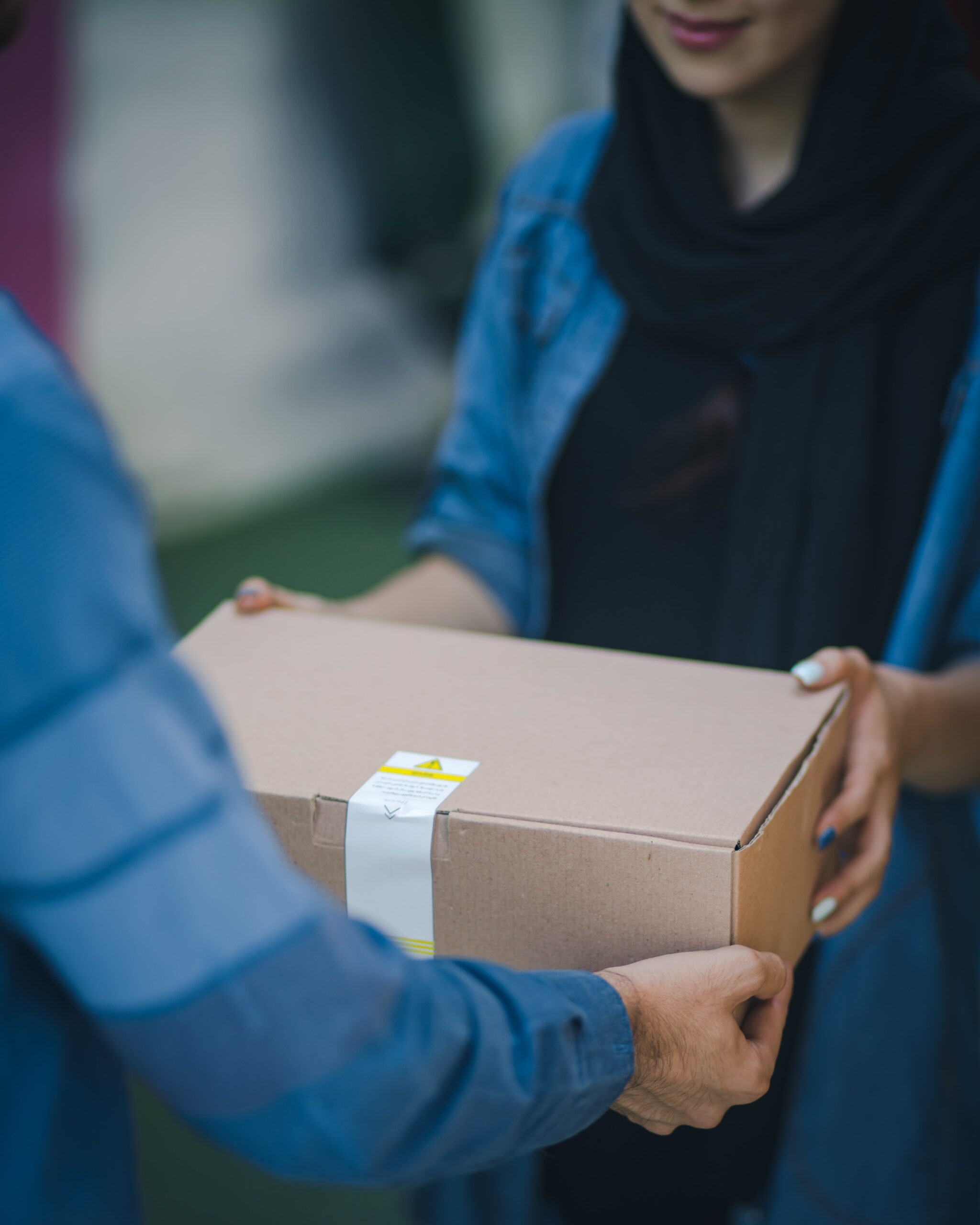
The Biggies: UPS, FedEx, And The Postal Service
Well, as it happens, in the united states we do have a variety of delivery companies and services. The big ones are of course UPS, FedEx, and the United States Post Office. There are plenty of others that make up the industry but these are the ones we will focus on today.
So – how do you track your packages?
UPS
According to their website, UPS delivers over 2 million packages per day. Their revenue for 2021 was over 90 billion dollars. That’s a mind-boggling amount of movement.
Luckily, UPS does offer tracking support. They even have specific labels and a helpful page on their website to help people understand where their packages are in the delivery process and what to expect with each step. For example, customers are alerted when a “label is created” which means UPS has the shipping details and billing information from the sender. After that, the package is “out for delivery”, delivered, or transferred. Customers can track all of this with their tracking number. It’s an easy-to-use site. The best tip is simply to familiarize yourself with their site and explore as needed to feel comfortable with the process.
FedEx
FedEx uses trains, planes, trucks, and ships to get deliveries to their proper destination. On their website, they offer a “delivery manager” service. This service is set up to provide added security and control through tracking and it’s easy to sign up for. With this, customers can set up times and places that work best for their schedules. This is also a means to decrease levels of damage and theft.
U.S. Postal Service
The origins of the U.S. Postal Service date back to 1639 in the United States. Early settler-colonialists needed the means to send mail back to England. The general court of Massachusetts designated a pub in Boston as the “official mail drop” for parcels. Obviously, we’ve come a long way from there.
Today, USPS stations are peppered around the country and are often a sort of community hub for folks of all different backgrounds and perspectives. There’s also been a fair amount of political debate around the topic in recent years.
But as far as tracking goes, USPS offers tracking numbers that customers can check in on through the USPS website. Tracking numbers are on shipping receipts or via email confirmation. Retailers will often offer this information in your confirmation email, but if they don’t do so you can always ask.
The Last Mile Problem
Being able to track packages on the internet has revolutionized the shipping industry and people’s understanding and control within it. However, the infamous “last mile problem” is still thwarting many of these companies and the waiting customers.
This is because a lot can go awry in the final stage of delivery. Packages wait unattended on porches, at incorrect addresses, in weather, and amidst other unforeseen circumstances. After every step in the process has been tracked, packages still disappear or are damaged.
This is where smart technology comes in. New advances such as smart lockers, in-house delivery apps, and other initiatives close the gap on the last mile problem. In addition to tracking through a shipping company, customers then receive immediate notification that their items are ready for pick up. It’s no wonder that smart lockers are popping up all over the place – adding security, convenience, and efficiency to this final step in the delivery process.
The post Where’s My Stuff? Tips for Tracking Your Packages appeared first on Smiota.
]]>The post Using Smart Lockers for IT Asset Management appeared first on Smiota.
]]>
Firstly, Let’s Cover The Basic Definitions
“Asset” is a term we often use to describe something of value. Particularly, we use it in regard to a human or company doing business. An asset is anything that produces a positive economic value.
An IT asset, specifically, is any company-owned information, system, and/or equipment. Short for “information technology”, companies use these elements to conduct business. These items can be common: laptops, digital folders, cameras, and hard drives. Other IT assets that might be more specific to various companies might include security systems, databases, codes, etc. It’s a broad category that includes valuable elements to a business – physical and digital, depending on the scenario. These assets need to be effectively managed and organized in order for a business to thrive.
Because IT assets are so valuable to a company’s success, IT asset management needs to be a priority. This is true, even if it is an aspect of a business that is more “behind the scenes”. Here’s where smart lockers come in. They are a popular systems upgrade that will improve the management process at every level within a company. Smart lockers increase security, clarity, and efficiency for all employees. Plus, they are accessible and easy to use for anyone with a smart tablet in their pocket or bag. Additionally, businesses can use the same smart locker systems with customers to improve their experience. It’s a system worth investing in.

IT Assets Security
It should go without saying that security is of critical importance when managing IT assets. However, too often, systems of management may lax into casual handoffs and incomplete logging. This leads to problems and miscommunications. Additionally, it can result in missing or mishandled equipment, and a lack of accountability within the workplace. It presents the possibility that important information and equipment may be left vulnerable – not a good scenario for any company worth its mettle.
Smart lockers vastly improve security in that they essentially eliminate various security risks. Smart locker systems provide specific, instantaneous messaging within an easy-to-use app. This means that without the proper passwords and smart tablets, critical and confidential items are secure until the proper person arrives to retrieve them. Through the app, the history of retrieval and returns can be logged to the minute. Managers and employees can rest assured that their handoffs, trades, upgrades, and deliverables are safe and secure. As co-working spaces and shared offices become more common in our post-covid professional settings, smart lockers can be used within a single business or utilized within broader, more non-conventional settings. No matter where they are incorporated, they provide additional safety and security to assets and, therefore, to the people in the area.
24-7 Access
Another major perk for managers upgrading to smart lockers for IT asset management includes 24-7 access to the secured items. As long as a building is open and accessible, employees can utilize their time to the best of their abilities, able to retrieve valuable assets at any time of day, any hour of the week.
As a result, this can lead to big improvements in efficiency and workplace satisfaction. More and more, companies are expanding their flexibility to accommodate employees’ needs. In the face of the global pandemic, many of us need a more flexible office culture. Studies show that these sorts of adaptions lead to high productivity and wildly-inspiring business success stories. It seems that this is the way our businesses are expanding – fluidly and malleable into people’s lives and the unfolding current events around us.
Efficiency For Managers
Finally, being a manager at a company is no small task. It is often a thankless job that requires a lot of attention to detail and a strong work ethic. A manager’s time is precious. This is especially true for management employees who facilitate and regulate IT assets within the company.
It’s important that managers utilize the systems that work. Importantly, smart lockers work. A functional system must be secure, accessible, and as efficient. This will reap massive benefits for the manager’s well being in the workplace. Additionally, it will empower these essential team members to use their skills in ways that continue to grow the company in sustainable ways.
The post Using Smart Lockers for IT Asset Management appeared first on Smiota.
]]>