The post Smart Lockers for Offices: Better Asset Access 24/7 appeared first on Smiota.
]]>This shift has made traditional asset distribution models less effective and, in many cases, costly. Employees working off-hours struggle to retrieve essential equipment, IT teams are overwhelmed with repetitive handoffs, and facilities managers spend significant time coordinating item distribution manually.
Smart lockers have emerged as a powerful solution to these evolving workplace dynamics. More secure than traditional storage, more efficient than manual processes, and available 24/7, smart lockers provide automated, streamlined, and trackable access to office assets. In this article, we take a deep dive into why smart lockers can be a game-changer for IT and office asset management.
The Challenges of Traditional Office Asset Management
Office environments historically relied on staff availability for asset distribution. Equipment requests required IT technicians, help desk staff, or front desk personnel to be present. Mailrooms depended on manual tracking. Onboarding kits needed to be handed out in person. While this system worked in the past, today’s workplaces demand greater flexibility.
Common challenges include:
Limited Access Hours
Employees who work early mornings, evenings, weekends, or across time zones often struggle to access the items they need.
Manual Pickups and Returns
Staff must physically hand over laptops, packages, or documents. These interactions create bottlenecks, especially during peak periods or major company events.
Lost Time and Lower Productivity
Employees may wait hours – or even days – for staff to process a pickup. Help desks experience high ticket volume for tasks that are purely logistical.
Increased Risk of Loss or Misplacement
Items left on desks, in hallways, or in unsecured storage areas can be misplaced or accessed by unauthorized personnel.
Operational Inefficiencies Across Hybrid Teams
When employees work asynchronously, manual processes simply can’t support the speed or security required.
These pain points illustrate the need for a system that provides constant availability, secure tracking, and automated workflows when it comes to asset management – something smart lockers are purpose-built to deliver.
The Benefits Smart Lockers Bring to the Workplace
Smart lockers transform how offices manage the flow of equipment, documents, packages, and supplies. Their benefits impact both day-to-day operations and long-term workplace strategy.
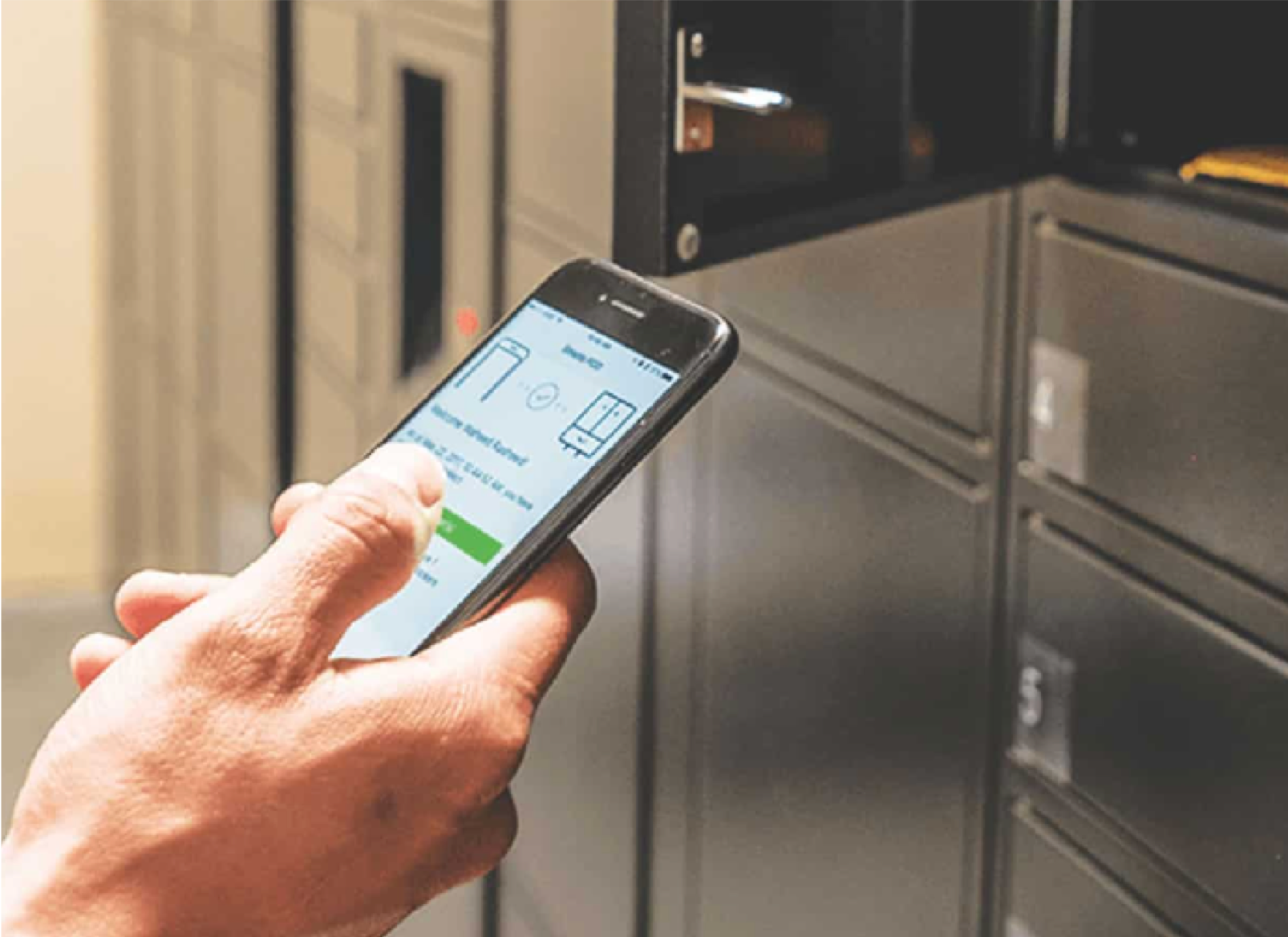
24/7 Access and Flexibility
No matter when an employee works, they can retrieve or return items with a secure code or ID. This eliminates scheduling dependency and empowers teams with self-service convenience.
Security and Full Accountability
Every item exchange is recorded digitally. Only authorized individuals can open specific compartments, reducing loss, theft, and unauthorized access.
Automation & Efficiency
Workflows are triggered automatically:
- IT places a laptop into a locker
- The system sends a pickup notification
- The employee retrieves it at their convenience
No handoffs, no manual tracking, no staffing required.
Seamless Integration With Office Systems
Smart lockers can connect to IT service management systems (like ServiceNow), mailroom software, employee directories, and inventory platforms for a unified workflow.
Better Employee Experience
Employees feel supported regardless of their schedule. They know exactly where to pick up items, when they’re ready, and how to access them – no waiting, no confusion.
These combined benefits make smart lockers a foundational element in future-ready workplaces.
Practical Office Use Cases for Smart Lockers
One of the greatest strengths of smart workplace lockers is their versatility. They can support a wide range of asset types and operational needs.
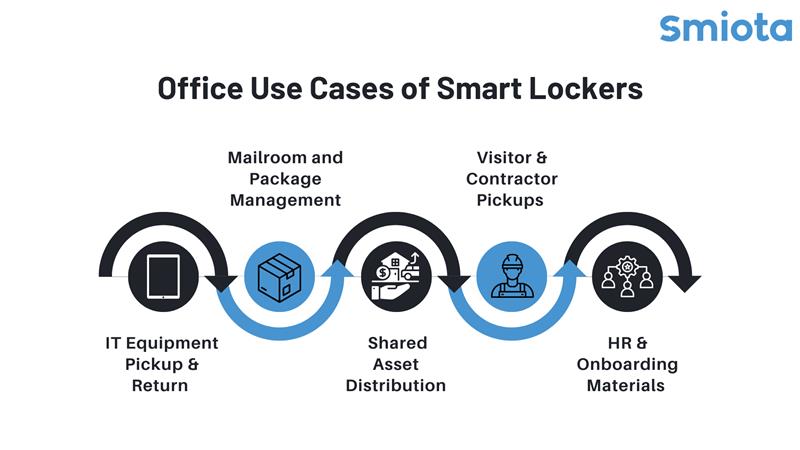
IT Equipment Pickup & Return
Smart lockers provide a secure point for:
- Laptops
- Power adapters
- Keyboards and mice
- Hard drives
- Secure media
They streamline workflows for new hires, device refresh cycles, repair returns, and urgent replacements.
Also read: Using Smart Lockers for IT Asset Management
Mailroom and Package Management
Instead of sorting and hand-delivering packages, mailroom staff simply place incoming items into lockers. Employees pick up at their convenience, reducing congestion and ensuring secure delivery.
Shared Asset Distribution
Smart lockers also help manage projectors, VR headsets, tools, specialized equipment, and meeting room accessories. This allows offices to maintain high utilization rates and prevent equipment loss.
Visitor & Contractor Pickups
Temporary access badges, loaner devices, or documents can be stored securely for pick up, reducing front desk workload.
HR & Onboarding Materials
Welcome kits, ID cards, and documentation can be distributed through lockers – especially helpful for hybrid or offsite onboarding.
Supporting Hybrid Work Environments
Hybrid work relies on flexibility, but traditional asset management often slows teams down. Smart lockers bridge this gap.
Anytime Availability
Employees working remotely can pick up items before or after their in-office days. Teams in different time zones can access equipment without waiting on staff.
Asynchronous Workflows
Workplace lockers support non-linear work schedules – an essential capability for distributed teams collaborating across continents.
Reduced IT Workload
Help desks and IT teams can prepare handoffs whenever convenient and let the system handle communication and access control.
Contactless Distribution
Smart lockers reduce unnecessary face-to-face interactions while maintaining secure asset exchange – a benefit realized during and after the pandemic.
Smart locker system for office allow hybrid work models to function with the reliability and consistency organizations expect.
Enhancing Security and Compliance
Security is critical in workplaces handling sensitive documents or equipment. Smart lockers strengthen compliance by offering:
- Individual access control for each compartment
- Audit logs for every pickup and return
- Closed-loop chain of custody
- Reduced human handling
These features support industries like finance, healthcare, legal services, government, and research & development. By reducing access vulnerabilities, smart lockers play a meaningful role in workplace security posture.
Smiota’s Smart Locker Capabilities for Offices
Smiota is one of the leading players in the smart lockers space and its solutions offer several capabilities that make them particularly well-suited for office environments – without being overly promotional.
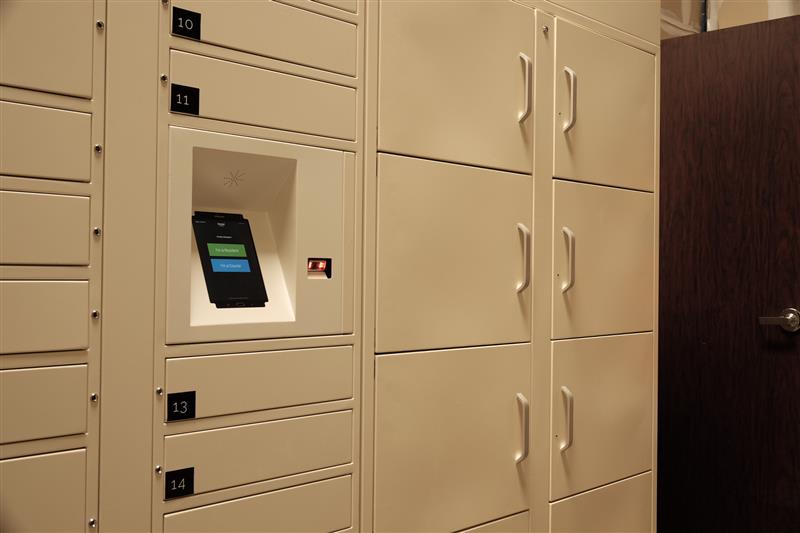
Some of these features include:
Modular Indoor Systems
Smiota lockers can be configured to fit office layouts, whether in a lobby, mailroom, or designated collection area.
Secure, Access-Controlled Compartments
Every user receives a unique digital credential, ensuring proper authorization.
Cloud-Based Management Dashboard
Facilities, IT, and mailroom teams can track usage, monitor inventory, and manage workflows from a centralized platform.
API Integrations
Smiota technology integrates with ITSM systems, HR platforms, directory services, and inventory tools.
Real-Time Notifications & Logs
Employees are alerted instantly when their assets are ready, and teams gain full visibility into all exchanges.
Durability for High-Traffic Offices
Lockers are built to withstand frequent use while maintaining long-term reliability.
These features make Smiota’s solutions a strong fit for organizations seeking dependable, automated asset distribution.
Conclusion: Powering a Modern, Accessible, and Efficient Office
As offices adapt to hybrid work and digital operations, the need for secure, flexible, and automated asset access has never been more important. Smart lockers provide a dependable, 24/7 solution that empowers employees, reduces administrative burdens, and strengthens security.
Whether managing IT equipment, packages, onboarding materials, or shared tools, smart lockers are becoming a cornerstone of modern workplace infrastructure. While many solutions exist, Smiota’s technology offers the scalability, reliability, and integration capabilities needed to support today’s evolving office environments.
Get in touch with us today to explore how our smart locker solutions can enhance your office operations.
The post Smart Lockers for Offices: Better Asset Access 24/7 appeared first on Smiota.
]]>The post Improving Workplace Logistics With Smart Locker Automation appeared first on Smiota.
]]>The Changing Landscape of Workplace Logistics
As organizations grow, both in workforce and complexity, the movement of physical items inside the workplace becomes more frequent and unpredictable. Employees receive personal packages at work, IT teams deploy laptops and devices, HR distributes uniforms or documents, and facilities deliver keys or equipment across departments. Without a structured system, these tasks become time-consuming and prone to miscommunication. Missed handovers, misplaced items, and delayed exchanges interrupt productivity for both staff and employees.
Smart lockers provide a centralized, automated solution that resolves these inefficiencies. Instead of relying on face-to-face interactions or scheduled handoffs, lockers allow employees to retrieve items at their convenience. When an item is deposited into a locker, the intended recipient receives an instant notification containing a secure access code or QR link. They can collect the item at any time, even outside regular working hours, without needing assistance from administrative staff. This flexibility drastically reduces delays and ensures smoother operations across the organization.
Transforming IT Asset Management
One of the areas that benefits most from smart locker automation is IT asset management. The distribution, replacement, and retrieval of devices such as laptops, chargers, access cards, monitors, or repaired equipment has traditionally required manual coordination. IT departments often spend valuable time tracking down employees or arranging meetings to exchange items. Moreover, the lack of clear audit trails increases the risk of lost or unreturned devices.
Smart lockers revolutionize this process by creating a secure, documented handover system. IT teams can deposit devices into lockers, assign them to specific employees, and rely on automated notifications to complete the exchange. Every locker transaction is logged, providing full visibility into who collected which item and when. This level of accountability significantly reduces asset loss, improves device lifecycle management, and enhances security within the workplace. For new hires, lockers can store onboarding kits and equipment that employees pick up the moment they arrive, ensuring smooth integration into the company.
Reducing Administrative Burden on Workplace Teams
HR, facilities, and administrative teams often spend hours each week coordinating deliveries, distributing materials, or fielding employee requests. These tasks – though essential – consume time that could be better spent on strategic responsibilities. Smart lockers free these teams from the burden of manual handovers. Items such as ID badges, keys, uniforms, documents, or equipment can be stored in lockers and retrieved without staff involvement.
This automation leads to fewer interruptions and more consistent workflows. Employees no longer need to rely on office hours or track down specific team members. In turn, workplace teams benefit from reduced stress, fewer repetitive tasks, and greater control over everyday operations. The streamlined process also enhances workplace professionalism by ensuring that handoffs are systematic, secure, and reliable rather than ad-hoc or inconsistent.
Scaling Across Multi-Site and Hybrid Organizations
As companies operate across multiple locations or adopt hybrid work models, internal logistics become even more complicated. Employees may split time between different offices, work irregular schedules, or collaborate with teams across cities or states. Smart lockers offer a scalable solution that adapts to these changing patterns. Locker networks can be deployed across several branches and managed through a centralized dashboard, giving leadership a unified view of asset movement and locker usage.
This scalability ensures that whether an organization has one office or dozens, processes remain consistent. Employees can enjoy the same secure, self-service pickup experience no matter where they work. Hybrid teams especially benefit from the flexibility to retrieve items whenever they visit the office, eliminating the need to coordinate shifts or wait for personnel to be available.
Conclusion
Smart locker automation represents a major leap forward in workplace logistics. By streamlining internal deliveries, facilitating secure IT asset management, and reducing administrative workload, lockers enable organizations to operate more efficiently and professionally. As companies continue to grow and adapt to hybrid work environments, the need for reliable, automated, and flexible internal logistics will only increase. With advanced solutions like Smiota’s enterprise-grade smart lockers, businesses can create a workplace that prioritizes convenience, accountability, and operational excellence.
FAQs
1. Are smart lockers suitable for large enterprises with high employee counts?
Yes. Smart lockers are highly scalable and can be deployed across multiple sites to accommodate organizations with thousands of employees.
2. Can smart lockers integrate with existing employee access systems?
Absolutely. Smiota lockers support RFID badges, QR codes, PIN authentication, and other secure access methods commonly used in workplaces.
3. Do smart lockers help reduce asset loss in IT departments?
Yes. Every locker transaction is logged, creating full accountability and reducing the risk of misplaced or unreturned devices.
4. What types of items can be distributed using smart lockers?
Smart lockers can store IT equipment, personal packages, uniforms, files, keys, onboarding kits, and virtually any other workplace-related item.
The post Improving Workplace Logistics With Smart Locker Automation appeared first on Smiota.
]]>The post How Smart Lockers Are Transforming Enterprise Mailrooms & Workplace Logistics appeared first on Smiota.
]]>This is why smart lockers, like those developed by Smiota are emerging as the modern backbone of enterprise mailrooms. By providing secure, automated, contactless, trackable internal delivery, they support hybrid work, strengthen security, and free up mailroom teams to focus on higher-value tasks.
Let’s explore exactly how.
The Challenges Facing Traditional Enterprise Mailrooms
Lost or Misplaced Internal Deliveries
Paper sign-in logs and manual storage lead to human error.
Staff Overload
Mailroom teams spend hours sorting, finding, handing off, and tracking items.
No Chain of Custody
IT devices, HR documents, and legal materials require full traceability.
Hybrid Work Disrupts Pickup Schedules
Employees aren’t always on-site to collect items.
Mailrooms become cluttered with unclaimed packages.
Security Gaps
Classified documents and devices are often stored in unlocked rooms.
Manual Handoffs Slow Everyone Down
IT teams spend time coordinating laptop swaps.
HR spends time issuing onboarding materials.
Operations spend time running deliveries across floors.
Organizations can’t scale with these outdated manual processes.
How Smart Lockers Transform Enterprise Logistics
Smart lockers automate and secure the entire internal delivery process.
Automated Delivery & Pickup
When an item is placed inside a locker:
- The system logs it
- Sends a notification to the employee
- Provides a pickup PIN or QR code
- Tracks the entire chain-of-custody
Pickup happens anytime without mailroom staff.
24/7 Access Supports Hybrid Schedules
Employees no longer need to align with mailroom hours.
They pick up items:
- During evenings
- Weekends
- Before or after shifts
- When visiting the office sporadically
This is essential for hybrid and remote workers.
Full Audit Trails and Access Logs
This is critical for:
- IT hardware
- Corporate-issued electronics
- Legal or HR documents
- Employee uniforms
- Tools and equipment
Every locker access is logged digitally.
This builds trust and compliance.
Secure Storage for Sensitive Items
Smart lockers protect sensitive corporate assets from:
- Theft
- Misplacement
- Unauthorised access
Smiota’s steel construction and locking system make lockers far safer than open mailrooms or desks.
Perfect for IT Departments
IT teams use lockers for:
- Laptop deployment
- Device swaps
- Hardware repairs
- Accessory distribution
- Replacement equipment
This eliminates back-and-forth scheduling with employees.
Streamlines HR & Onboarding
Smart lockers automate distribution of:
- Welcome kits
- Uniforms
- Documents
- Access cards
- Employee equipment
New hires can retrieve items independently upon arrival.
Saves Hours of Staff Time
Mailroom teams no longer spend energy on:
- Manual logs
- Email notifications
- Locating packages
- Coordinating pickup
The system handles everything.
Industries Benefiting from Smart Lockers
Not just corporate offices but also many industries benefit from placing smart lockers:
Pharmaceutical companies
Chain-of-custody for lab samples, controlled substances, equipment.
Manufacturing & Industrial
Tools, PPE, safety gear, shift supplies.
Government & Defence
Confidential documents, equipment storage, secure pickup rooms.
Education & Research
Intercampus mail distribution, IT hardware, research materials.
Healthcare Facilities
Medication delivery, internal samples, patient belongings.
Every industry with internal movement of goods benefits.
Why Smiota Is Ideal for Enterprise Deployment
Smiota offers technology suitable for enterprise-scale requirements:
Cloud-based management dashboard
Manage multiple buildings, campuses, floors.
API Integrations
Connect to:
- HRIS
- IT ticketing
- Visitor management
- Corporate workflow systems
Temperature-controlled lockers
For lab materials or medication.
Modular locker banks
Expandable at any time.
User role permissions
Different departments have secure access.
Full tracking & compliance
Critical for regulated industries.
The ROI for Enterprises
Smart lockers save money across multiple departments:
Lower labor cost
Staff time is reduced significantly.
Fewer lost assets
Expensive devices aren’t misplaced.
Reduced downtime
Employees receive hardware instantly.
Improved hybrid productivity
Pickup becomes flexible.
Higher internal efficiency
Workflows move faster.
Conclusion: Smart Lockers Are Becoming Core Enterprise Infrastructure
Smart lockers are no longer a convenience, they are a requirement for modern enterprises.
They reduce staff workload, support hybrid workers, secure sensitive assets, and streamline internal operations.
As corporate logistics grow more complex, Smiota’s smart locker systems offer a future-ready solution built for performance and security.
The post How Smart Lockers Are Transforming Enterprise Mailrooms & Workplace Logistics appeared first on Smiota.
]]>The post Transforming HVAC/R Distribution with Smart Locker Technology appeared first on Smiota.
]]>Smart locker solution is rapidly gaining traction among HVAC/R distributors looking to cut down on inefficiencies, provide 24/7 service, and meet technicians where they are. These intelligent, self-service lockers are transforming how parts and tools are stored, picked up, and returned—helping the industry respond to disruption with innovation.
Industry Trends Creating a Shift in Distribution Strategy
The shift to smart lockers isn’t happening in isolation. It’s a response to sweeping trends reshaping the entire HVAC/R distribution landscape.
Sustainability Mandates
Governments and industry regulators are introducing stricter rules around emissions and waste. For HVAC/R distributors, this means reducing truck rolls, paper trails, and inefficient routing—without compromising service.
Workforce Shortages
Finding skilled technicians and warehouse workers has become more challenging. Fewer hands on deck make it harder to keep up with rising demand, prompting the need for self-service solutions that free up human labor and keep operations running smoothly.
Digital Transformation
From AI-assisted diagnostics in HVAC systems to real-time logistics tracking, digital innovation is everywhere. Distributors must integrate intelligent tools into their workflows to stay relevant—and competitive.
Together, these forces are urging distributors to rethink old-school fulfilment models. Automation, mobility, and smart fulfilment strategies are no longer nice to have—they’re essential. That’s where smart lockers shine.
Smart Lockers: A Game-Changer for HVAC/R Logistics
Smart lockers are secure, tech-enabled storage units that offer automated order pickup, return, and tracking. Unlike traditional pickup counters, these systems work around the clock and eliminate unnecessary human contact—without sacrificing safety or reliability.
Here’s how they help HVAC/R distributors:
- 24/7 technician access – Techs can grab what they need any time, even during off-hours or emergencies.
- Touchless pickup and returns – A simple QR code or mobile app enables fast, hygienic transactions.
- Real-time tracking – Digital receipts and time-stamped logs ensure transparency at every step.
- Reduced dependency on staff – Lockers eliminate the need for counter clerks and reduce bottlenecks.
In short, smart lockers empower distributors to offer consistent, high-quality service, even as workforce and demand pressures grow.
How Smart Lockers Streamline Order Fulfilment
One of the biggest pain points in HVAC/R logistics is inefficient order fulfilment. Technicians often face long waits at counters, missed pickups, or delays caused by incomplete inventory. Smart lockers flip the script with a fast, contactless, and organized approach.
Key Operational Benefits
- Faster Order Pickups
Technicians simply scan a QR code or log into the app to open their designated locker—no waiting in line or paperwork required.
- Simplified Returns
Unused or faulty parts can be returned quickly, helping with inventory reconciliation and warranty processing.
- Pre-Sorted Locker Access
Orders are sorted and placed in specific locker compartments ahead of time, so techs can grab and go with minimal effort.
These benefits reduce friction, eliminate downtime, and free up warehouse staff to focus on higher-priority tasks. For distributors, it’s a cost-effective way to improve last-mile performance and keep technicians productive.
Real-World Success Example
The real power of smart lockers is evident when you look at how HVAC/R companies are already using them.
A leading HVAC/R distributor recently deployed smart lockers across five regional service hubs. Within just a few months, they reported:
- 30% reduction in technician downtime
- Lowered dependence on counter staff
- Improved order accuracy and delivery transparency
- Higher customer satisfaction scores
What stood out most was the agility the system introduced. Technicians could pick up critical parts even at night or on weekends. And thanks to digital tracking, the distributor gained new visibility into order patterns and locker usage—leading to smarter planning and fewer service delays.
Serving the Modern HVAC/R Technician
Today’s technicians are often mobile, operating across multiple job sites and working unpredictable hours. Smart lockers are built to meet those needs head-on.
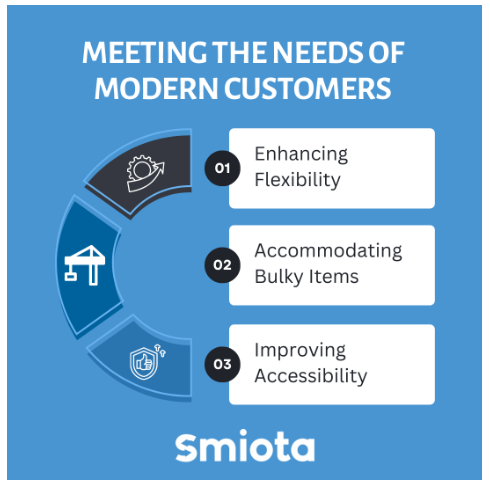
- Access Beyond Business Hours
Emergencies don’t wait for 9-to-5. Smart lockers give technicians the freedom to retrieve parts at any hour.
- Oversized Locker Compartments
HVAC/R jobs aren’t one-size-fits-all. Smiota’s lockers come in various sizes, including large units that accommodate compressors, coils, and fan assemblies.
- Strategic Placement Near Job Sites
By placing lockers in convenient locations—like warehouses, service hubs, or retail partner sites—distributors help technicians cut travel time and increase job efficiency.
These small changes can lead to big improvements in technician satisfaction and productivity. And that translates into better service for customers.
Aligning with Sustainability and Cost-Saving Goals
Smart lockers do more than boost efficiency—they also help HVAC/R distributors meet sustainability and cost-saving goals.
- Fewer Delivery Trips
By consolidating pickups into smart lockers, distributors cut down on truck rolls, which reduces carbon emissions.
- Digital Paper Trails
Receipts, tracking info, and inventory updates are stored digitally, minimizing the need for paper documentation.
- Reduced Fuel and Labor Costs
With fewer return trips and less need for on-site staff, operational costs go down—while service reliability goes up.
These improvements not only support environmental, social, and governance (ESG) mandates but also make smart business sense. Over time, the savings on logistics alone can justify the investment in smart locker infrastructure.
Seamless Tech Integration for Smarter Distribution
Smiota’s smart lockers don’t operate in a silo—they integrate seamlessly with existing systems, creating a more connected, data-driven supply chain.
- WMS and ERP Compatibility
Lockers can sync with inventory management tools, making it easier to track stock levels, flag low inventory, and schedule restocks.
- Mobile and Cloud Platforms
Technicians can use mobile apps to check locker status or get pickup notifications, while managers can access real-time data from the cloud.
- Actionable Insights
Get analytics on locker usage, pickup patterns, missed appointments, and order turnaround times—data that can be used to fine-tune operations.
These integrations allow distributors to future-proof their infrastructure while laying the groundwork for more advanced applications like AI-powered inventory forecasting and IoT-based climate monitoring.
Future-Proofing HVAC/R Operations
Smart lockers aren’t just a quick fix—they’re a long-term strategy that aligns with the future of HVAC/R logistics.
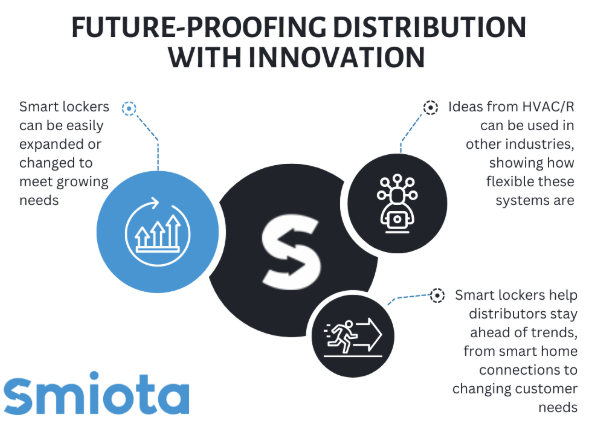
- Scalability
Start with one location and expand as needed. Smart lockers grow with your business.
- Cross-Industry Applications
Once implemented, the same systems can be adapted for related sectors like plumbing, electrical, and industrial supply chains.
- Support for Smart Tech Ecosystems
As HVAC systems become more connected and digital, distributors must follow suit. Smart lockers help bridge the gap between physical inventory and smart technology.
By investing in these solutions now, HVAC/R distributors position themselves as forward-thinking partners to both customers and contractors.
Conclusion: From Logistics Tool to Competitive Advantage
The HVAC/R industry is at a pivotal moment. Legacy distribution models are struggling to keep up with modern expectations for speed, transparency, and sustainability. Smart locker technology offers a powerful way forward—combining automation, flexibility, and intelligence into one streamlined solution.
Smiota’s smart lockers are purpose-built for the HVAC/R sector. With secure access, large-item compatibility, temperature control options, and real-time integration, they enable technicians to work smarter, not harder—and help distributors raise the bar for efficiency and customer service.
Whether you’re looking to cut costs, lower emissions, or deliver five-star service every time, smart lockers are no longer optional—they’re essential. Partner with Smiota to bring next-generation logistics to your HVAC/R operations and stay ahead of the curve.
The post Transforming HVAC/R Distribution with Smart Locker Technology appeared first on Smiota.
]]>The post Essential office security tips to keep employees and assets safe appeared first on Smiota.
]]>This article explores essential security measures for the modern office, covering physical security tips like access control and secure entry points, cybersecurity measures for protecting digital assets, comprehensive employee training protocols, and smart security technologies including innovative solutions for asset management and monitoring.
Understanding the Importance of Office Security
Office security serves a dual purpose: safeguarding your workforce while protecting valuable organizational assets. From expensive equipment to confidential client information, businesses must protect both tangible and intangible assets. Your employees need a secure environment to perform their best work, while your equipment and data require protection from potential threats.
Today’s offices face an array of security challenges. Physical threats like break-ins and unauthorized access continue to evolve, while cybersecurity risks grow more sophisticated. Employee safety concerns, from workplace violence to health emergencies, add another layer of complexity. Data breaches can compromise sensitive information, leading to significant financial and reputational damage.
1. Physical Security Tips
a. Access Control Systems
Keycard and Biometric Entry: Modern access control systems provide robust security through keycard and biometric authentication. These systems ensure only authorized personnel can enter specific areas, creating detailed access logs for monitoring and audit purposes. Biometric systems offer enhanced security by using unique physical characteristics for identification.
Visitor Management Systems: Implementing a comprehensive visitor management system is crucial for tracking who enters and exits your premises. These systems can pre-register visitors, print temporary badges, and maintain detailed records of all visits, enhancing security while providing professional experience for guests.
b. Secure Entry Points and Perimeter
Reinforced Doors and Windows: Strong physical barriers are your first line of defense. Reinforced doors, secure locks, and shatterproof glass significantly reduce break-in risks. These elements should be regularly maintained and upgraded to ensure maximum effectiveness.
Alarm Systems: A modern alarm system acts as your 24/7 security guard. When unauthorized access is detected, these systems immediately alert security personnel or local authorities, minimizing potential damage and ensuring swift response to security breaches.
2. Cybersecurity Measures
a. Secure Network Access
Firewall Protection: Firewalls serve as your network’s security gateway, monitoring and filtering incoming and outgoing traffic. They protect against external threats, malware, and unauthorized access attempts, forming an essential component of your digital security infrastructure.
VPN for Remote Work: With remote work becoming common, VPNs are essential for secure data transmission. They create encrypted connections for remote employees, ensuring sensitive information remains protected regardless of where team members are working.
b. Strong Password Policies
Enforcing Complex Passwords: Complex password requirements significantly reduce the risk of unauthorized access. Implement policies requiring combinations of uppercase and lowercase letters, numbers, and special characters to create strong, hack-resistant passwords.
Regular Password Changes: Establish a system for regular password updates to minimize security vulnerabilities. This practice helps prevent unauthorized access even if older passwords are compromised.
c. Protecting Sensitive Data
Data Encryption: Encryption transforms sensitive data into coded information, protecting it both during transmission and storage. This essential security measure ensures that even if data is intercepted, it remains unreadable without proper authorization.
Restricted Data Access: Implement role-based access controls to ensure employees can only access data necessary for their work. This minimizes the risk of internal data breaches and unauthorized information sharing.
3. Employee Training and Awareness
a. Security Policy Training
Onboarding Security Training: New employees must understand security protocols from day one. Comprehensive security training during onboarding ensures all team members understand their role in maintaining office security.
Ongoing Security Refresher Sessions: Regular training sessions keep security protocols fresh in employees’ minds and update them on new security measures and threats.
b. Cybersecurity Awareness
Phishing Awareness: Train employees to recognize and avoid phishing attempts and suspicious emails. This training should include practical examples and regular updates on new types of scams.
Secure Handling of Sensitive Documents: Provide clear guidelines for handling and disposing of sensitive materials, both digital and physical. This includes proper shredding procedures and secure digital file deletion protocols.
c. Emergency Response Training
Evacuation Drills: Regular fire and emergency drills ensure employees know exactly what to do during various types of emergencies. These drills should be conducted periodically and include different scenarios.
Incident Reporting Procedures: Establish clear guidelines for reporting security incidents and suspicious activities. Employees should know exactly whom to contact and what information to provide when reporting security concerns.
4. Implementing Smart Security Technologies
a. Smart Lockers for Secure Deliveries and Asset Tracking
Package and Document Storage: Smart lockers provide a secure solution for managing deliveries and sensitive documents. These systems eliminate the risk of package theft and ensure proper chain of custody for important materials.
IT Asset Management: Smart lockers offer secure storage and management of IT assets, making equipment distribution and tracking more efficient while maintaining workplace security.
Asset Tracking: Advanced mailroom software enables precise tracking of asset usage. Integration capabilities with workplace management software provide comprehensive oversight of all assets.
b. IoT-Enabled Devices
Smart Sensors for Monitoring: IoT sensors provide continuous monitoring of secure areas, detecting unauthorized entry or movement. These devices create an invisible security net across your facility.
Real-Time Alerts: IoT devices deliver immediate notifications about security breaches, enabling security personnel to respond quickly to potential threats.
c. Integrating Physical and Cyber Security Systems
Unified Security Platform: A centralized security system integrates various security components, from access control to CCTV and cybersecurity measures, providing comprehensive protection and easier management.
Automation and AI: AI-powered systems analyze security data to predict and prevent potential threats, adding a proactive layer to your security infrastructure.
Smiota – enhancing security with smart lockers
A comprehensive workplace safety strategy combines physical security, cybersecurity, and employee training. While each element plays a crucial role, Smiota smart lockers stand out by bridging physical and digital workplace security gaps. Our solution integrates secure package management, asset tracking, and automated monitoring into your existing security infrastructure, creating a more robust and efficient security system. To learn more about how smart lockers can enhance office security, talk to us today.
The post Essential office security tips to keep employees and assets safe appeared first on Smiota.
]]>The post What are Pick-up Lockers, and How do they help Automate your Enterprise Workflow? appeared first on Smiota.
]]>What is a pick-up locker?
A pick-up locker is an automated parcel delivery system designed to store packages securely until the recipient picks them up. Typically installed in accessible locations, these lockers can be utilized by delivery companies or integrated into an enterprise’s delivery division. Integrating pick-up lockers in a delivery facility center heralds a shift from traditional, labour-intensive methods to a more automated, efficient approach. Customers also receive a unique code or barcode to retrieve their package from the designated locker, ensuring security and convenience.
Features of Smart Pick-Up Lockers
Smart pick-up locker systems are innovative solutions designed to modernize and streamline the process of package delivery, storage, and retrieval. These systems are increasingly integral to various sectors, including corporate offices, retail outlets, apartment complexes, and educational institutions. Here are the key features of smart pick-up locker systems:
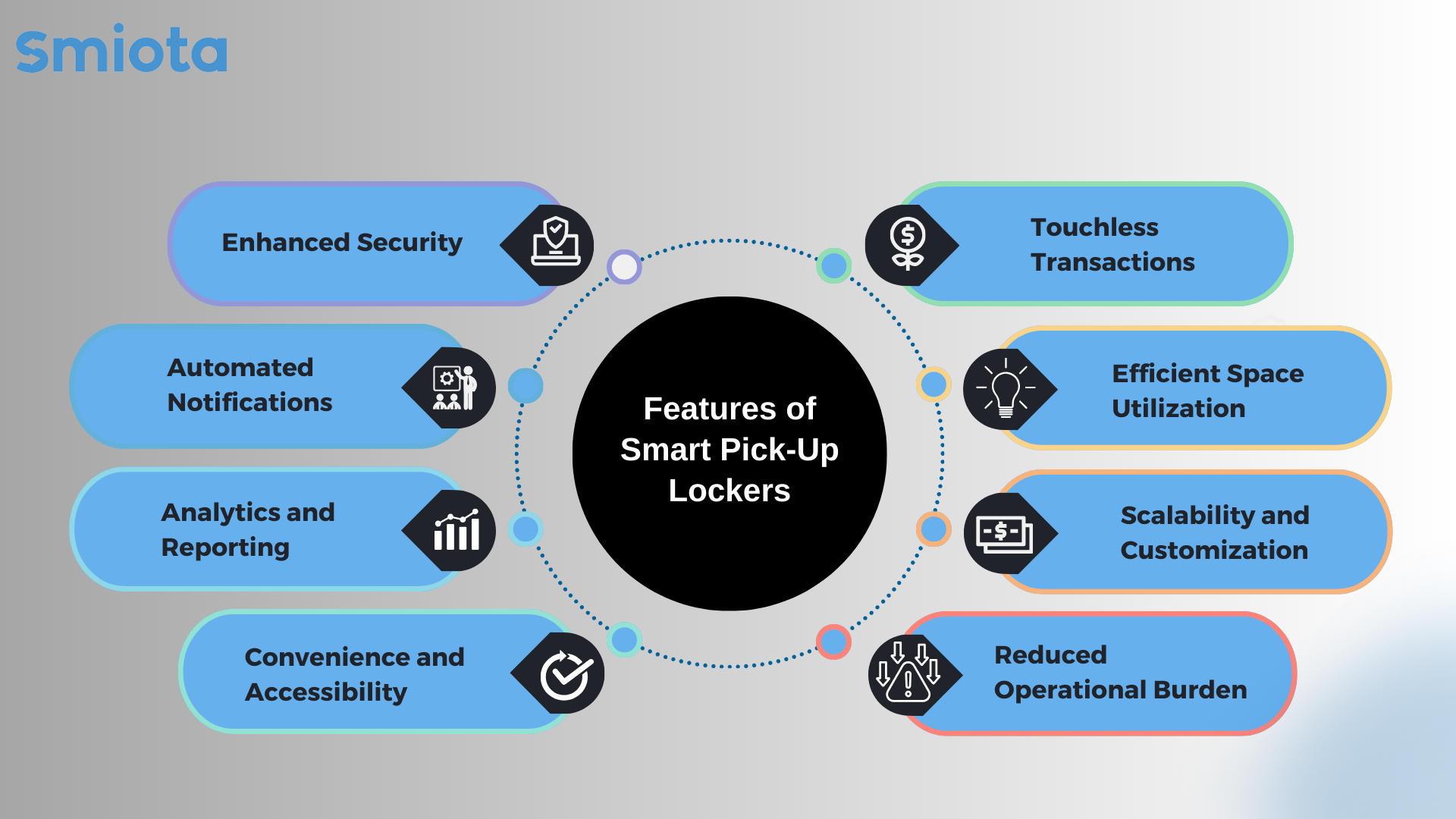
Enhanced Security
Smart lockers come with advanced security features to protect packages and assets from theft or unauthorized access. This is especially critical in addressing concerns like porch piracy in residential settings.
Automated Notifications
Upon the arrival of a package or when it’s ready for pick-up, automated notifications are sent to the recipient. This could be via SMS, email, or through a dedicated mobile app, ensuring that recipients are promptly informed about their deliveries.
Analytics and Reporting
Advanced analytics and reporting tools enable real-time tracking of usage patterns, occupancy rates, and access history, helping optimize locker placement, understand user behavior, and boost operational efficiency. Reports include peak usage and unauthorized access, aiding in informed decision-making and user experience enhancement.
Convenience and Accessibility
Smart lockers are accessible 24/7, allowing recipients to pick up their packages at their convenience without adhering to the operational hours of traditional mailrooms or reception areas.
Touchless Transactions
In a pandemic-aware world, smart lockers provide a contactless pick-up option, enhancing safety and hygiene by minimizing physical interactions between people.
Efficient Space Utilization
Smart lockers help optimize space, especially in urban settings where space comes at a premium. They ensure that parcels are neatly stored and are not cluttering lobbies or reception areas.
Scalability and Customization
These systems can be scaled and customized according to the specific needs of an organization or facility. They can be expanded in capacity or integrated with other systems for a seamless user experience.
Reduced Operational Burden
By automating the package delivery and retrieval process, smart lockers significantly reduce the workload on administrative or mailroom staff, allowing them to focus on other critical tasks.
In essence, pick-up lockers streamline and secure enterprise workflows, proving to be a valuable investment for businesses aiming for automation and efficiency, especially when faced with common delivery management challenges.
Common Challenges in Delivery Management Facilities
Efficient delivery management is a critical concern for enterprises. Adopting pick-up lockers is an innovative solution that addresses several challenges in enterprise workflows. For instance:
Delivery Management Challenges
- Inefficient Package Handling: Traditional systems involve time-consuming manual sorting, leading to delays and customer dissatisfaction.
- Limited Delivery Windows: Fixed schedules don’t align with customer or service needs, causing missed deliveries and long waits.
- Security Concerns: Risks of theft, damage, or loss impact costs and reputation.
- Space Constraints: Limited, costly storage in urban areas creates congestion and slows processes.
- Environmental Impact: High carbon footprint from transportation and packaging materials pressures businesses for sustainable options.
- Inflexible Delivery Options: Fixed schedules don’t meet customer expectations for flexibility and convenience, resulting in dissatisfaction.
Innovative Solution: Pick-Up Lockers
Pick-up lockers, being an innovative solution to address these challenges, offer the following benefits:
- Automated Delivery: Pick-up lockers address challenges by automating sorting and handling, enhancing efficiency.
- Convenience & Flexibility: They offer flexible pick-up times, reducing missed deliveries and wait times.
- Enhanced Security: Secure storage until retrieval minimizes theft, damage, and loss.
- Space Efficiency: Compact design alleviates urban space constraints.
- Environmental Benefits: Reduces carbon footprint by minimizing transportation and packaging needs.
- Adaptability: Meets customer demands for convenience and flexibility, improving satisfaction.
As enterprises seek innovative solutions to streamline their operations, integrating pick-up lockers stands out as a strategic move to automate and optimize their workflow.
How to implement smart lockers in your enterprise
Implementing a smart pick-up locker system in a delivery facility center involves several key steps. These steps span from the initial conceptualization to the integration of technology and the final deployment.
Initial Analysis
- Define objectives like improving efficiency, security, and convenience.
- Choose an accessible locker location.
- Budget for hardware, software, and maintenance.
Design and Technology Integration
- Customize locker size and quantity based on parcel sizes.
- Use durable materials and secure designs.
- Integrate smart tech and user interfaces.
- Develop or modify software for locker management.
Security Measures
- Enforce strong cybersecurity and regulatory compliance.
- Boost physical security with surveillance and sturdy construction.
Testing and Assurance
- Prototype and test lockers for functionality and user satisfaction.
- Perform thorough hardware and software checks.
Deployment and Training
- Install lockers and integrate them with the facility’s network.
- Train staff and inform customers about the system.
Ongoing Management
- Monitor performance and feedback for quick issue resolution.
- Regularly maintain hardware and software.
Evolution and Enhancement
- Gather feedback for improvements.
- Stay flexible for expansion or tech updates.
A delivery center can significantly boost its service quality by methodically progressing through these steps, ensuring a safe, efficient, and user-friendly parcel delivery experience. Addressing the various challenges delivery centers face is crucial to availing the numerous benefits of smart locker solutions.
Benefits of Integrating Smart Pick-up Lockers into Your Workflow
Smart pick-up lockers represent a significant leap forward in the pursuit of automated and efficient enterprise workflows offering several benefits:
Enhanced Efficiency
- Automated pick-up saves time and resources.
- Frees employees for more productive tasks.
Improved Security
- Smart lockers prevent theft, loss, or misplacement.
- Access is restricted to authorized individuals.
Reduced Operational Costs
- Automation decreases staff intervention, lowering labor costs.
- Efficient space use and fewer lost items save costs.
Increased Customer Satisfaction
- 24/7 pick-up availability enhances convenience.
- A secure and efficient system boosts user experience and loyalty.
Scalability and Flexibility
- Smart lockers are easily scalable and configurable.
- Adaptable to changing business needs and various item sizes.
It’s clear that adopting smart pick-up locker systems is a strategic move towards a more automated, secure, and efficient package delivery system.
Conclusion
Smart pick-up lockers represent a pivotal innovation in logistics and delivery management. By addressing the core challenges of traditional delivery methods and introducing advanced features, smart locker systems offer a comprehensive solution to automate and optimize enterprise workflows. As businesses seek efficiencies in their operations, adopting pick-up locker systems is poised to become a standard, driving the future of secure, efficient, and customer-centric delivery services.
The post What are Pick-up Lockers, and How do they help Automate your Enterprise Workflow? appeared first on Smiota.
]]>The post Emerging Office Design Trends for 2024 and Beyond appeared first on Smiota.
]]>Office Design Trends for 2024 and Beyond
This era marks a departure from traditional layouts as workplaces transform into dynamic, adaptive environments prioritizing employee well-being and productivity. Below are some of the most innovative and influential modern office designs shaping our workspaces’ future.
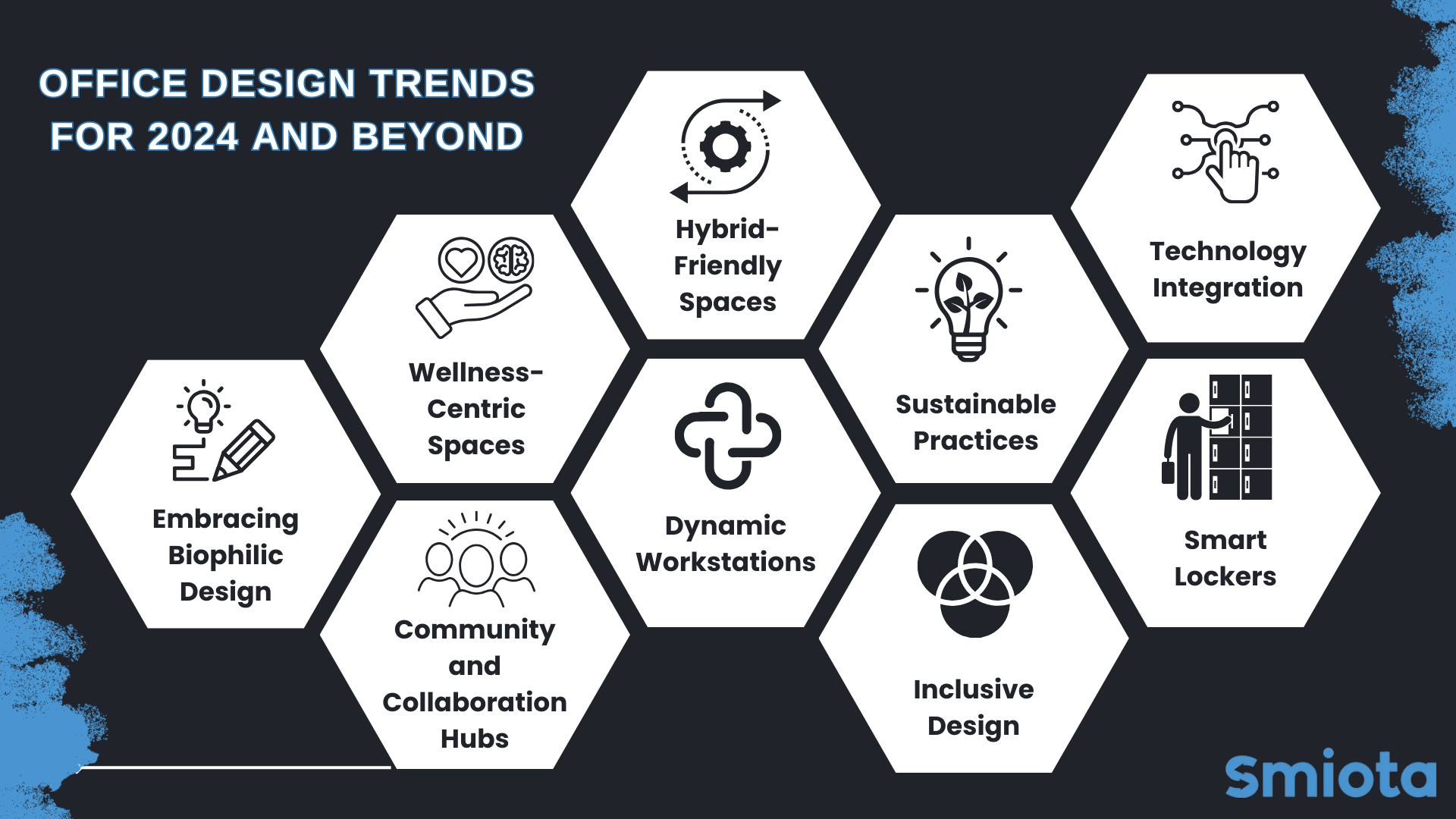
Embracing Biophilic Design: Bringing the Outdoors In
Biophilic design is more than a trend; it’s necessary in today’s office environments. It involves incorporating elements of nature into the workplace to create a more organic and serene atmosphere. Think living green walls, natural light, wooden textures, and indoor water features. Biophilic designs have been shown to reduce stress, enhance creativity, and improve overall well-being.
Wellness-Centric Spaces: Prioritizing Employee Health
In modern office design, employee well-being takes center stage. This is reflected in creating wellness zones equipped with fitness equipment, meditation spaces, and areas designated for relaxation. Additionally, ergonomic furniture and standing desks are increasingly standard to encourage physical health.
Community and Collaboration Hubs: Encouraging Interaction
Offices are evolving to cultivate community and collaboration. This shift is evident in the communal spaces such as cafeterias, game rooms, and open lounges. These areas are designed to promote interaction, facilitate informal meetings, and strengthen team dynamics.
Hybrid-Friendly Spaces: Adapting to the New Normal
The hybrid work model has redefined office space requirements. Hybrid-friendly spaces are designed to support both in-person and remote team members seamlessly. These spaces include technology-enabled meeting rooms for virtual collaboration, quiet zones for focused work, and communal areas for in-person interactions. The goal is to create a work environment that supports flexibility and inclusivity for all working styles.
Dynamic Workstations: The End of One-Size-Fits-All
Gone are the days of rigid, one-size-fits-all workstations. The future is about dynamic workstations that can be easily adjusted to suit individual needs. Think adjustable desks, ergonomic chairs, and modular furniture that can be reconfigured for different tasks. This trend is about allowing employees to choose how and where they work best within the office.
Sustainable Practices: Eco-Friendly and Ethical Choices
Sustainability is a critical component of modern office design. This trend focuses on using eco-friendly materials, energy-efficient lighting, and waste-reduction strategies. It’s about creating a space that looks good and aligns with ethical and environmental responsibilities.
Inclusive Design: Designing for Everyone
Inclusive design ensures that office spaces are accessible and comfortable for everyone, regardless of ability or background. This includes wheelchair-accessible entrances, gender-neutral restrooms, and spaces catering to sensory needs. An inclusive office is a company’s commitment to diversity and equality.
Technology Integration: The Smart Office
Technology integration is pivotal in modern office designs. From high-speed internet and wireless charging stations to advanced security systems and AI-driven climate control, technology enhances the functionality and efficiency of the workplace. It’s about creating a connected and smart environment that supports the digital needs of today’s workforce.
Smart Lockers: Revolutionizing Office Storage and Workflow
Smart lockers are a game-changer in office design, offering both aesthetic appeal and functional benefits. These digital or automated lockers streamline the workflow by providing secure, accessible storage solutions. They are especially beneficial in hybrid work environments where employees may not have permanent desks.
As we explore the innovative landscapes of modern office designs, marked by open spaces, ergonomic furniture, and collaborative work areas, we must acknowledge how technology seamlessly integrates into these environments. A key trend that exemplifies this integration is the rise of smart locker solutions in office design.
The Rise of Smart Lockers in Office Design
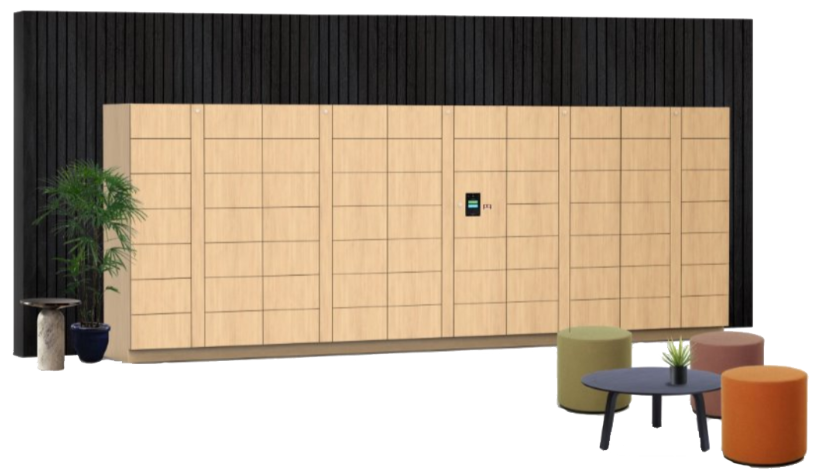
The shift towards intelligent, user-friendly amenities is a defining feature of office design trends for 2024 and beyond, symbolizing the blend of functionality and innovation in the modern workspace. Smart lockers, like those offered by Smiota, are not merely storage units; they are sophisticated additions that align with modern office design trends, offering customizations to blend with the office’s overall design.
Aesthetic Integration
The design of an office speaks volumes about a company’s culture and values. Smart lockers can be customized to match a brand’s colors and preferred materials, ensuring they blend seamlessly with the office’s overall aesthetic. This customization allows companies to maintain a cohesive look throughout their workspace, reinforcing their brand identity visually.
Imagine a lobby where sleek, branded lockers stand, not as an afterthought but as a harmonious part of the design. They can be integrated into walls, acting as functional art, or stand alone as a statement piece that captures the essence of the company’s style. The flexibility in design and material choices ensures that these lockers can complement any office décor, from minimalist modern to classic corporate.
Enhanced Functionality
The functionality of smart lockers extends far beyond traditional storage. They are digital or automated locking systems that streamline the workflow. Employees can securely store personal belongings and documents or even receive deliveries without manual distribution. This system eliminates the need for a dedicated staff to manage locker assignments or handle parcel deliveries, freeing up valuable human resources for more critical tasks.
In a dynamic office environment, where flexible seating arrangements and hot-desking are commonplace, smart lockers provide a personal space for employees who may not have a fixed desk. This flexibility is essential in today’s evolving workplace, where the traditional concepts of assigned seating are rapidly changing.
Smoother Workflow
The digital nature of these lockers also means integration with existing office systems is simpler and more efficient. For instance, they can be linked to the company’s internal network, allowing remote management and monitoring. Employees can access their lockers through a smartphone app or employee badge, making the process seamless and secure. This ease of access ensures that the flow of work is uninterrupted, enhancing overall productivity.
Moreover, smart lockers play a pivotal role in managing the flow of goods and information within the office. These lockers offer a secure and traceable storage solution for businesses that frequently handle sensitive documents or high-value items. Tracking who accessed the locker and when adds a layer of security and accountability that traditional lockers cannot provide.
Conclusion
As we look towards 2024 and beyond, it’s clear that office design is not just about creating a physical space but crafting an experience that resonates with the evolving needs of employees and businesses. These emerging trends reflect a deeper understanding of how our work environments impact productivity, well-being, and corporate culture. The integration of smart technologies like Smiota’s customizable lockers will be vital in creating aesthetically pleasing workspaces that are also highly functional. Businesses can create visually appealing spaces highly conducive to the diverse and dynamic nature of modern work life. The smart office of 2024 is where technology and design converge to create an efficient and inspiring workspace.
The post Emerging Office Design Trends for 2024 and Beyond appeared first on Smiota.
]]>The post Day Use Lockers: The Perfect Amenity for Corporate Offices and Co-working Spaces appeared first on Smiota.
]]>The Rising Popularity of Flexible Workspaces
Flexible workspaces have become increasingly popular, driven by the rise of freelancing, startup culture, and flexible corporate policies. These spaces, including co-working areas, shared offices, and hybrid models, provide dynamic environments that cater to diverse professional needs and styles. By the end of 2024, it’s projected that there will be over 40,000 co-working spaces worldwide, serving about 5 million members, highlighting their growing appeal. These environments offer agile spaces equipped for productivity and collaboration, suitable for those who need quality facilities on a flexible basis.
This trend is further reflected in the rising demand for office amenities that enhance convenience, security, and personal space management. Smart Day Use Lockers fulfill the demand, providing secure storage and supporting the transient nature of modern work environments. The demand for such adaptable amenities is expected to increase, changing our expectations of the workplace. Let’s explore the advantages of Day Use Lockers in different workplaces.
Benefits of Day Use Lockers in Corporate Offices
Day use Lockers address several workplace needs—from security and privacy to efficiency and employee satisfaction, making them indispensable to modern office environments.
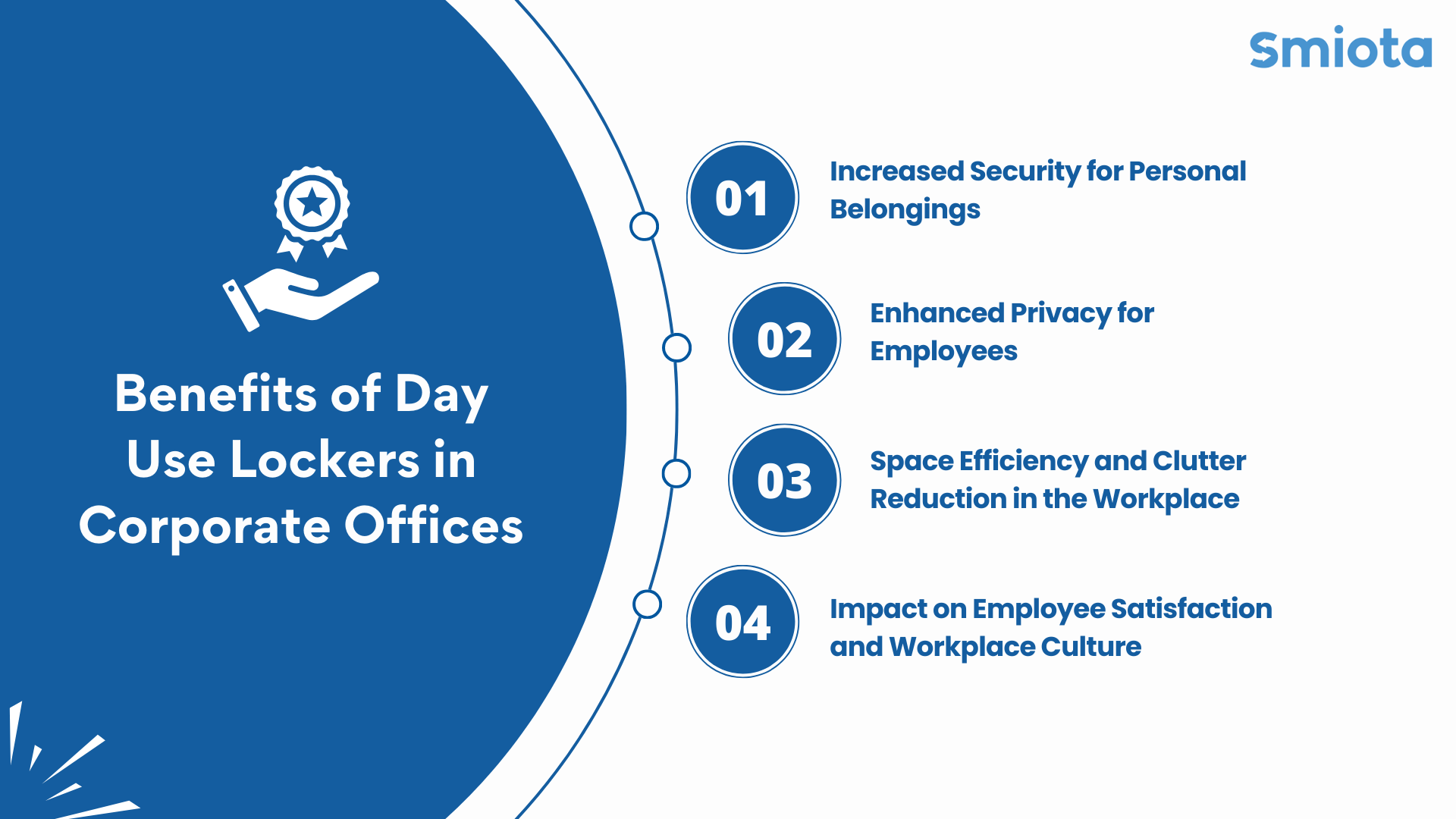
Increased Security for Personal Belongings
Day use Lockers provide a secure place for employees to store valuable items like laptops and personal documents, reducing concerns over theft and enabling better focus on work tasks.
Enhanced Privacy for Employees
These lockers ensure that personal and sensitive materials are kept confidential, especially in shared workspace settings. They safeguard employee privacy and prevent unauthorized access.
Space Efficiency and Clutter Reduction in the Workplace
Smart lockers help maintain a professional, organized workspace by minimizing desk clutter and optimizing the layout, which improves the overall environment without extensive renovations.
Impact on Employee Satisfaction and Workplace Culture
Providing Day use Lockers boosts employee satisfaction by creating a secure and stress-free work environment. This perceived commitment to employee needs helps attract and retain talent, fostering a culture of respect and professionalism.
Advantages of Day Use Lockers in Co-working Spaces
Co-working spaces thrive on being flexible and accommodating to diverse professionals, including freelancers and remote workers. Day use Lockers are crucial in enhancing these environments and making them more attractive and functional.
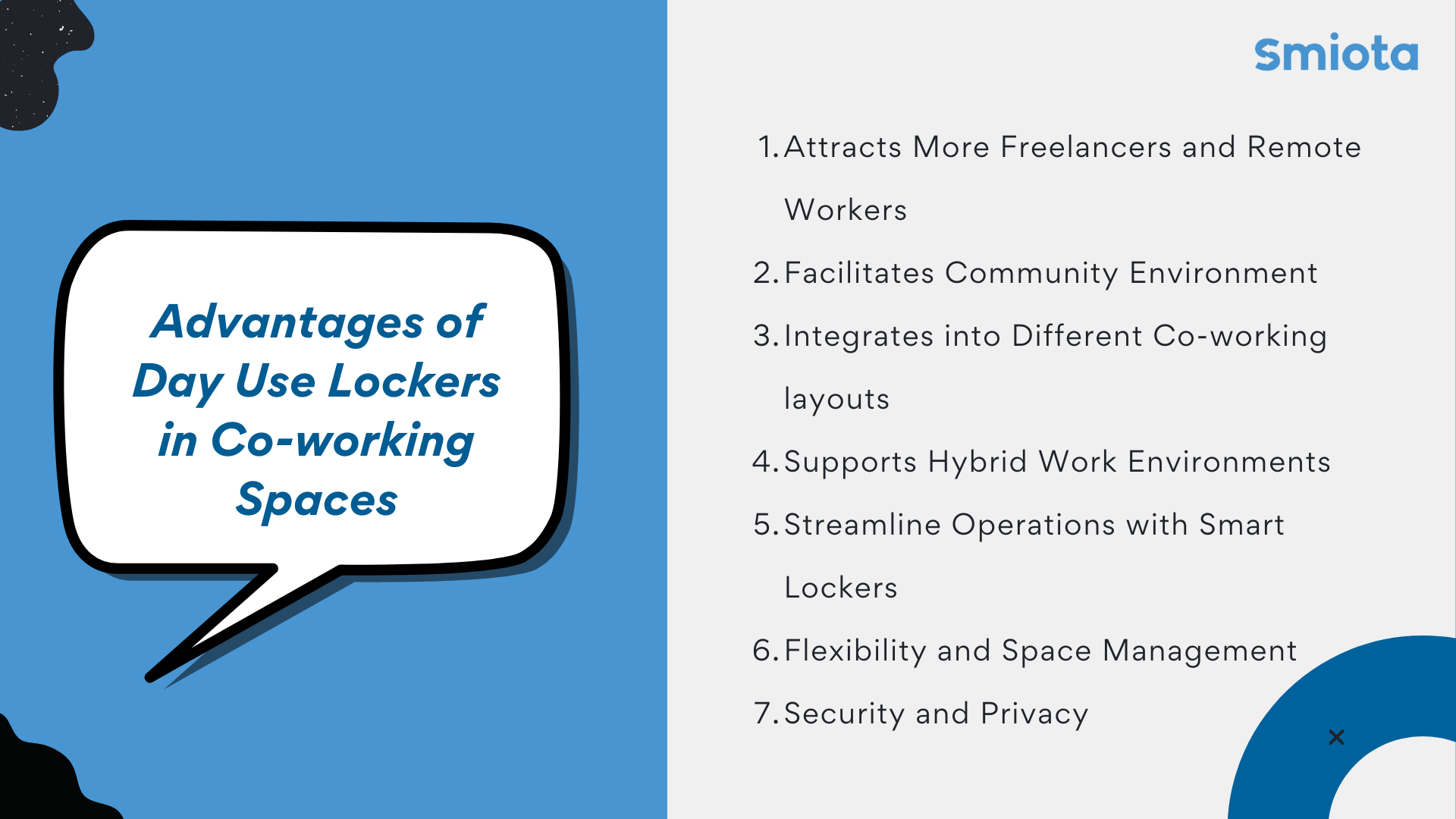
Attracting More Freelancers and Remote Workers
Co-working spaces attract freelancers and remote workers due to their flexibility and networking opportunities. Adding day use lockers increases these spaces’ appeal by providing secure storage for personal and professional items and allowing users to attend meetings or work in shared areas confidently.
Facilitation of a Community Environment
Smart lockers also promote a community atmosphere by offering a personal “home base” in a shared, transient setting. This personal space encourages longer commitments to the co-working space, helping to build a stable professional community.
Integration into Different Co-working Layouts
Co-working spaces, whether open-plan or segmented, can accommodate day use Lockers. These lockers fit seamlessly into any area and are available as compact units for smaller spaces or expansive, feature-rich options for larger areas. Their design and functionality are customizable to meet the aesthetic and practical needs of the space, boosting both utility and style.
Supporting Hybrid Work Environments
The shift towards hybrid work models has necessitated a rethink in how office spaces are structured. Day use lockers, particularly smart lockers, are pivotal in supporting these flexible work arrangements, streamlining operations, and ensuring security and privacy.
Streamlining Operations with Smart Lockers
Smart lockers offer digital access controls that facilitate seamless operations in hybrid environments. They can be assigned temporarily or permanently via an app, reducing administrative overhead and allowing easy access to employees on the days they work from the office. Additionally, these lockers can serve multiple users and purposes throughout the day, adapting to varied employee schedules and needs.
Flexibility and Space Management
In hybrid settings, the efficient use of space is crucial. Day use lockers help manage this by adapting to fluctuating in-office employee numbers. This flexibility supports a clean desk policy and maximizes the usable space, which is especially beneficial in offices where space is at a premium.
Security and Privacy
The importance of security and privacy escalates in hybrid work environments, where employees may not have fixed desks or may share workstations. Day use lockers provide a secure space, ensure confidentiality, and reduce the risk of data breaches or personal theft.
Smart lockers are highly beneficial to a modern working environment, especially Smiota’s range of lockers, which are designed to cater specifically to the needs of modern, flexible workspaces. Their ability to enhance and support flexible work arrangements makes them a key element in contemporary workplace design.
Smiota’s Day Use Lockers: Features and Benefits
Smiota offers advanced smart locker solutions tailored to the modern, hybrid workplace. They are designed with an acute understanding of corporate and co-working environments.
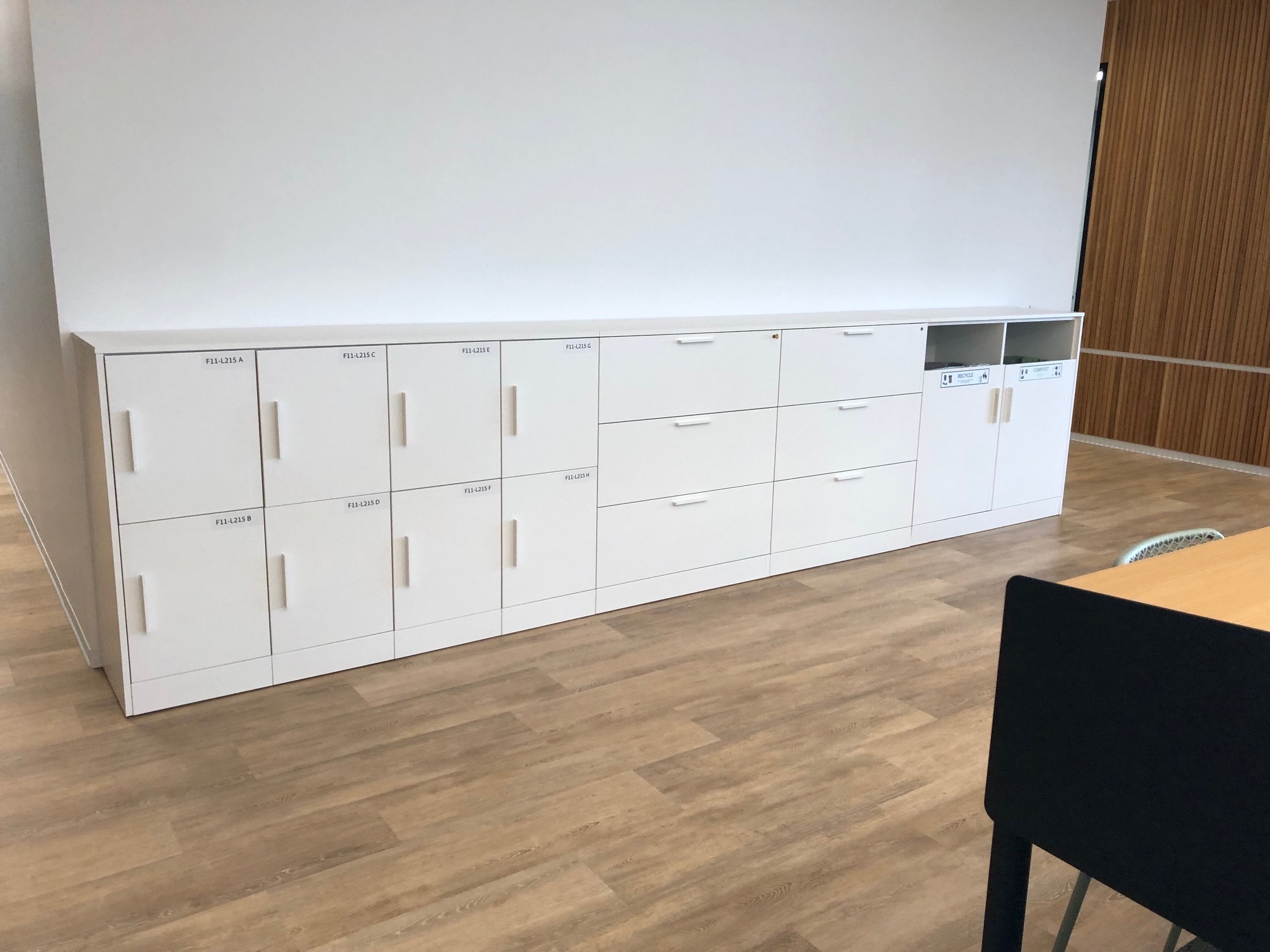
Key Features of Smiota’s Day Use Lockers
- User-Friendly Technology: Smiota’s lockers are integrated with their proprietary software, allowing users to operate them via a mobile app. This app-enabled access eliminates the need for physical keys or access cards, enhancing user convenience and security.
- Customization: One of the standout features of Smiota’s lockers is their high level of customization. Lockers can be tailored in size, number of compartments, and configuration to meet a facility’s specific needs. Additionally, the aesthetic aspect is not overlooked—Smiota offers customization options that include a range of finishes and colors to match the office’s design and brand style.
- Security Features: Enhanced security features ensure that belongings are safe. This includes robust construction, secure locking mechanisms, and sometimes even surveillance capabilities within the locker areas.
Benefits Across the Board
The benefits of implementing Smiota’s Day Use Lockers in a corporate, co-working, or hybrid environment extend beyond mere convenience:
- Aesthetic Enhancement: Customizable designs improve office aesthetics.
- Employee Satisfaction: Secure, flexible storage options boost morale and productivity.
- Space Optimization: Efficient use of space leads to cost savings, particularly in expensive markets.
- Environmental Impact: Promotes a shared-resource model, supporting sustainability efforts.
Installing Smiota’s lockers is straightforward. The company also helps choose the right configurations and locations for the installation and setup. Employees can reserve a locker via the mobile app, place their items inside, and lock it until they need to retrieve them. The lockers are designed for daily use, making them ideal for employees who do not have a permanent desk.
Smart solutions like Smiota’s Day Use Lockers streamline operations and enhance the work environment, making them perfect amenities for modern corporate offices and co-working spaces.
Conclusion
In an era where flexibility and security are paramount, Smiota’s day use lockers emerge as a stellar solution. With their robust features, ease of use, and customizable options, these lockers enhance operational efficiency, employee satisfaction, and space utilization, all while fitting seamlessly into the aesthetic of any workspace. As we embrace the evolving demands of modern workspaces, incorporating innovative solutions like Smiota’s lockers can significantly uplift the quality and functionality of office and co-working environments. This makes them not just an amenity but a necessity in today’s work culture.
The post Day Use Lockers: The Perfect Amenity for Corporate Offices and Co-working Spaces appeared first on Smiota.
]]>The post Role of Smart Lockers in Efficient Office Space Utilization appeared first on Smiota.
]]>Think about it – every square foot of your office holds potential, kind of like a puzzle waiting to be solved. Getting it right can lead to incredible benefits. For the modern workforce of today, fancy amenities, food, and fun are no longer great draws to drive employee productivity or organizational efficiency. Effective office space utilization is.
A 2019 survey by Gensler shows that a well-designed office can increase workplace productivity by up to 20%.
Therefore, businesses can put themselves at a competitive advantage if they carefully optimize their office space, fostering employee well-being and enhancing operational efficiency.
However, effective office space utilization is not merely about optimizing physical space; it’s about strategically designing and managing areas to enhance employee productivity, drive collaboration, and streamline operations.
At the heart of this transformation is innovative solutions like Smiota’s smart lockers. They redefine the way organizations utilize common spaces, particularly in areas such as mailrooms and package management zones. By replacing traditional storage methods with smart lockers, businesses are poised to unlock new levels of efficiency and productivity.
Effective Office Space Utilization – What Does it Entail?
By definition, office space utilization refers to the effective and efficient use of physical workspace within an organization. It involves analyzing how space is allocated and used to ensure that it meets the needs of the business and its employees, optimizing for productivity, cost-effectiveness, and employee satisfaction.
Optimizing office space requires strategic planning across various dimensions, including the type of organization, layout and design, equipment needs, and understanding of usage patterns.
Storage areas such as mailrooms particularly require careful consideration of equipment for sorting and distribution, ensuring they meet the evolving needs of the organization. It is important to recognize when and how each space is most frequently used, allowing for adjustments to layout and scheduling to avoid congestion and maximize efficiency.
Areas that come under office space include:
- Workstations and Desks: The primary areas range from individual cubicles to open-plan desks and flexible hot-desking areas for employees who do not need a permanent spot.
- Meeting Rooms and Conference Areas: Spaces designated for team meetings, client presentations, and video conferences.
- Common Areas and Break Rooms: These are spaces designed for employees to relax, take breaks, and for watercooler conversations.
- Technology and Infrastructure Rooms: Dedicated spaces for servers, network equipment, and other technological infrastructure that supports the organization’s operations.
- Mailroom/Package Management Areas: Although often overlooked, they comprise a critical component of office space. These designated areas are responsible for handling incoming and outgoing mail and packages, ensuring they are securely stored and distributed to the right people.
Effective management of office space involves leveraging the right mix of technology and innovation to maximize office space utilization and enhance employee experiences. For instance, integrating smart lockers in the mailroom/package management area can streamline the handling and distribution of mail and packages, reducing clutter and improving security and accessibility.
Why Does Office Space Utilization Matter?
Efficient office space utilization directly translates to cost savings. Here is how.
By optimizing office space layout, organizations are not just creating a great environment; they are also ensuring they are not paying for unused or underutilized space. In a way, it’s like finding extra money in their budget to invest back into their teams or for technology upgrades. In this regard, integrating solutions like Smiota’s smart lockers can transform underutilized corners into secure, versatile areas for package and mail management, making every inch count.
Getting office space utilization wrong or not putting much thought into it can probably set up an organization for failure. It’s a no-brainer that crowded spaces can stifle productivity, while underused areas bleed resources. The key lies in finding that sweet spot where every area serves a purpose, and advanced technology solutions like smart lockers come into play in order to achieve the balance.
How Can Smart Lockers Maximize Office Space Utilization?
Let’s explore the role smart lockers play in revolutionizing office space utilization by offering versatile, efficient solutions for managing mailroom areas and beyond. Here are five tangible use cases that highlight their effectiveness in maximizing office space utilization.
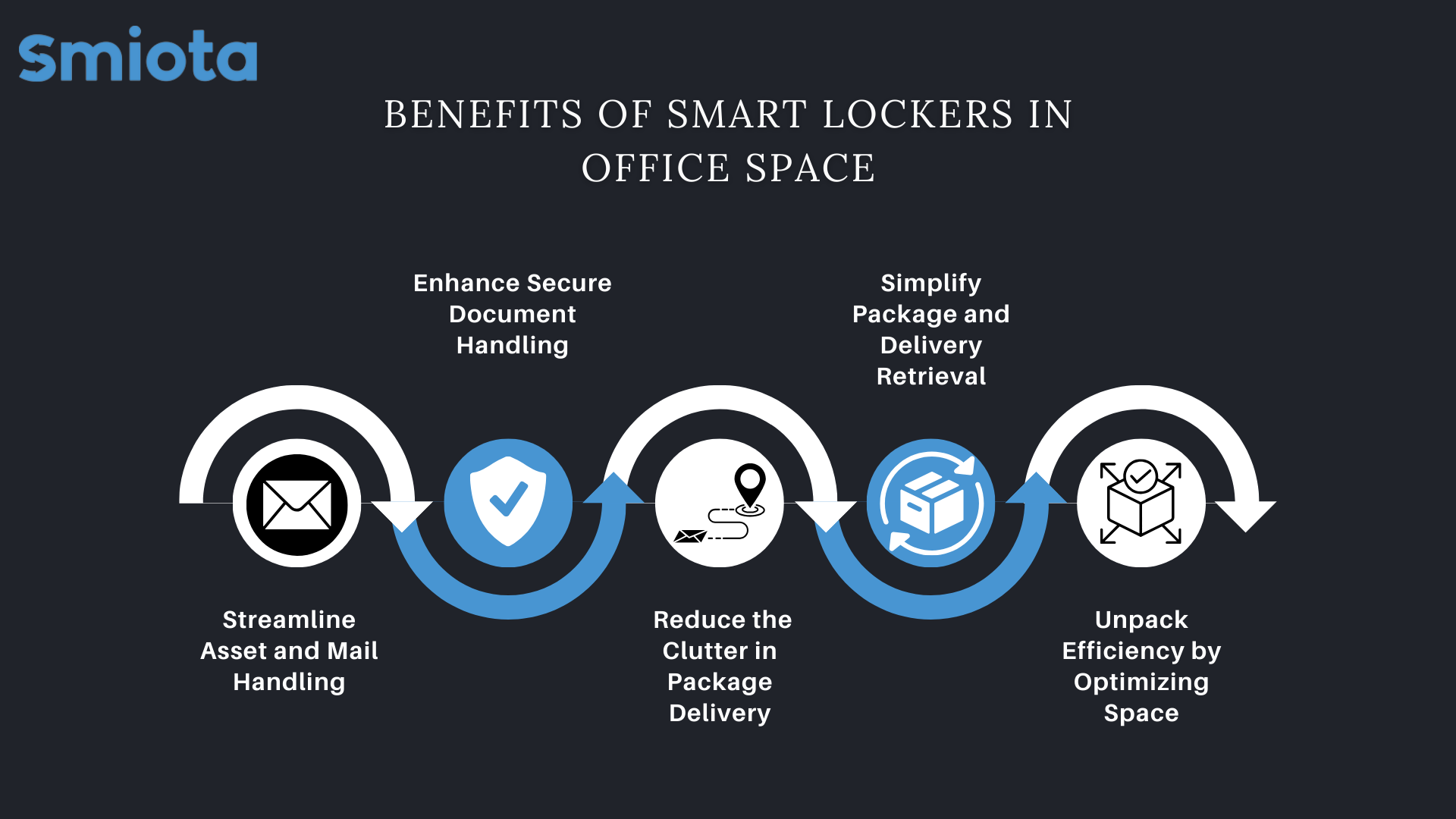
1. Streamline Asset and Mail Handling
A critical operational aspect of an office layout is in its mailroom spaces. Smart lockers in mailrooms play a crucial role in transforming the way mail and assets are managed. By significantly reducing the time IT managers and employees spend on tracking and distributing mail and equipment, smart lockers ensure that items are not only securely stored but also readily accessible. This ease of access eliminates the need for extensive coordination, allowing for a smoother, more efficient workflow. Tracking deliveries and managing vendor interactions become effortless with smart locker systems. The ability to monitor package movements provides transparency and accountability, particularly crucial for high-value or sensitive items. Moreover, the system simplifies the process for vendors and couriers, enabling secure and verified drop-offs and pickups without the need for direct oversight.
2. Enhance Secure Document Handling
In industries where sensitive documents are frequently exchanged, smart lockers provide a secure and trackable method for document delivery and storage. This use case is particularly relevant in legal, financial, and healthcare sectors. By using smart lockers for document handling, offices can reduce the need for large, dedicated storage areas and secure rooms, thus optimizing office space for more critical functions.
3. Reduce the Clutter in Package Delivery
Smart lockers streamline the handling of these deliveries by providing a secure location for packages until employees can pick them up. This system reduces clutter in the mailroom and ensures that the area remains organized and efficient, freeing up space and resources that can be used for other purposes.
4. Simplify Package and Delivery Retrieval
Gone are the days of missed deliveries and waiting around for packages. With smart lockers, employees are instantly notified and can pick up their deliveries at their convenience, without any wait time. This hassle-free process not only enhances productivity but also contributes to a more streamlined mailroom operation, freeing up valuable space and resources.
5. Unpack Efficiency by Optimizing Space
Traditional mailroom setups often lead to inefficiencies, with parcels and assets taking up precious space. Smiota’s smart locker solutions address this challenge head-on by enabling multiple employees to use the same locker unit when available. This dynamic approach to locker allocation drastically reduces the need for a vast number of lockers, thereby minimizing the physical and financial footprint of mailroom operations.
Smiota’s Smart Lockers for Office Space Utilization – A Feature-Rich & Benefit-Laden Solution
Smiota’s smart lockers are significantly improving the dynamics of office space utilization and office operations. Let’s look at some of their highlights, and how they help optimize mailroom operations, and in turn overall office space utilization.
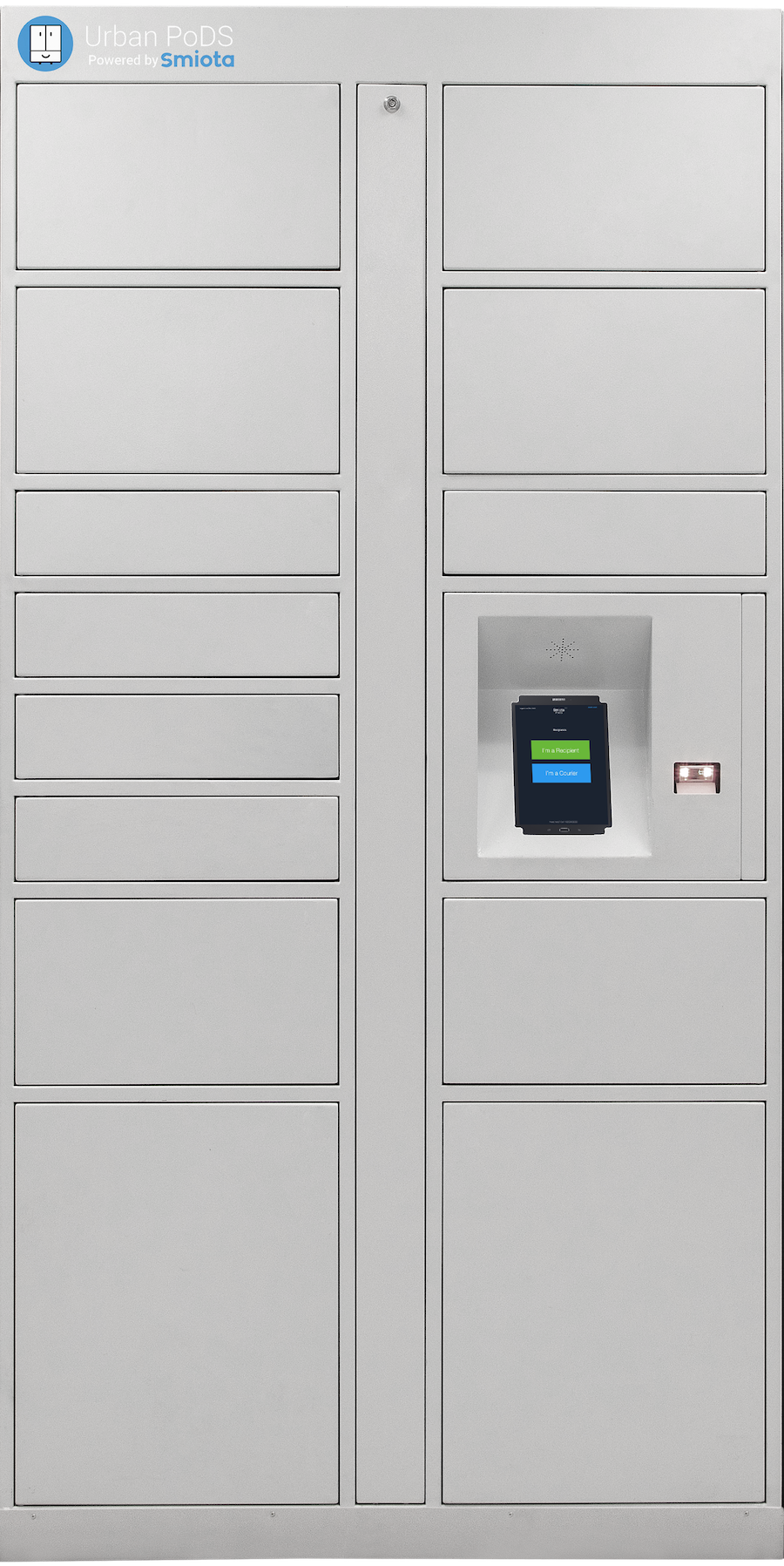
- Real-Time Occupancy and Vacancy Status: Smiota’s smart lockers are built to provide real-time information on which lockers are occupied and which are available. This feature is enabled through sophisticated sensors and software that monitor locker usage. This immediate visibility helps prevent bottlenecks during peak package delivery times and optimizes the user experience by reducing wait times for locker assignments.
- Instant Notifications: The integration of a mailroom app within the Smiota ecosystem facilitates immediate communication with employees upon the arrival of their packages. This prompt notification system ensures quick retrieval, which, in turn, minimizes the time packages occupy locker space, thereby optimizing locker usage.
- Analytics and reporting: In addition to the hardware solution, Smiota also offers detailed analytics and reporting for administrators to get a complete view of the packages exchanged.
The Bottomline
As we unpack the advantages of effective office space utilization, it is becoming increasingly clear that smart lockers are handy tools that go beyond offering basic storage – they double down as strategic tools in enhancing mailroom efficiency and supporting various facets of office space management.
In an era where technology dictates the way we operate, Smiota’s smart lockers provide value as the intersection of innovation and security, addressing contemporary office space challenges. Say yes to a straightforward solution that makes a big difference to the dynamics of office space utilization. Get in touch with us today to transform your office space.
The post Role of Smart Lockers in Efficient Office Space Utilization appeared first on Smiota.
]]>The post Smart Lockers for Office Space – How They Enhance Employee Effectiveness appeared first on Smiota.
]]>From providing secure personal storage to facilitating seamless delivery and exchange of work materials, smart lockers are reshaping conventional offices into more organized, efficient, and employee-friendly spaces. These smart lockers contribute significantly to enhancing overall workplace efficiency and effectiveness, especially in the case of common lockers utilized collectively within an office space.
Here, we will explore the myriad ways in which smart lockers are not just storage solutions but pivotal tools in enhancing the overall effectiveness and dynamics of modern office life. Let’s start with understanding the role and importance of smart lockers and how they differ from traditional lockers in today’s workplace.
Lockers for Office Space
Lockers in an office setting have traditionally been simple, key or combination lock-based storage spaces. They serve as a secure place for employees to store various belongings, documents, or equipment. They typically require manual management, which can be time-consuming and less secure.
Transitioning from traditional to modern solutions, smart lockers represent an innovative leap. These lockers are equipped with electronic locking mechanisms, controlled via a central system, and often incorporate features like remote access, tracking, and automated notifications.
Simply put, smart lockers are automated storage systems designed for the secure and efficient handling of items in a shared space. Unlike traditional lockers, they are equipped with advanced technologies like RFID, biometrics, or PIN code access, providing a more personalized and secure storage experience.
Traditional Office Lockers vs. Smart Lockers
When comparing traditional office lockers with smart lockers, several key differences emerge in terms of technology, security, convenience, and management.
Traditional Office Lockers
- Mechanical Locks: Traditional lockers typically use mechanical locks, such as key locks or combination dials. This simplicity can be both a benefit and a limitation. It’s straightforward but lacks advanced security features.
- Manual Management: Assigning lockers and managing keys or combinations is often done manually, which can be time-consuming, especially in larger organizations.
- Privacy and Security: While traditional lockers offer a basic level of security, they are more vulnerable to break-ins compared to their high-tech counterparts.
- Cost-Effective: Generally, they are more affordable upfront compared to smart lockers. This makes them a budget-friendly option for many businesses.
- Limited Features: Apart from providing storage space, traditional lockers do not offer additional features such as tracking usage or integrating with other office systems.
Smart Lockers
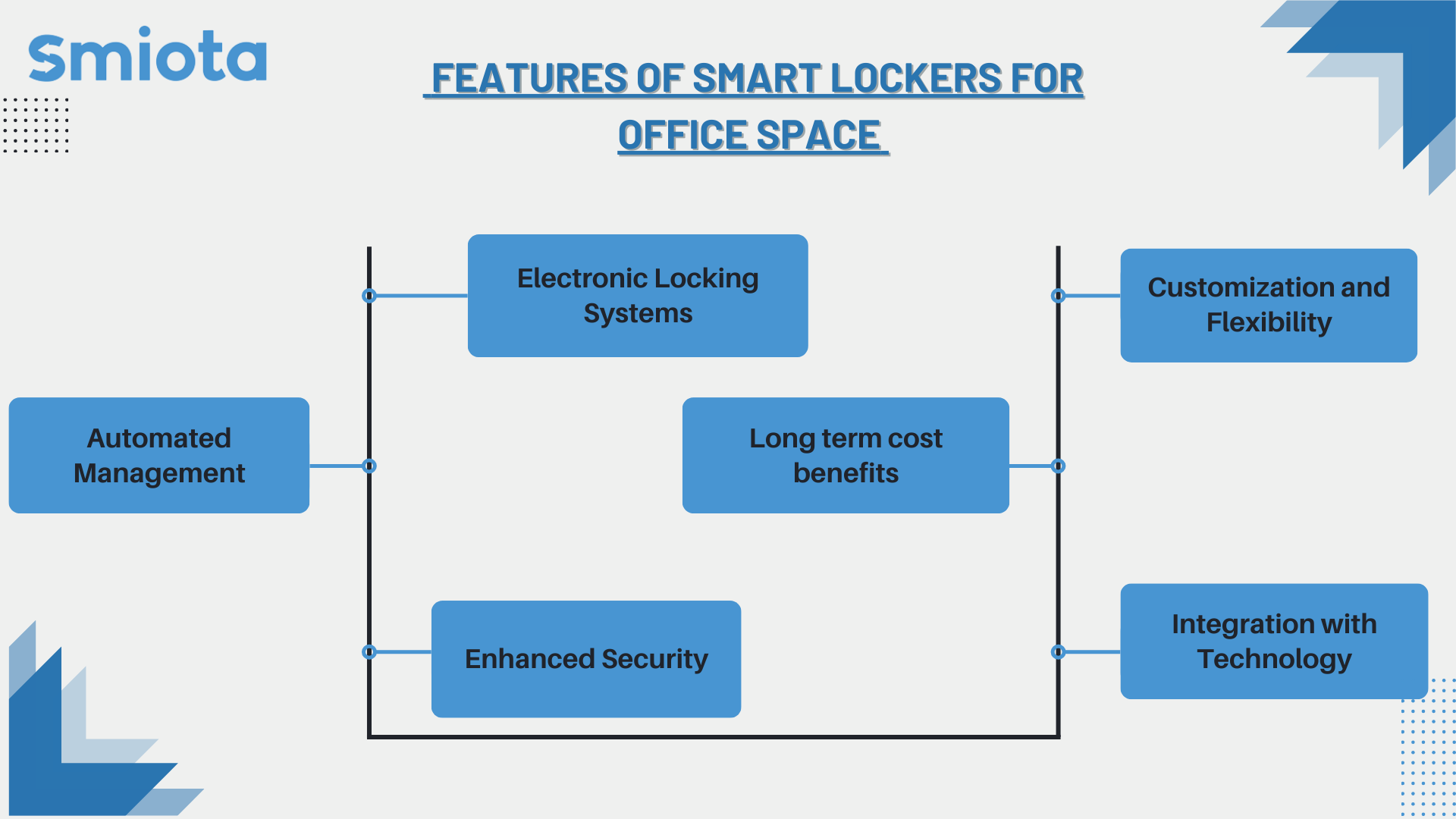
- Electronic Locking Systems: Smart lockers are equipped with electronic locks that can be opened with PIN codes, RFID cards, or even biometrics. This enhances security and allows for keyless entry.
- Automated Management: They can be integrated with office management systems, allowing for automatic assignment, tracking, and monitoring of locker usage, significantly reducing administrative burden.
- Enhanced Security: Smart lockers often come with advanced security features like audit trails, which record who accessed the locker and when, adding an extra layer of security and accountability.
- Customization and Flexibility: They can be programmed for different access levels and time-restricted access or even used for temporary assignments, offering greater flexibility than traditional lockers.
- Long-term cost benefits: The advanced technology in smart lockers makes them more expensive than traditional lockers. However, the long-term benefits and efficiencies can offset this initial investment.
- Integration with Technology: Smart lockers can be integrated with other systems like HR software, security systems, or mobile apps, offering a more cohesive and streamlined office experience.
With greater clarity on the features and benefits of smart lockers, we now see how they can improve employee effectiveness in an office setting.
How Smart Lockers in an Office Can Improve Employee Effectiveness
These innovative systems streamline everyday office operations by providing a secure and automated way of handling personal storage, deliveries, and document exchanges. As we explore their benefits, it’s clear that smart lockers are more than just storage units; they are a key to unlocking greater productivity and organization in the workplace. Let’s see how.
Smart Lockers Result in Time Savings in Asset Management
Smart lockers streamline the asset management process for IT managers and employees alike. They reduce the time spent on tracking and distributing equipment, as items can be securely stored and easily accessed without extensive coordination.
Easy Package and Delivery Pickup
Smart lockers facilitate a hassle-free process for package and delivery pickups. Employees can receive notifications and access their packages at their convenience, eliminating the need for coordination and wait times.
Better Efficiency and Space Management
Traditional lockers involve allocating a locker permanently to an employee. Whether they are using it or not, the locker box remains blocked. This is an inefficient utilization of the locker. In addition, this would also mean that you need one locker compartment for every employee in the organization, which in turn would require a large locker setup that occupies a ton of space. Not to mention the additional cost associated with it.
Smart lockers have a better solution. With the ability for multiple employees to use the same locker box when it is free, smart lockers facilitate efficient utilization, thereby reducing the total space required.
No Theft or Misplacement of Packages and Assets
The enhanced security features of smart lockers significantly reduce the risks of theft or misplacement. With individual access codes and tracking, items are securely stored until retrieved by the authorized person.
Easy Tracking of Packages with Smart Lockers
Smart lockers offer an efficient way to track packages, providing transparency and accountability in the delivery process. This feature is particularly beneficial for tracking high-value or sensitive items.
Effective Vendor Delivery and Courier Management
These lockers simplify the process for vendors and couriers, allowing for secure and verified drop-offs and pickups. This system ensures that deliveries are efficiently managed without requiring physical oversight.
Having explored the significant ways smart lockers can enhance employee effectiveness in the office, we come to a specific example of Smiota’s Lockers and see how these advanced lockers are changing the way offices operate.
Smiota’s Lockers for Office Space – A New-Age Smart Locker Solution
Smiota’s smart lockers represent a cutting-edge solution in this domain. They offer robust security, seamless integration with office systems, and user-friendly interfaces, making them ideal for modern workplaces looking to enhance efficiency and security. Below are only a few of the advanced features that are integral to Smiota’s smart lockers.
- Smart Storage Efficiency: Smiota’s lockers streamline storing and retrieving work equipment, offering 24/7 access for improved workplace efficiency.
- Enhanced Office Security: Encrypted access in Smiota’s lockers provides secure storage for sensitive items, ensuring employee peace of mind.
- Flexible Work Support: Smiota’s round-the-clock lockers cater to dynamic and hybrid workplaces, perfect for hot-desking setups.
- Organizational Improvement: Smiota’s lockers create an organized, disciplined work environment, enhancing productivity.
- Easy Office Integration: Smiota’s lockers are designed for easy incorporation into existing office systems, simplifying management and operations.
- Eco-Friendly Solution: With digital access and energy efficiency, Smiota’s lockers support eco-friendly office practices by reducing paper use.
Conclusion
Embracing smart lockers in our office landscapes is not just an upgrade—it’s a transformative leap into heightened efficiency, robust security, and unparalleled work efficacy. These cutting-edge solutions are catalysts for streamlining operations and elevating employee productivity to new heights. In an era where technology reshapes our workplaces, smart lockers emerge as the beacon of innovation, addressing contemporary office challenges with finesse. In harnessing their potential, we unlock the door to an optimized, satisfied, and forward-thinking workplace, ready to thrive in the ever-evolving corporate world.
The post Smart Lockers for Office Space – How They Enhance Employee Effectiveness appeared first on Smiota.
]]>