The post From Reservation to Retrieval: The Journey of a Book Through a Smart Locker System appeared first on Smiota.
]]>A student remembers they need a textbook for tomorrow’s lecture. A professional wants to pick up a book after a long workday. A researcher needs quick access to a reference but cannot align their schedule with library hours.
What should be a simple task often turns into a frustrating experience.
Libraries, despite being essential spaces for learning and discovery, still operate within constraints. Fixed timings, long queues, manual processes, and occasional mismanagement of reserved books can create unnecessary friction. For users who are already managing packed schedules, even small delays feel significant.
But what if accessing a book felt as seamless as ordering something online?
This is where smart locker systems step in. Not loudly, not disruptively, but in a way that quietly transforms the experience from end to end.
To understand this better, let’s follow the journey of a single book. From the moment it is reserved to the moment it is picked up and returned; every step tells a story of how efficiency, convenience, and technology come together.
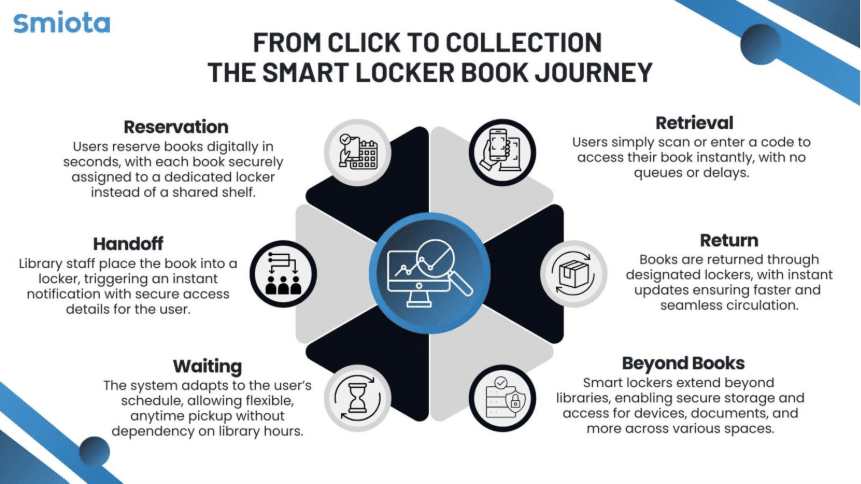
Chapter 1: The Reservation Stage
The journey starts with intent and a few clicks.
Instead of walking through rows of shelves, the user opens a digital platform. They search for the book, check availability, and place a reservation within seconds. It is quick, precise, and far more efficient than traditional browsing.
But in many libraries, this is where the efficiency stops.
Reserved books are often placed on shared shelves. Multiple users, multiple requests, and limited tracking can lead to confusion. Books may be misplaced, delayed, or difficult to locate when the user arrives.
Smart lockers introduce a simple yet powerful shift.
Instead of placing reserved books in a common area, each book is assigned a specific compartment. This creates structure. The book is no longer just “reserved” but securely allocated to a particular user.
This small change sets the tone for the entire journey. It replaces uncertainty with clarity and ensures that the process begins on a strong, reliable note.
Chapter 2: The Handoff Process
Once the reservation is in place, the responsibility shifts to the library staff.
They locate the book and prepare it for the next step. In traditional systems, this might involve manual coordination, verbal confirmations, or physical handovers that depend on timing.
With smart lockers, the process becomes far more streamlined.
The staff member places the book into a designated locker compartment. The system connects this physical action with digital tracking. The moment the locker is closed, the system updates automatically.
The user receives a notification.
It might be a message, an email, or an app alert. Along with it comes a secure access method such as a PIN or QR code. There is no ambiguity. The user knows exactly when their book is ready and how to access it.
This step removes one of the biggest pain points in traditional systems, which is the lack of real time communication. Instead of guessing or following up, the user stays informed without any effort.
Chapter 3: The Waiting Experience
Waiting is often where traditional systems create the most inconvenience.
Users must align their schedules with library hours. If they arrive late, they may miss their window. If they are too early, the book might not be ready. This dependency on timing can make even a simple pickup feel like a task.
Smart lockers completely change this dynamic.
The book waits for the user, not the other way around.
Whether it is early morning, late evening, or even outside standard operating hours, the locker remains accessible. Users can pick up their books when it fits naturally into their day.
This flexibility is more than just convenience. It gives users control.
A student can pick up a book after a late study session. A professional can stop by on their way home without worrying about closing times. The process adapts to their routine instead of disrupting it.
This shift, though subtle, has a significant impact on user satisfaction. It turns what used to be a rigid system into a flexible experience.
Chapter 4: The Retrieval Moment
Now comes the moment that defines the entire journey.
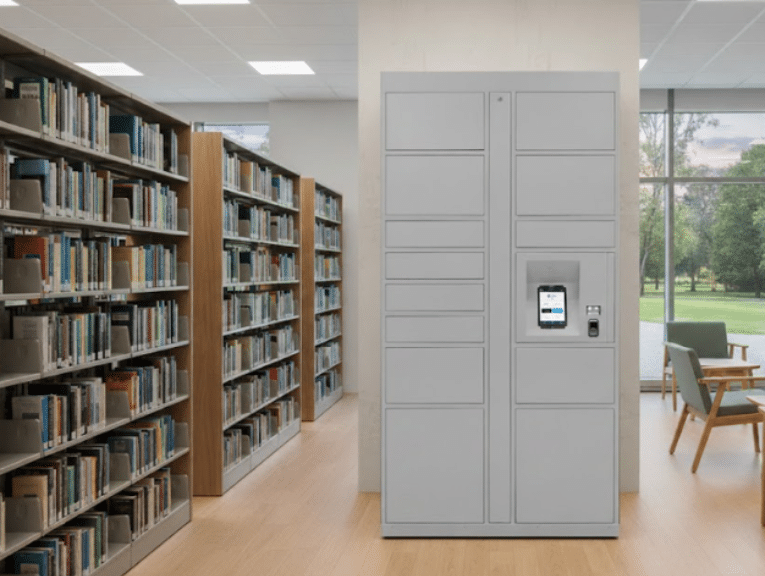
The user arrives at the locker system. There are no lines. No waiting counters. No need to interact with staff unless they choose to.
They enter their PIN or scan their QR code. Within seconds, the locker opens and the book is right there.
This interaction is simple, but it carries a sense of efficiency that traditional systems often lack. The entire process takes only a few seconds, yet it eliminates delays that could otherwise take several minutes or more.
Behind the scenes, the system records everything. It logs the transaction, updates the status, and maintains a clear record of who accessed what and when.
For the user, it feels effortless. For the organization, it ensures accountability and accuracy. This is where the true value of smart lockers becomes visible. They remove friction without adding complexity.
Chapter 5: The Return Process
Every journey eventually comes full circle.
After using the book, the user needs to return it. Traditionally, this involves visiting the return desk, waiting in line, and relying on staff to process the return.
Smart lockers simplify this step just as effectively as they simplify pickup.
Users can drop the book into a designated return compartment. The system logs the return instantly and updates the inventory. There is no need for manual intervention or extended waiting.
This creates a continuous and efficient cycle. Books move faster between users. Staff spend less time managing routine transactions. The entire system operates more smoothly.
What was once a multi-step, time consuming process becomes quick and seamless.
Chapter 6: Beyond Books
While this journey focuses on books, the potential of smart lockers goes far beyond library systems.
In universities, they can be used to store laptops, lab equipment, and important documents. In offices, they manage internal asset distribution and package deliveries. In residential spaces, they simplify parcel management for residents.
The core idea remains the same. Create a secure, automated, and user-friendly system for handling physical items.
This adaptability makes smart lockers a valuable addition across multiple environments. They are not limited to one use case. Instead, they evolve with the needs of the organization.
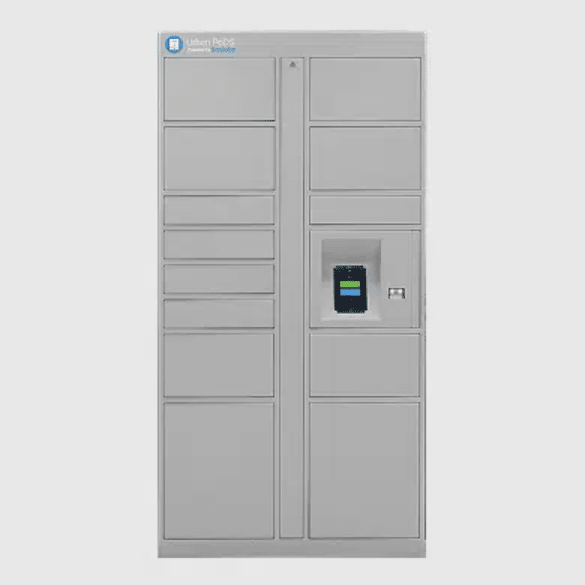
Enabling the Experience with Smiota Smart Lockers
While the concept of smart lockers is powerful, the real impact comes from how well the system is designed and implemented.
This is where Smiota smart lockers play a critical role.
Smiota brings together technology, usability, and scalability to support the entire journey from reservation to retrieval. It ensures that every step is connected, visible, and easy to manage.
With features like real time tracking, secure access controls, and seamless system integration, Smiota enables organizations to deliver a consistent and reliable experience. It reduces manual effort, minimizes errors, and improves operational efficiency.
At the same time, it keeps the user experience simple and intuitive.
Whether it is a library, a university campus, or a corporate environment, Smiota smart lockers adapt to different needs without adding complexity. They act as the backbone that supports a smooth and efficient system.
Conclusion
The journey of a book may seem simple at first glance. But when you break it down, it reveals how many steps are involved in making access smooth and reliable.
From reservation to retrieval and return, each stage plays a role in shaping the user experience.
Smart locker systems transform this journey into something far more efficient and user focused. They remove delays, reduce dependency on timing, and create a sense of ease that users appreciate instantly.
What was once a process filled with small frustrations becomes something seamless and intuitive. And in a world where time matters more than ever, this shift is not just beneficial. It is necessary.
Access to books and knowledge should never feel complicated. It should feel natural, flexible, and always within reach.
The post From Reservation to Retrieval: The Journey of a Book Through a Smart Locker System appeared first on Smiota.
]]>The post How Smart Lockers Help Rural Libraries Expand Their Reach appeared first on Smiota.
]]>For many residents, visiting the library can mean a long drive, arranging transportation, or adjusting to restricted operating hours. Over time, these barriers reduce engagement – even among people who value the library deeply.
Smart lockers offer a practical solution. By enabling secure, self-service pickup at flexible times and locations, they allow rural libraries to extend access without constructing new branches or increasing payroll. Instead of expanding buildings, libraries expand reach.
The Core Challenges Rural Libraries Face
Rural libraries operate in conditions that differ significantly from urban systems. Their challenges are shaped by geography, funding limitations, and evolving patron expectations.
Geographic barriers are often the most visible obstacle. A single rural library may serve multiple towns or even an entire county. For many patrons, accessing services requires significant time commitment.
- Residents may live 20, 30, or even 40 minutes away
- Weather conditions can make travel unsafe or unreliable
- Unpaved roads add additional difficulty
- Public transportation is often limited or unavailable
- Seniors and families with one shared vehicle face added constraints
Budget and staffing limitations further complicate access in rural libraries. Many operate with small teams, where staff members juggle multiple responsibilities – from circulation and program management to technology support and community outreach. With limited personnel, expanding services through traditional methods becomes increasingly difficult.
Increasing access often requires additional payroll, higher utility expenses, extended security coverage, and long-term operational commitments. For most rural libraries working within tight municipal budgets, these added costs are rarely feasible or sustainable.
At the same time, patron expectations continue to evolve. Even in rural communities, convenience and flexibility matter more than ever. Students need after-hours access to complete assignments and research. Shift workers may only be available late at night. Working families value flexible pickup options that fit around busy schedules. Patrons also expect streamlined, user-friendly services that mirror the convenience they experience elsewhere.
The central challenge becomes clear: how can rural libraries expand access and meet modern expectations without significantly increasing costs?
What Smart Lockers Do
Smart lockers are secure, electronically controlled compartments that can integrate with a ILS (Integrated Library System). When a patron places a hold, staff assign the item to a locker. The patron receives a secure code or digital notification and retrieves the material at a convenient time.
The process is simple:
- A hold is placed online or in person.
- Staff prepare the item and load it into a locker compartment.
- The patron receives an access code.
- Pickup happens independently – often 24/7.
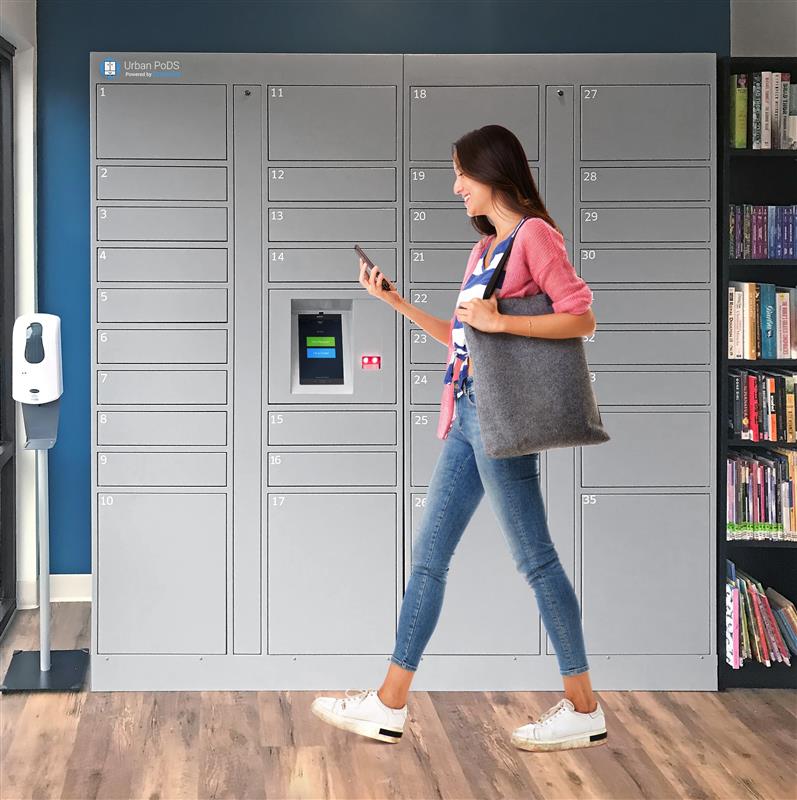
This system separates material access from staffed service hours. The library building may close at 5 or 6 p.m., but access to requested materials continues.
Extending Service Without Extending Hours
One of the most immediate benefits of smart lockers is the ability to provide round-the-clock pickup without keeping the entire facility open.
For rural libraries, this means:
- Serving shift workers who cannot visit during daytime hours
- Supporting students with evening commitments
- Reducing congestion during peak times
- Offering convenience without additional staffing
Instead of increasing payroll or stretching staff schedules, libraries create flexible access points that operate independently.
This is especially impactful in small communities where even minor scheduling conflicts can prevent visits altogether.
Creating Satellite Access Points
Beyond after-hours access, smart lockers enable something even more transformative: distributed service locations.
Rather than constructing new branches, libraries can install lockers in strategic community locations such as:
- Municipal buildings
- Community centers
- Local grocery stores
- Schools or colleges
These locker installations function like “micro-branches,” extending the library’s presence beyond its main building. Patrons in neighboring towns can place holds and retrieve materials locally, eliminating the need to travel long distances to access services.
This approach significantly reduces travel time for remote residents while increasing the library’s visibility in surrounding communities. Because these locations do not require permanent staffing, they avoid the operational complexities associated with traditional branches. The overall costs are also far lower than constructing and maintaining a new facility.
In effect, the library transforms from a single physical destination into a distributed network of access points, bringing services closer to the communities it serves.
Improving Equity and Access
Distance often creates hidden inequities. Seniors with mobility limitations, families without reliable transportation, and residents in remote agricultural areas may engage less simply because visiting the library is inconvenient.
Smart lockers help level the playing field. By positioning pickup points closer to where people live and work, libraries reduce dependence on transportation and fixed schedules.
This expanded accessibility is particularly important for:
- Technology lending programs
- Educational materials for students
- Workforce development resources
- Interlibrary loan items
When access becomes easier, participation increases – and so does community impact.
A Cost-Effective Growth Strategy
For rural systems operating within strict financial limits, smart lockers provide a scalable alternative to traditional expansion. Compared to opening a new branch, lockers require significantly fewer resources. They involve a lower upfront investment, do not require full-time staffing commitments, and incur minimal additional utility costs. Additionally, lockers typically demand limited long-term maintenance, making them a more cost-efficient option.
They also increase the efficiency of existing collections. When pickup becomes more convenient, hold fulfillment improves and circulation rates often rise.
From a strategic standpoint, lockers allow rural libraries to expand services without committing to long-term structural costs. They offer flexibility – something especially valuable in small communities where budgets fluctuate.
Supporting More Than Books
While often associated with book pickup, smart lockers can support a wide range of materials.
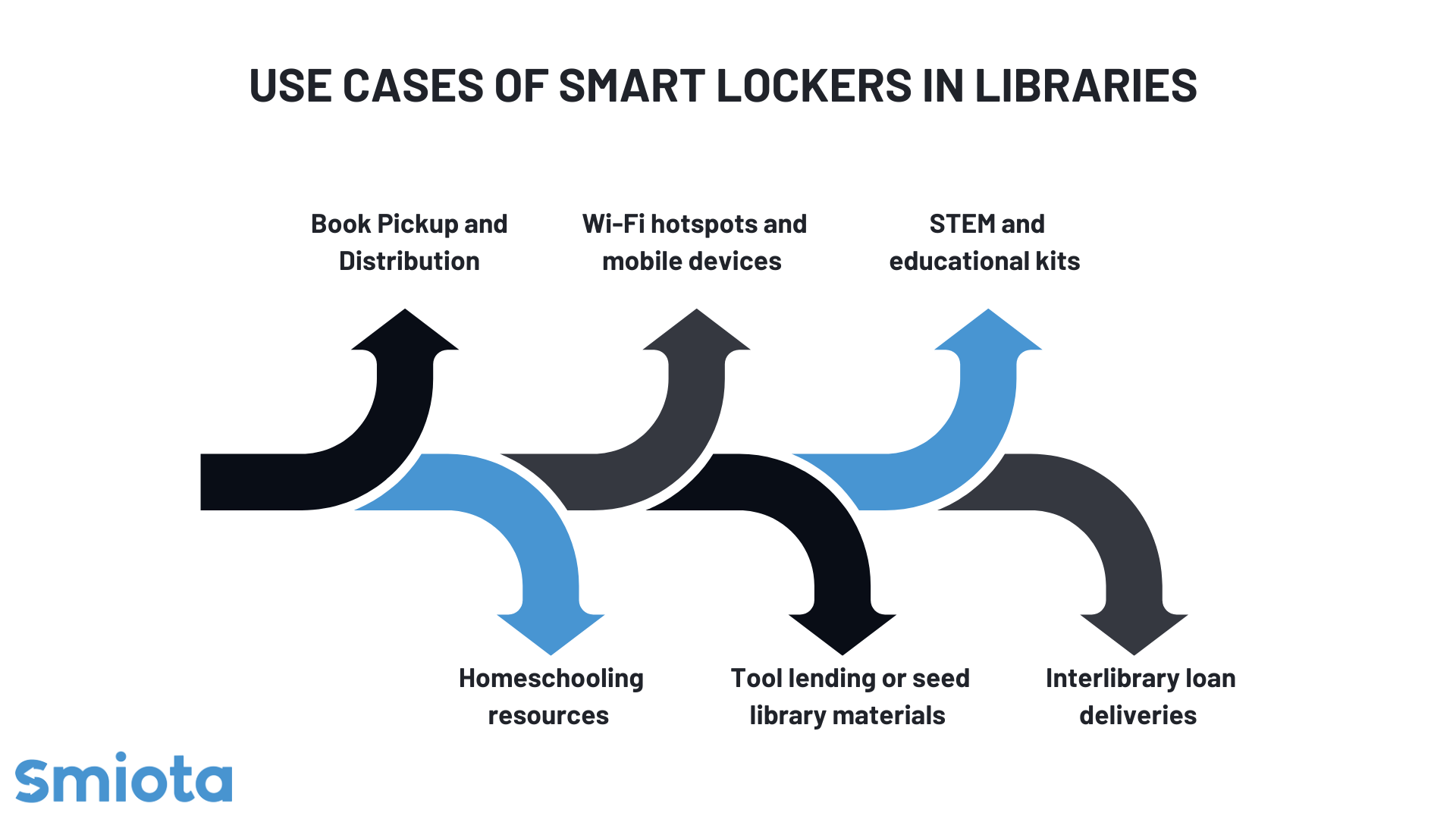
They are particularly valuable for distributing:
- Wi-Fi hotspots and mobile devices
- STEM and educational kits
- Homeschooling resources
- Tool lending or seed library materials
- Interlibrary loan deliveries
In rural areas where broadband access and educational resources may be limited, this capability significantly strengthens the library’s role as a community support center.
Increasing Community Visibility
Strategically placed lockers also reinforce the library’s presence. When installed in high-traffic areas, they act as constant reminders that the library is active, modern, and accessible.
This visibility can help encourage new memberships, strengthen partnerships with local businesses, and increase awareness of additional services offered by the library. It also helps position the library as an innovative leader within the community.
Implementation Considerations
Successful deployment requires thoughtful planning. Rural libraries should evaluate:
- Secure, accessible locations
- Reliable power and internet connectivity
- Weather protection and lighting
- Clear communication to patrons
- A phased rollout approach
Starting with one pilot location allows libraries to measure demand and refine processes before expanding further.
Conclusion: Expanding Reach Without Expanding Buildings
Rural libraries face undeniable structural challenges – geographic spread, limited budgets, and small teams. Yet their mission remains the same: to provide equitable access to information, education, and opportunity.
Smart lockers offer a practical way to meet that mission. They extend service hours, reduce travel barriers, create satellite access points, and support diverse lending programs – all without major infrastructure investment.
In communities where distance can limit opportunity, smart lockers bring the library closer to the people it serves. Instead of asking patrons to travel farther, rural libraries can now extend their reach outward – one secure pickup point at a time.
The post How Smart Lockers Help Rural Libraries Expand Their Reach appeared first on Smiota.
]]>The post The Future of Library Convenience: Integrating Smart Lockers with ILS appeared first on Smiota.
]]>The hold shelf is full, staff are rushing between circulation tasks, and patrons keep asking the same question: “Is my item ready yet?” Packages and borrowed items pile up behind the desk. Students sprint across campus trying to pick up materials before closing. Working parents arrive minutes too late and leave disappointed. Staff juggle manual logs, sticky notes, and constant interruptions.
This scene isn’t unique, it’s happening everywhere.
As demand for materials grows, library hours stretch thinner, and patrons expect more flexibility, traditional pickup and return workflows can’t keep up. People want convenience. They want 24/7 access. They want secure, contactless pickup that fits their schedules, not the other way around.
And this is where technology quietly steps in.
Integrating smart lockers with an Integrated Library System (ILS) is transforming the way libraries fulfill holds, manage returns, handle reserves, and support patrons’ ever-changing needs. It creates a seamless, automated experience that reduces staff workload and gives patrons the freedom to pick up materials anytime.
In this blog, we explore how Smiota’s smart lockers integrate with various ILS software and how this combination is shaping the future of library operations.
Why Traditional Delivery & Pickup Workflows Are No Longer Enough
Libraries are built on service, but outdated processes can unintentionally slow everything down. Here are the everyday frustrations you’ve probably experienced:
- Missed pickups and frustrated patrons: Patrons often miss their holds simply because the library closes before they can reach it.
- Crowded hold shelves: With rising circulation volume, shelves overflow quickly and become difficult to manage.
- Long queues at service desks: Staff handle constant pickups, which reduces time for programming, assistance, and outreach.
- Manual tracking and outdated logbooks: From paper forms to printed slips, each step adds friction and increases the risk of error.
- Mailroom-style chaos: Items get shuffled during busy periods, leading to misplaced materials or forgotten holds.
- No real visibility: Staff can’t always confirm who picked up what, or when, making accountability tricky.
And with e-commerce influencing patron expectations and campuses relying on libraries for equipment lending, internal deliveries and logistics have expanded beyond books.
Traditional workflows simply aren’t built for this scale.
Automation is no longer a “nice to have”, it’s the next logical step.
What Smiota Smart Lockers Actually Do
Smart lockers sound technical, but Smiota’s system is designed to be intuitive, for patrons, staff, and administrators.
Here’s the simplest way to explain them:
Automated, Self-Service Kiosks
Lockers where items are stored securely, ready for pickup whenever patrons need them.
Secure, Individual Compartments
Each holds books, devices, documents, or any material the library circulates.
24/7 Access with Phone or PIN
Patrons receive a notification with a pickup code or use the mobile app, zero staff intervention required.
Cloud-Connected (using our L-DOS Platform)
Libraries manage everything remotely, assignments, logs, analytics, and alerts, all in one interface.
Real-Time Digital Tracking
Every interaction is recorded: who stored, who picked up, at what time, and from which locker.
Adaptable for Any Library Workflow
Whether it’s a university library handling equipment loans or a public library managing interlibrary transfers, the system fits right in.
Smiota turns everyday circulation activities into a smooth, automated experience.
So, What Is ILS, and Why Should Anyone Care?
ILS (Integrated Library System) is the invisible backbone of library operations.
It manages:
- Who borrowed what
- When items are due
- Holds, reservations, circulation rules
- Inventory
- Patron records
- Fines, loan periods, return status
- Item requests and routing
Most libraries already rely on ILS systems like Polaris, Koha, SirsiDynix, Alma, or others every single day. But even with powerful ILS software, the last mile, the actual physical handoff of items, remains manual. That’s where inefficiencies happen. Integrating Smiota’s lockers with an ILS bridges this last mile.
It connects digital records with real-world item exchanges.
The Power of Integration: ILS + Smiota Smart Lockers
In this section, let us look at some of the key benefits of Smiota’s integration with ILS software.
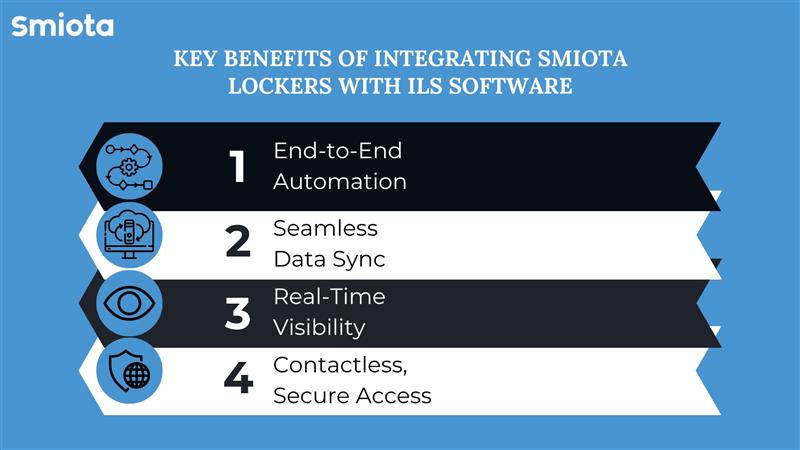
1. End-to-End Automation
With the integration, this is what a pickup workflow will look like:
- Staff process the hold or loan in the ILS.
- The ILS pushes the information to Smiota automatically.
- Smiota assigns the perfect locker size.
- Patron receives an instant notification.
- Locker pickup triggers an automated check-in or status update.
No repeat data entry. No manual tracking.
2. Seamless Data Sync
Everything stays perfectly aligned:
- Item status
- Patron notifications
- Pickup confirmations
- Return timestamps
- Inventory updates
The ILS and Smiota communicate constantly.
3. Real-Time Visibility
Libraries can see:
- What’s inside every locker
- Which items are overdue for pickup
- When a locker was opened
- Usage trends
- Peak-demand times
This eliminates lost materials and reduces internal confusion.
4. Contactless, Secure Access
Security is built into the entire experience:
- Unique PINs
- QR codes
- Mobile app unlock
- Tamper alerts
- Full digital audit trails
Patrons get convenience; libraries get accountability.
How This Integration Improves Daily Life
For Patrons
- Pick up holds anytime, early morning, late night, weekends, or holidays.
- Skip the line entirely.
- Pick up sensitive items discreetly (e.g., health-related books).
- Get simple, clear notifications with zero guesswork.
For Library Staff
- Spend less time sorting hold shelves.
- Handle fewer interruptions at the service desk.
- Eliminate manual errors and misplaced materials.
- Focus on programs, outreach, and community engagement.
For the Library as a Whole
- Reduce operational overload during peak hours.
- Eliminate bottlenecks with automated workflows.
- Gain reliable, real-time reporting and digital audit trails.
- Improve patron satisfaction through consistent, predictable service.
- Scale without increasing staff hours or expanding physical space.
Smart lockers don’t replace the library, they enhance it.
Real-World Use Cases Where Smiota + ILS Integration Shines
Holds & Hold Shelves → Locker Pickup
Instead of crowding the hold shelf, items go directly into lockers.
Patrons receive automatic pickup codes, reducing missed pickups.
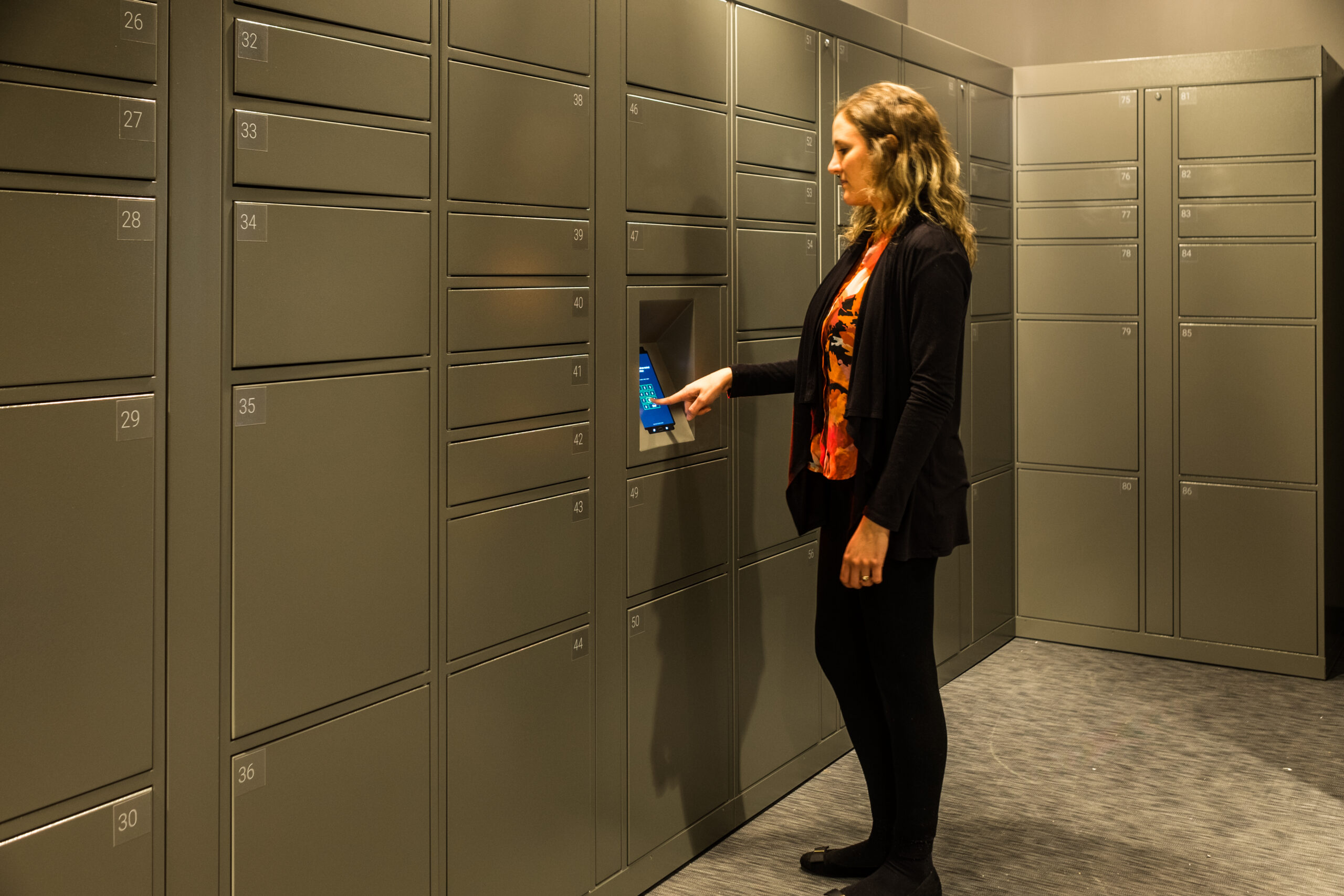
Returns Outside Opening Hours
Lockers allow after-hours returns.
The ILS logs the return as soon as it’s scanned or checked in.
Course Reserves & Short-Term Loans
High-demand materials can be scheduled for timed locker access.
Students avoid queues during exam week.
Interlibrary Loan (ILL) & Document Pickup
Sensitive or special-request items get secure, trackable delivery.
Chain of custody remains clean and fully traceable.
Special Collections / Restricted Materials
Controlled-access lockers maintain security while offering flexibility.
Pickups can be limited to certain time windows based on ILS rules.
Equipment & Media Lending
Whether it’s laptops, cameras, tablets, or AV kits, lockers reduce front-desk pressure and ensure accountability.
Community Outreach / Pop-Up Pickup Points
Lockers serve as temporary or seasonal extensions of the branch.
Events and community centers become pickup hubs.
Accessibility & Equity Improvements
Patrons who cannot visit during traditional hours maintain full access.
ILS integration ensures fairness and consistent prioritization.
Why Smiota’s Integration Capabilities Stand Out
Smiota is not a company that simply makes lockers, it builds locker ecosystems. What makes it stand out?
Cloud-Native L-DOS Platform
A stable, fast, flexible backend that grows with library demands.
Enterprise-Grade Security
Encrypted communication, tamper detection, and full audit trails.
Modular, Scalable Hardware
Locker banks that expand with circulation needs, including oversized, outdoor, refrigerated, and mixed-use modules.
API-Based Integrations
Smooth, reliable connections with major ILS platforms.
Remote Management
Staff can control, monitor, unlock, or troubleshoot lockers from anywhere.
Mobile-First Experience
Patrons unlock lockers through the app or PIN without any complexity.
Proven Across Diverse Environments
Libraries benefit from Smiota’s expertise in high-volume, high-security industries.
The Future: Connected, Automated, and Intelligent Library Workflows
With smart lockers and new-age ILS systems, here are some of the trends that are going to shape library operations in the coming years:
- Unattended Pickup Becomes Standard: Self-service locker pickup is rapidly moving from optional to essential.
- Smart Locker Allocation Based on ILS Data: Systems may soon predict demand and allocate locker space automatically.
- Multi-Branch Locker Networks: Patrons choose pickup locations across multiple branches and community points.
- Predictive Planning: Analytics anticipate rush periods so libraries can plan better.
- Deeper ILS Integrations: More circulation actions, checkouts, renewals, holds, will be automated.
- Greater Accessibility & Equity: 24/7 access ensures everyone gets equal opportunity to borrow materials.
- From Convenience to Infrastructure: Smart lockers will become core components of modern library service models.
Conclusion: Convenience + Security + Automation = The New Standard
We started with the everyday frustrations, missed pickups, long lines, chaotic hold shelves, and overwhelmed staff.
Now imagine the opposite.
Every item flows smoothly from the ILS into a locker.
Patrons receive instant notifications.
Pickups happen anytime.
Staff regain the freedom to focus on meaningful work.
The library operates with clarity, efficiency, and trust.
This is the power of integrating Smiota lockers with ILS. It’s not just a technology upgrade, it’s a complete shift toward future-ready, automated, patron-friendly service delivery.
Want to learn more about how Smiota’s lockers can enhance your library operations? Talk to one of our locker experts here.
The post The Future of Library Convenience: Integrating Smart Lockers with ILS appeared first on Smiota.
]]>The post Smiota vs Bibliotheca: A Comparison of Library Smart Lockers appeared first on Smiota.
]]>But with more libraries exploring this technology, a common question emerges: Which locker system is the right fit?
In this blog, we compare two recognizable names in this space: Smiota and Bibliotheca. While both offer secure, automated pickup systems, their core purpose and design philosophies differ. Understanding these differences helps libraries choose a solution aligned with their workflows, goals, and long-term plans.
Here’s a clear, human-friendly breakdown of how each system works, their strengths, and when each one makes the most sense.
Smiota Smart Lockers: Key Features, Benefits, and Use Cases
Overview & Purpose
Smiota is best known as a smart package locker specialist, a company that builds lockers not just for libraries, but for residential communities, corporate mailrooms, universities, retail stores, and campuses. Our system is designed from the ground up to handle the complexity of modern logistics: parcels, mail, deliveries, oversized items, groceries, temperature-controlled goods, and more.
This is why libraries have started considering Smiota: our locker solutions are built to be flexible, scalable, and capable of handling real-world delivery needs far beyond basic book pickup. It’s a locker system that comfortably works in various environments and adapts to different item types, usage patterns, and user expectations.
The core purpose is simple: automate drop-off and pickup in a secure, traceable, self-service way.
Key Features & Benefits
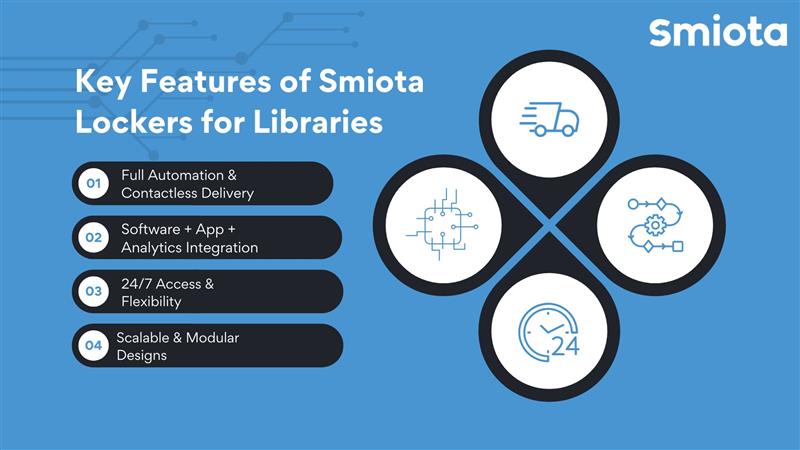
1. Full Automation & Contactless Delivery
Couriers, staff, or delivery personnel can drop packages using a QR code or PIN, and the recipient is instantly notified through the mobile app or email. Patrons or residents scan their code and retrieve the item without needing staff involvement. This reduces desk traffic and introduces an efficient self-service flow.
2. Software + App + Analytics Integration
Unlike basic hardware-only systems, Smiota combines:
- a smart locker interface
- a cloud-based software platform
- a mobile app
- analytics and reporting tools
Users and staff can track every delivery, check chain-of-custody, monitor locker utilization, and streamline workflows through a centralized dashboard.
3. 24/7 Access & Flexibility
Whether in a residential tower, campus building, office, or library, Smiota lockers ensure uninterrupted availability. Users can collect items whenever it suits them, after work, on weekends, or during off-hours.
4. Scalable & Modular Designs
Smiota lockers come in various sizes and configurations. They can be:
- indoor or outdoor
- refrigerated or temperature-controlled
- oversized
- or expanded to meet growing demand
This flexibility is valuable for libraries with diverse collections and equipment types.
Typical Use Cases & Ideal Audience
Smiota is widely used in:
- Residential complexes needing automated package and mail management
- Retailers and eCommerce brands offering secure BOPIS (Buy Online, Pick Up in Store)
- Corporate offices and campuses automating mailroom processes
- Universities managing parcels, equipment, and internal deliveries
- Any organization that handles circulation of parcels, kits, equipment, or mixed items
This versatility is what makes Smiota appealing to libraries seeking a system that can support more than just book pickups.
Check out how Fossil Ridge Library is using Smiota lockers to enhance patron and staff experience:
What Is Bibliotheca? Lockers Built for Libraries
Overview & Purpose
Bibliotheca’s locker product, often marketed as remoteLocker, is part of their larger library-focused technology ecosystem. Everything Bibliotheca offers is designed specifically for libraries, including self-checkout kiosks, return systems, and materials handling tools. Their lockers fit neatly into that ecosystem, allowing libraries to offer convenient pickup and returns without needing to keep service desks open.
While the solution is solid for basic library workflows, its functionality is intentionally narrow: the product is built for library holds, returns, and browsing, not multi-environment logistics.
Key Features & Benefits
1. 24/7 Pickup & Return Access
Libraries can extend access beyond staffed hours. Patrons can pick up holds early in the morning, late at night, or anytime the branch is closed.
2. Browse & Borrow Option
Some locker models offer transparent doors so patrons can view items inside, essentially creating a small browsable “mini shelf.”
3. Easy Returns
With integrated return compartments or bins, patrons can return materials without entering the library building or waiting in line.
4. Extends Library Reach
Bibliotheca lockers can be placed in:
- community centers
- parking lots
- partner locations
These setups help libraries serve remote or underserved communities without constructing new branches.
Typical Use Cases & Ideal Audience
Bibliotheca lockers are ideal for:
- Public libraries offering after-hours pickup or extending services to remote neighborhoods
- Institutions expanding access to media kits, STEM kits, or non-traditional materials
- Libraries needing simple holds and returns workflows without additional delivery complexity
Bibliotheca vs. Smiota: How Their Focus Shapes What They Deliver
While both companies offer secure, self-service lockers, their design philosophies and target users differ significantly.
Bibliotheca: Purpose-Built for Libraries
Bibliotheca’s products revolve around improving how libraries operate. Their system is deeply tied to existing library workflows, and the locker solution matches traditional library needs: placing holds, returning books, and providing basic browsing.
Their ecosystem includes self-checkout stations, automated return systems, and other core library tools, all built to enhance the library patron experience.
The focus is clear: library workflows first.
But because the product line is tailored to this singular environment, its flexibility ends there.
Smiota: Smart-Locker Specialists with Broader Expertise
Smiota has one specialization, smart lockers, and because of that, its capabilities extend across multiple industries. The system supports:
- package deliveries
- mail management
- campus logistics
- retail click-and-collect
- corporate mailrooms
- oversized items
This multi-industry experience strengthens Smiota’s reliability and adaptability.
For libraries, this means Smiota can:
- integrate with ILS platforms (Polaris, Koha, Sirsi Dynix, etc.)
- streamline holds and pickups
- provide real-time reporting and analytics
- support diverse library items, including equipment or media kits
- offer 24/7 secure access
- scale as usage grows
While Smiota is not exclusively a “library company,” it brings a level of sophistication and robustness that comes from solving locker challenges in many different settings.
Why Smiota Goes Beyond the Traditional Locker Model
Smart lockers used to be simple: store a book or two, notify a patron, and wait for pickup. But today’s logistics landscape, even in libraries, is more complex.
Libraries now manage:
- higher circulation volumes
- a wider variety of items
- hybrid schedules
- demand for 24/7 access
- expanding community service expectations
Smiota is built for this scale. Below are some of the key highlights of Smiota lockers for libraries.
- Modular & Expandable: Libraries can start with a small setup and expand as traffic grows.
- Advanced Chain-of-Custody Tracking: Every touchpoint is logged, improving accountability and reducing misplaced materials.
- Robust Software Infrastructure: Smiota’s cloud-based delivery management platform lets staff monitor usage, track pickups, and generate reports.
- Future-Ready: From contactless access to mobile-first workflows, Smiota fits into long-term operational plans.
- Real-World Versatility: Smiota lockers handle books, media kits, equipment, parcels, and more, allowing libraries to support additional services without investing in new systems.
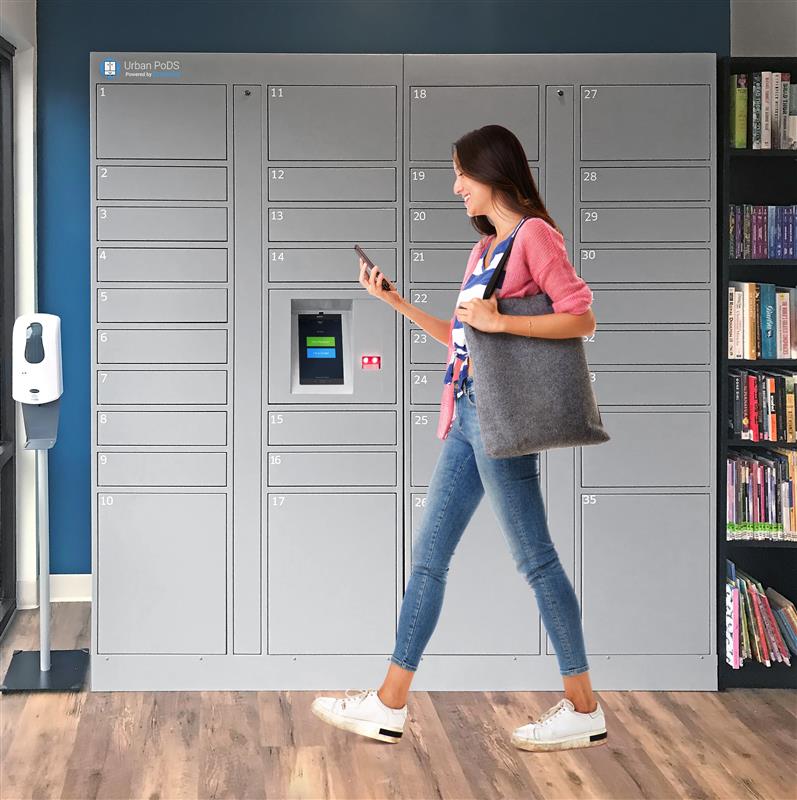
This is where Smiota stands out:
It offers a purpose-built, scalable smart locker ecosystem designed to support modern library workflows, from holds to returns to secure, after-hours access.
And while Smiota works with residential buildings, retailers, and campuses, this broader experience strengthens, not distracts from, its library capabilities. It means libraries get a locker system engineered with durability, flexibility, and reliability in mind.
For libraries that want more than a single-purpose locker, Smiota provides a platform that grows with them and adapts to a wide range of circulation and delivery scenarios.
Conclusion
Both Bibliotheca and Smiota offer smart locker solutions. Both give patrons convenient access, enable after-hours pickup, and reduce staff workload. But their strengths differ:
- Bibliotheca is ideal for libraries seeking a complete system to manage all their library workflows and activities.
- Smiota, on the other hand, is the choice for organizations looking for true locker specialists, a system designed to handle parcels, deliveries, equipment, media kits, and more, while still integrating seamlessly with ILS platforms like Koha, Polaris, and Sirsi Dynix.
Ultimately, the decision comes down to your particular need:
Do you want a locker that supports only book pickups and returns?
Or a system capable of evolving with your library and community over time?
Smiota is built for libraries ready to think beyond the traditional model, and ready for a smarter, more flexible future. Get in touch with us today to learn more about our locker solutions for libraries.
The post Smiota vs Bibliotheca: A Comparison of Library Smart Lockers appeared first on Smiota.
]]>The post From Shelves to Smart Lockers: Redefining the Last Mile of Library Lending appeared first on Smiota.
]]>Enter Smiota Smart Lockers. By integrating Koha with Smiota’s locker-based asset management system, libraries can reimagine how they handle pickups, returns, and even inter-library transfers. Think of it as bringing Amazon-style convenience to public and academic libraries—without turning them into fulfillment centers.
What Is the “Last Mile” in Library Lending?
In logistics, the last mile refers to the final step in the delivery process—when a product travels from the warehouse to the customer. In libraries, the equivalent is:
- A reserved item being retrieved from a shelf by staff
- That item being placed on a hold shelf or behind a counter
- The user needing to visit the building (during hours) to pick it up
This process is effective but inflexible. It doesn’t scale well with limited staff, and it puts a burden on patrons to fit their schedule around library hours.
Smart Lockers: The Flexible Pickup Point
With Smiota lockers, libraries can decentralize the last mile. Here’s how it works:
- A user places a hold through Koha.
- Once the item is ready, staff load it into a designated locker.
- Koha updates the item’s status, and Smiota sends the user a notification with a secure pickup code.
- The user picks up the item—on their time.
This eliminates lines, waiting, and the need for face-to-face interactions (a plus for patrons who like books more than small talk).
Use Case: Public Libraries in Urban Areas
Public libraries often serve patrons with inconsistent schedules—shift workers, parents, students, commuters. Lockers can be installed:
- In transit stations
- Inside malls or grocery stores
- Outside the library itself for 24/7 access
By making it easier to pick up materials, libraries increase usage and reduce hold abandonment. This is particularly valuable for underserved communities where transportation or time is a barrier.
Use Case: Academic Libraries with Campus-Wide Demand
In universities, students and faculty are constantly moving across campus. Placing lockers near dormitories, labs, or student centers removes friction from the pickup process.
Let’s say a grad student places a request for a book from the science library. Rather than hiking across campus between classes, they pick it up from a locker outside their department building. Efficient, discreet, and entirely on their schedule.
Enabling Inter-Branch and Inter-Library Delivery
Some library systems use internal couriers to transfer items between branches. Now imagine this:
- Item is scanned and dispatched from Branch A
- Delivered to a locker hub at Branch B or even a partner university
- Patron receives pickup instructions automatically
This system transforms how libraries cooperate, especially in consortium models. It supports true resource sharing with minimal administrative load.
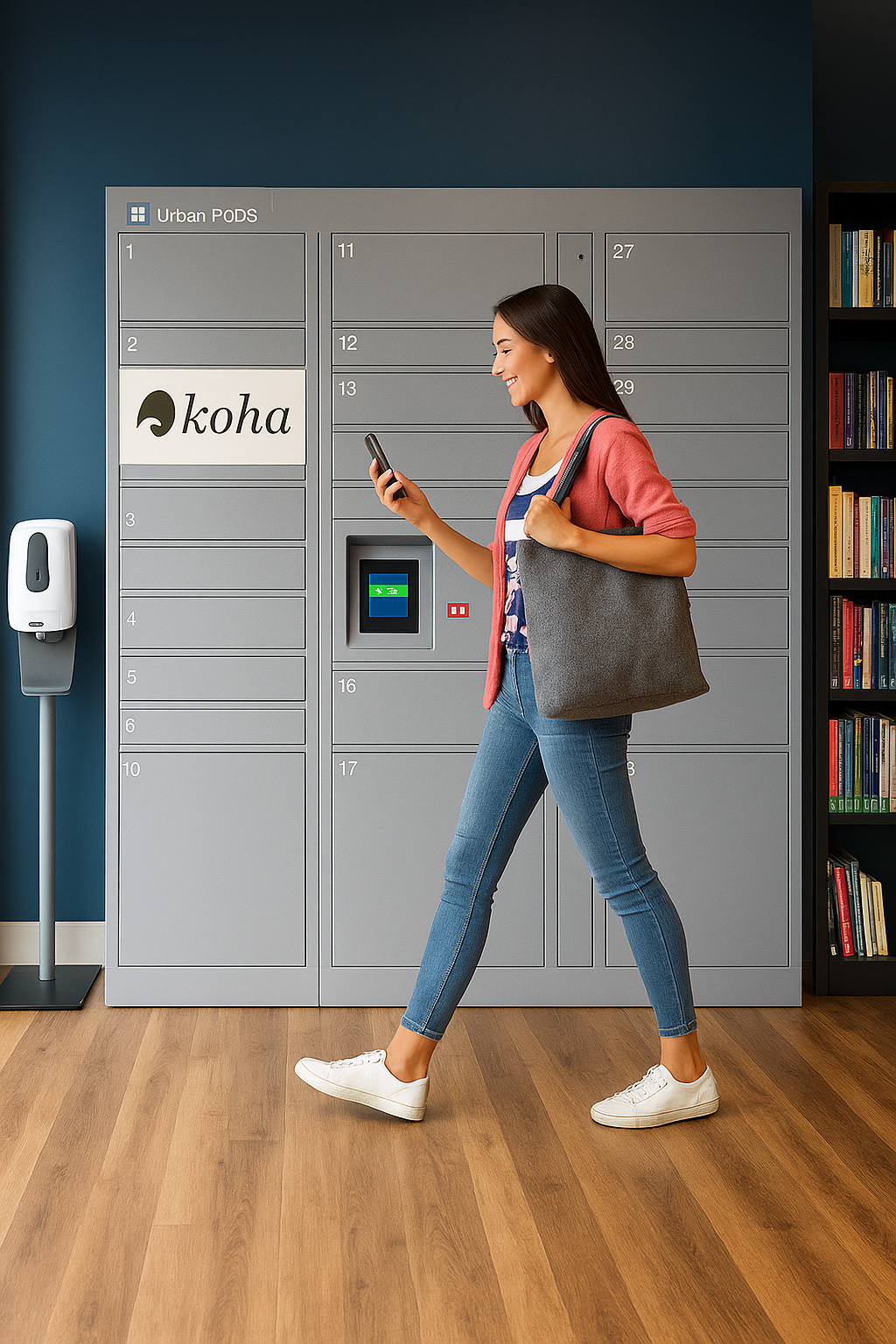
The Integration Workflow: Koha + Smiota in Action
Let’s break down the workflow:
- Reservation: A user places a hold request via Koha’s OPAC or mobile interface.
- Fulfillment: Staff pull the item and scan it into Koha, triggering the “Ready for Pickup” status.
- Locker Assignment: Koha passes this status to Smiota via API; the item is placed in a locker.
- Notification: Smiota sends a secure one-time PIN or QR code to the user.
- Pickup: The user retrieves the item; locker access is logged.
- Sync: Koha updates the circulation record automatically.
This system removes the manual handoff and lets both staff and users operate independently.
Designing for Scale: Where to Put the Lockers
Your locker deployment strategy should align with:
- Patron traffic patterns
- Geographic gaps in access
- Physical space availability
- Security and accessibility
You don’t need 50 lockers in one place. A few lockers in key locations offer better coverage and efficiency. For example:
- 10 lockers outside a community center in a residential neighborhood
- 6 lockers in a health clinic waiting area for parents picking up parenting books
- 12 lockers in the engineering building for technical equipment loans
Benefits Beyond Convenience
Smart lockers are not just about convenience. They offer a wide variety of benefits to different users. Let us have a look at those key benefits in this section.
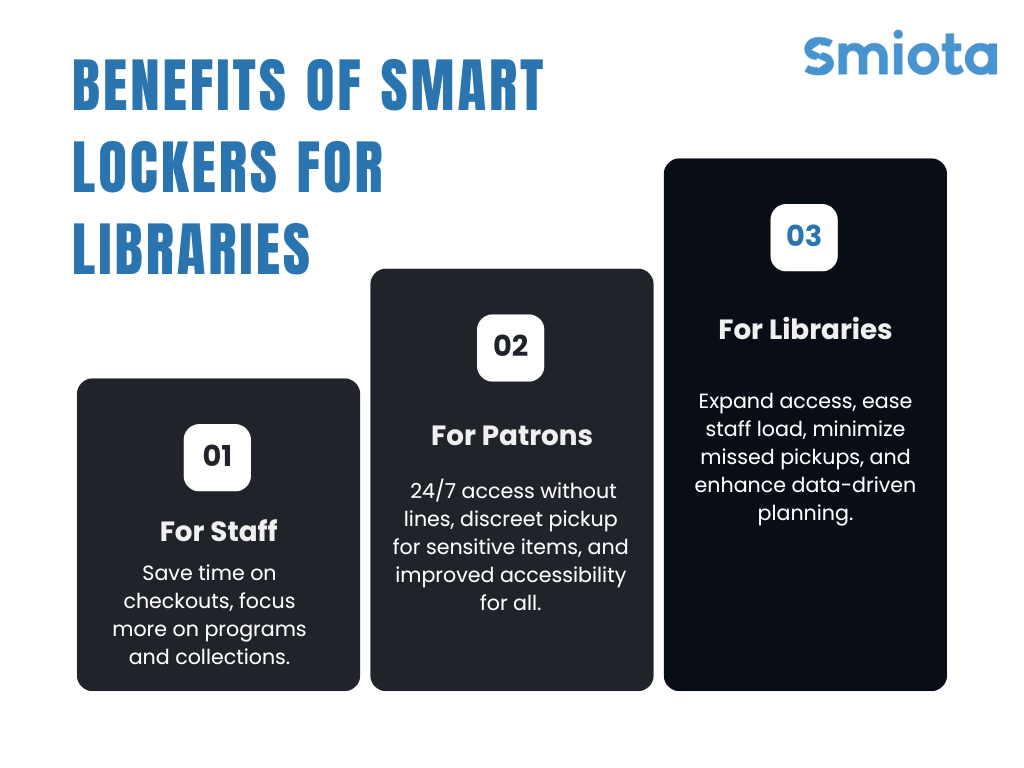
For Patrons:
- No waiting in line or rushing before closing
- Discreet pickup for sensitive materials (e.g., health, finance, or social services topics)
- Better access for disabled users
For Libraries:
- Extended service without extended hours
- Reduced desk workload
- Fewer uncollected holds and overdue returns
- More consistent pickup data for planning and reporting
For Staff:
- Less time spent on checkouts
- More time for programming, engagement, and collection curation
Challenges and Mitigation
While implementing smart lockers, it is important to understand the challenges that come with it and how to overcome them. Here is a list of the most common challenges associated with smart lockers and how to mitigate them:
- Locker availability: Use real-time inventory and alerts to avoid overflow.
- System integration: Work with IT or integration partners to connect Koha’s circulation API with Smiota’s locker platform.
- Training: Ensure staff understand locker workflows and backup procedures.
- User education: Use signage, onboarding emails, and a short how-to video to demystify the process.
Final Word: The Library Locker as a Service Hub
The last mile is where the user experiences either delights or disappoints. With Koha + Smiota, libraries can control that experience—even beyond their walls.
It’s not just about automating checkouts. It’s about bringing the library to the places and moments where people already are. Whether it’s a 24-hour locker outside a transit stop or a campus pickup point near the coffee shop, smart lockers remove barriers while preserving everything people love about libraries.
Libraries aren’t trying to compete with e-commerce—they’re simply adopting the best parts of their playbook to make knowledge more accessible.
And for once, the last mile doesn’t feel like the hardest one. It might just be the smartest.
The post From Shelves to Smart Lockers: Redefining the Last Mile of Library Lending appeared first on Smiota.
]]>The post Smarter Library Access with Koha + Smiota appeared first on Smiota.
]]>That’s where Smiota smart lockers come in.
This blog explores how integrating Koha, the world’s leading open-source Integrated Library System (ILS), with Smiota’s asset management locker system can create a seamless, 24/7 library experience that’s efficient for staff and delightful for patrons.
The Challenge: Libraries Are Still Bound by Physical Constraints
Libraries do so much right—they democratize access to information, promote lifelong learning, and serve as community hubs. But from an operational perspective, they still face several limitations:
- Opening hours: Patrons can only access materials during staffed hours.
- Manual workflows: Checkouts, returns, and holds often require librarian mediation.
- High staff workload: Staff are burdened with routine tasks that can be automated.
- Limited last-mile service: Especially in campuses or large city libraries, retrieving items from the central building can be a hassle.
All of this creates friction in the patron journey. And when there’s friction, engagement drops.
The Solution: Marrying Koha + Smiota for a Modern Library Experience
Now imagine this:
A patron reserves a book online via Koha. Once it’s ready, library staff place it in a Smiota smart locker. Koha updates the status and Smiota notifies the patron via email or SMS with a one-time access code. The patron swings by, enters the code, and collects their item—anytime, even at midnight.
Returns work the same way in reverse. No lines. No limited hours. No awkward small talk if you’re returning the same overdue book for the third time.
The Tech Side: How This Integration Works
Both Koha and Smiota are built with integration in mind:
- Koha offers RESTful APIs and webhooks that allow external systems to interact with its core modules—circulation, patrons, holds, and more.
- Smiota supports API-based locker assignments, notifications, asset tracking, and audit logs.
By syncing the two systems:
- When an item’s status changes in Koha (e.g., from “available” to “on hold”), it triggers a Smiota locker assignment.
- Smiota sends access credentials to the patron.
- When the item is retrieved or returned, Koha is updated automatically.
This automation ensures real-time tracking, reduces human error, and keeps both systems in sync without extra admin work.
Use Cases Across Library Types
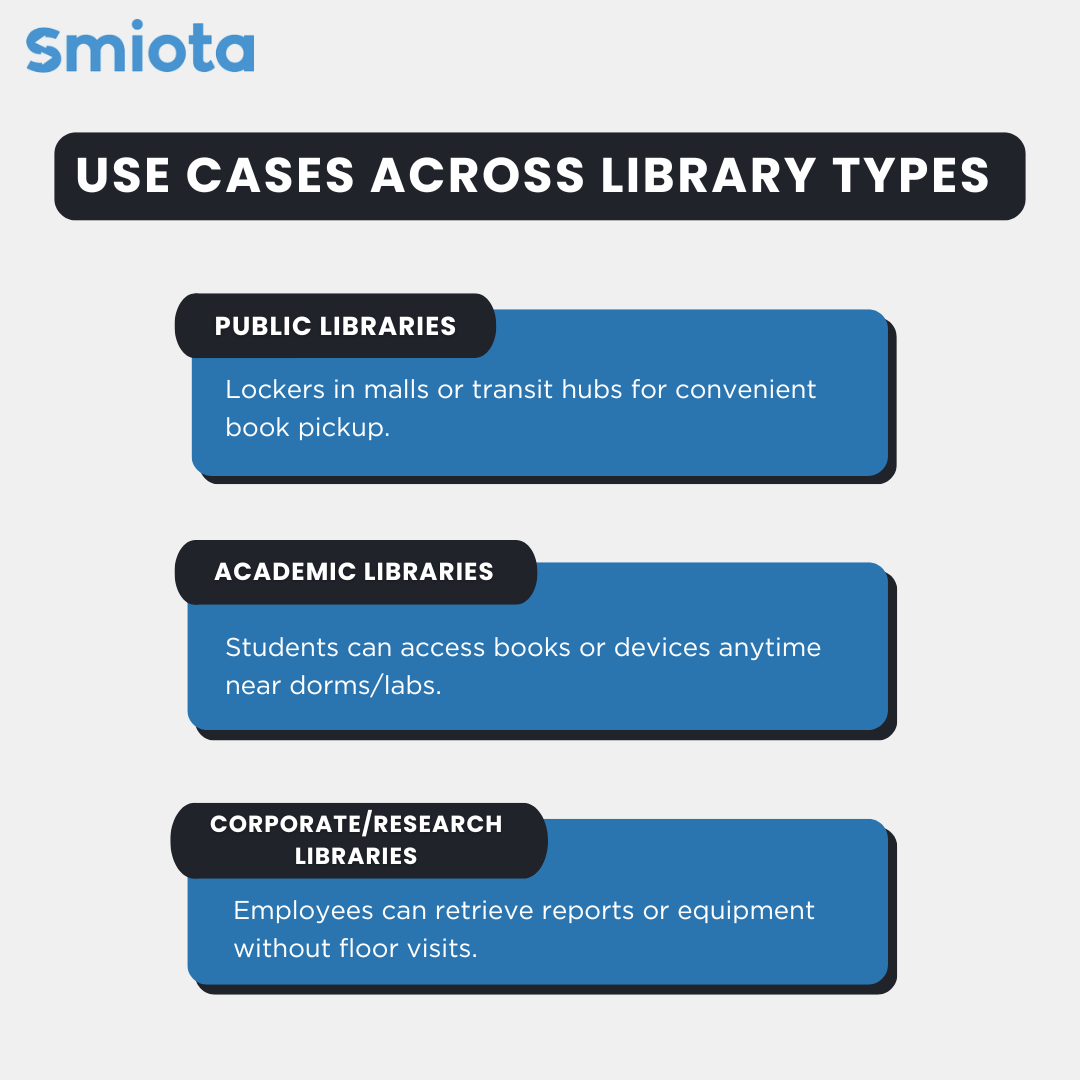
Public Libraries: Extend your reach into the community. Place lockers in shopping centers, community halls, or transportation hubs. Let patrons reserve and pick up books where they already are.
Academic Libraries: Campus life doesn’t run from 9 to 5. Lockers installed near dorms or labs let students pick up research material or loaned tech devices on their own schedule.
Corporate/Research Libraries: Employees in large organizations can retrieve industry reports, devices, or reference materials without needing to visit a specific floor or department.
Beyond Books: Managing Assets with Precision
Libraries have evolved beyond books. Koha can manage various asset types—laptops, cameras, lab kits, tablets—and Smiota lockers can store and track them securely.
- Valuable assets: Require ID verification or tiered access levels.
- Limited-use materials: Set automated return reminders and alerts for overdue items.
- Shared equipment: Use audit trails to track asset movement and usage patterns.
This is asset management without spreadsheets. Every pickup and drop are logged. Every interaction is traceable.
Marketing Automation + CRM Touchpoints: Koha Gets Even Smarter
If your Koha instance is integrated with email or marketing platforms (like Mailchimp, HubSpot, or even a custom CRM), you can:
- Trigger personalized notifications when an item is ready or overdue
- Segment users by locker usage and behavior
- Send post-pickup feedback surveys
- Nudge inactive users with a “ready when you are” message
Smart lockers are not just a hardware solution—they’re a chance to add real-time, behavior-triggered communication to your library marketing stack.
Metrics That Matter
Here’s what you can track when Koha and Smiota are in sync:
- Locker dwell time: How long items stay in lockers before being picked up.
- High-demand item cycles: Which materials get picked up fastest.
- Idle inventory: Items that sit too long uncollected or unused.
- Staff time saved: Fewer manual checkouts and returns.
The data doesn’t just help with logistics—it informs collection development, space planning, and staff allocation.
Challenges and Considerations
Of course, integrating two systems isn’t plug-and-play. Libraries need to consider:
- API compatibility and middleware
- Locker capacity and item size variability
- Security and patron authentication
- Clear SOPs for returns, overdue items, and locker maintenance
However, with thoughtful planning, these hurdles are manageable. Libraries around the world have successfully implemented smart locker systems—and often see a rapid return in both time saved and patron satisfaction.
Final Thoughts: More Access, Less Hassle
You don’t need to complete change your library to modernize it. Sometimes, it’s about removing just enough friction to let great service shine through.
By integrating Koha with Smiota, libraries can:
- Automate routine tasks
- Expand hours without hiring more staff
- Offer secure, convenient self-service options
- Free up librarians to focus on what they do best—connecting people with knowledge
In short, it’s about giving people better access to what they want—on their terms. And in a world where convenience rules, a locker isn’t just a metal box—it’s a portal to a smarter, more patron-friendly library.
So yes, the book is on lockdown. And this time, that’s exactly where it should be.
The post Smarter Library Access with Koha + Smiota appeared first on Smiota.
]]>The post Maximize Accessibility of Your Library Materials with Outdoor Library Lockers appeared first on Smiota.
]]>Understanding Outdoor Library Lockers
Outdoor library lockers are secure, automated systems designed for storing and retrieving library materials. Imagine finishing work late, missing library hours, or struggling with transportation. Outdoor lockers eliminate these barriers by offering 24/7 access to reserved materials. No more rushing during limited hours or facing closed doors!
Located outside the library premises, these lockers enable patrons to pick up and return items at their convenience, 24/7, without the need to enter the library itself. This system offers flexibility to users with busy schedules or those unable to visit the library during regular hours. It ensures continuous access to library materials, even when it is closed.
Understanding outdoor library lockers has provided us with a solid foundation on how these innovative solutions can enhance the accessibility of library materials beyond traditional service hours. Now, let’s see how these lockers can be leveraged to maximize convenience and ensure library materials are accessible to everyone, anytime.
Features of Library Smart Lockers
Outdoor library lockers come with various features designed to enhance user experience and streamline library operations. Each feature contributes to the system’s overall functionality and usability:
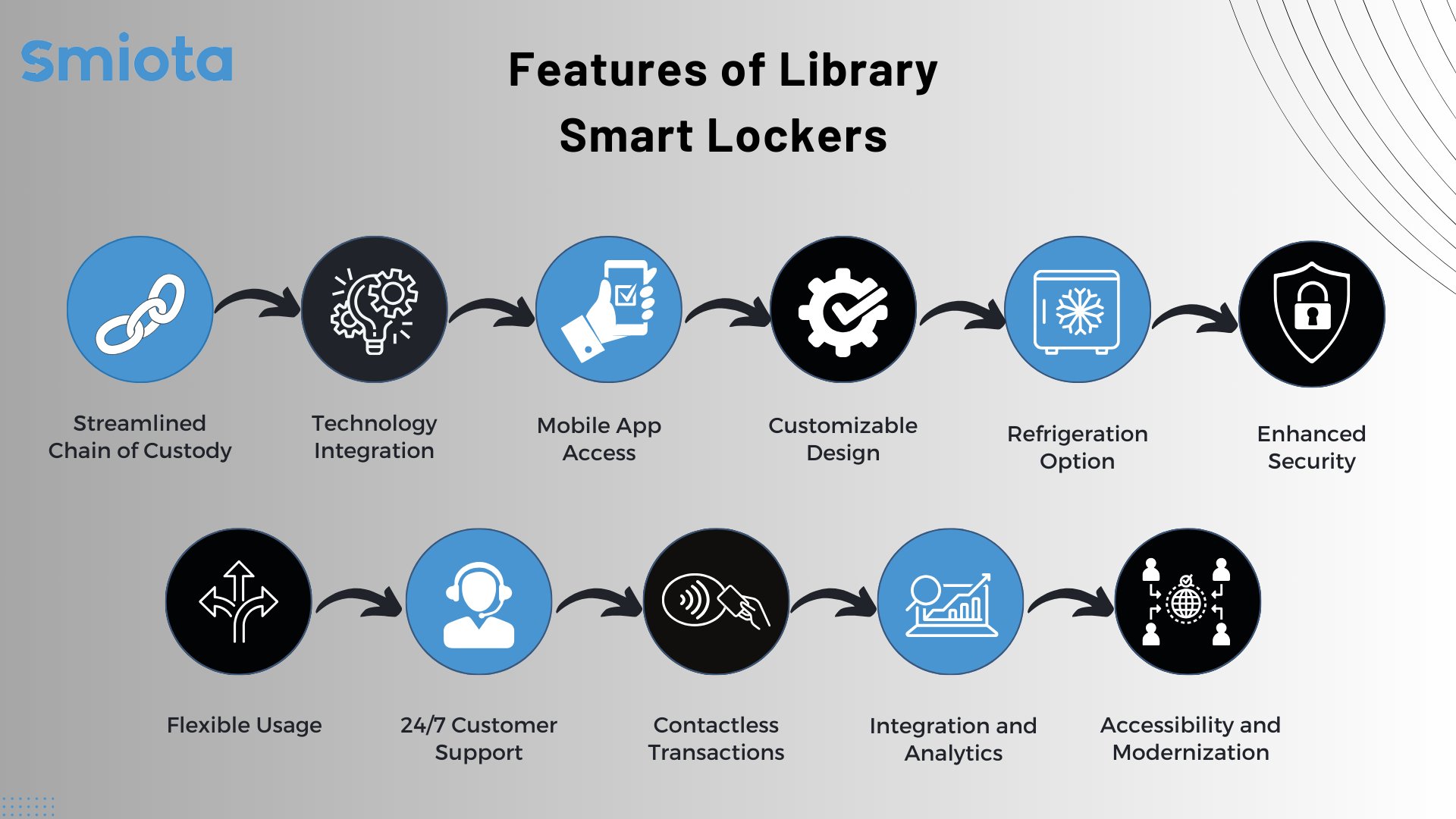
- Streamlined Chain of Custody: Library smart lockers ensure seamless material transit and ensure that items can be tracked with ease.
- Technology Integration: Enhances delivery/pickup processes, offering a smooth, efficient operation.
- Mobile App Access: Available for iOS and Android, broadening user accessibility.
- Customizable Design: Tailored to fit library aesthetics, offering various colors, sizes, and configurations.
- Refrigeration Option: Ideal for temperature-sensitive materials or food distribution in community programs.
- Enhanced Security: Protects against theft and unauthorized access, ensuring material safety.
- Flexible Usage: Adaptable for different needs, including personal item storage and confidential deliveries.
- 24/7 Customer Support: Offers continuous assistance for troubleshooting and queries.
- Contactless Transactions: Minimizes physical contact, reducing health risks and adhering to public guidelines.
- Integration and Analytics: Provides valuable insights for optimizing operations and enhancing user experience.
- Accessibility and Modernization: Outside placement increases material access and modernizes library services.
These features underscore the role of outdoor library lockers in extending accessibility and enhancing user convenience. However, it is vital to ensure proper implementation of these valuable resources.
Installation and Implementation of Outdoor Storage Lockers in Libraries
Implementing smart outdoor lockers in libraries involves several key steps, starting with selecting the right technology and locker system that meets the library’s and its community’s specific needs. The process includes:
- Site Selection: Choosing a secure, accessible location outside the library where the lockers will be installed. This area should be well-lit, easily accessible, and preferably under surveillance to ensure the safety of both the users and the materials.
- Technology Integration: Ensuring the locker system integrates seamlessly with the library’s catalog and circulation system. This integration allows for real-time tracking of materials, reservations, and returns.
- Infrastructure Requirements: Addressing the physical and technological infrastructure needed to support the lockers, such as power supply, internet connectivity, and weatherproofing to protect against environmental elements.
- User Education and Support: Developing materials and sessions to educate library patrons on how to use the lockers, including making reservations, accessing the lockers, and troubleshooting common issues.
Case Studies in Action
Libraries worldwide are reaping the benefits of outdoor lockers. For example, the following libraries are using Smiota’s smart locker solutions to provide an enhanced experience to their members.
Check out the below video that shows how Smiota’s smart lockers are improving library operations at Evergreen State College:
Innovative solutions like library lockers offer myriad benefits to libraries, ensuring materials are more accessible than ever before.
Benefits of Library Smart Lockers
Implementing outdoor library lockers brings numerous benefits to the library itself, enhancing its service quality and operational efficiency.
Improved Service Quality
The convenience and flexibility offered by 24/7 lockers significantly enhance the user experience. Patrons appreciate the ability to access library materials on their schedule, improving overall satisfaction and loyalty. This accessibility can significantly enhance the library’s role in the community.
Hassle-Free Experience for Members
With outdoor lockers, members no longer need to worry about rushing to the library before closing time or waiting in line to pick up or return items. This hassle-free experience can lead to increased library resource usage, patron loyalty, and positive word-of-mouth, attracting new users to the library.
Attracting More Members
The availability of such a modern and convenient service can attract new members to the library. It demonstrates the library’s commitment to innovation and customer service, appealing to tech-savvy users and those with busy lifestyles.
Community Engagement
Outdoor lockers can be a physical reminder of the library’s presence and commitment to serving the community’s needs. They can be installed in high-traffic areas for convenience, to attract non-members, and to encourage library use among a broader audience.
Increased Safety and Security
Outdoor locker systems provide patrons with a secure and safe way to collect sensitive or valuable materials without direct handovers. Especially relevant in times of health concerns, such as during a pandemic, lockers offer a contactless pickup option to help reduce the spread of illness among patrons and staff.
Cost Efficiency
While there’s an initial investment in the lockers, libraries may see a reduction in operational costs over time. Automated outdoor locker systems reduce the need for staff to manage checkouts and returns manually, potentially lowering labor costs. Additionally, the durability and low maintenance of these lockers can make them a cost-effective solution in the long term.
Sustainability
By reducing the need for patrons to enter the library for pickups and returns, outdoor lockers can contribute to lowering the building’s energy consumption. Reducing paper receipts and manual checkouts also aligns with green initiatives, making the library more environmentally friendly.
Efficient Use of Space and Resources
By utilizing outdoor lockers for holding and pickup services, libraries can better manage their indoor space for other purposes, such as reading areas, workshops, or additional collections. It also allows for a more efficient allocation of staff resources, as employees can focus on in-house services and programs instead of managing a busy circulation desk.
Conclusion
Outdoor library lockers represent a whole new approach to library service delivery, ensuring library materials are as accessible and convenient as possible for all community members. By embracing this technology, libraries can extend their reach beyond traditional boundaries, adapt to the evolving needs of their patrons, and continue to fulfill their mission in the digital age.
The post Maximize Accessibility of Your Library Materials with Outdoor Library Lockers appeared first on Smiota.
]]>The post How Smart Lockers Turn Library Problems Into Solutions appeared first on Smiota.
]]>So, in the case of libraries, we’re going to focus on how smart lockers turn library problems into solutions. We’ll take a closer look at what those library problems are and how people are solving them via automated lockers, for the benefit of staff and clientele alike.
There’s no need for smart tech to be intimidating, especially when it can make such a big difference in smoothing out operations and making books, journals, and even IT rentals that much more accessible for people.

Common Library Problems
Problems can and will stump the best, most curious minds. Yep, even in the library.
According to a Wiley poll librarians face a variety of challenges. Dicey situations include:
Budget. This may come from federal, state, or institutional funding and it’s a major challenge. Libraries are often in a position where they have to defend their current funding while also growing it.
Managing Library Operations And Staff. Like any industry, the daily operating tasks and staff management are a constant swirl of challenges and unexpected twists. Inefficiencies bog down all operations.
Understanding Research Trends And Public Expectations of Library’s Role. For libraries to have a positive impact, they need to be effective environments for learning, research, and empowerment. As our societies change at rapid speeds, so too do the trends and roles of those making the library tick and hum.
These are just three examples. Of course, library professionals are also juggling policy changes, public relations, and continually transitioning collections from print to digital. The room may be quiet, but don’t be fooled! There are plenty of library tribulations to be overcome.
Smart Lockers: Efficient Systems For Libraries
For libraries, efficiency is key. With efficiency, all challenges become an easier process to tackle. Based on the examples above, we can see how this plays out:
Let’s say a library installs an area of smart lockers in a public area and also in their staff areas. They can do so in a way that is customizable to match their existing aesthetic. Additionally, they can create a cohesive environment for education and other efforts. The lockers provide 24/7 support to those who use them, which is added support for the library staff and the library patrons.
And then, for example, a library technician can use these smart lockers as a means to facilitate and simplify the rental and return process. Patrons no longer have to wait in long lines to rent or pick up items. Library staff can efficiently organize lockers to be ready in a quick and easy way. Managers and technicians can spend their precious time elsewhere. Instead of stretching to compensate for outdated systems, professionals can dig into areas of research and possible grant writing, for instance.
This will have positive impacts on the budget (many libraries’ biggest challenges). Library professionals can use current funding on meaningful tasks. Their efforts in adding to the current budget can actually be implemented and secured.
In using smart technology, all staff is empowered to focus more on their specialties and gifts. In automating the elements of operation that can easily be automated through smart technology, the work environment improves.
Library Charm Combines With A Smart Future
Any library professional worth their mettle knows the age-old charm and magic of a library lies in the connections made, lessons learned, and research unearthed and synthesized. This has been a critical element of libraries since their inception. It’s a delightful part of their mystique and allure. But all this is not to say that libraries shouldn’t also be at the cutting edge of progress. In fact, it is important that they do just that.
Keeping up with tech advances helps the bottom line of operating costs. It also buoys research and enlightenment. People enter the doors with a question in their mind. It is a beautiful thing when technological advances facilitate the curious spirit of people. Libraries may be the best example of this very thing.
In conclusion, from the ancient history of Alexandria to the Vatican, to the Library of Congress, to the neighborhood library around the corner, we see how our libraries reflect who we are. They hold what we set to the record. They change, as we do, with technology and the unfolding annals of time.
The post How Smart Lockers Turn Library Problems Into Solutions appeared first on Smiota.
]]>The post How Library Smart Lockers Streamline the Library Return Process appeared first on Smiota.
]]>Literary greats live inside library shelves. There are research journals. Memoirs of eras long gone await discovery. These places are community hubs. Libraries provide needed access to computers and printers. Also, trained library technicians can work like superheroes for people. They might help a grade-schooler with a project and assist a person in writing their resume. Amazingly, this can take place in the same hour. It may not be glamorous, but the impacts are undeniable.
Free and ongoing access to educational materials and information is a key component to any democratic society. They are integral to our understanding of ourselves and to our world. Afterschool programs, guest lectures, a chair to sit in and read – the impacts of a library space are difficult to overstate.
Libraries also hold the line of technology access and empowerment. This is more important with each passing year. Tech literacy is a huge boon in our societies today. As such, these spaces must remain abreast of technological advances and opportunities. This reality can be applied to many areas of a library’s organization and daily operations.
Today, we are going to zone in on how smart lockers are a means of streamlining the return process at libraries. However, their impact can ripple out, too. These systems can and will create new, more efficient possibilities in the process.

Smart Lockers In The Library
A well-functioning library depends on the talented professionals who make the building hum with learning and possibility. There are systems that can make or break this collaborative song in a space that entirely depends on functionality. Smart lockers are perfect in this situation.
Smart lockers are accessible to anyone with a smartphone or access to the internet – which is often right there in the library. These lockers lend organizational support to any setting. This support is clean and customizable. It can be designed to fit right in or stand out. So while smart lockers may be a new addition to the space, additionally, they seamlessly fold into the needs and processes of materials transfers and technological exchange.
What This Looks Like
We can use our imaginations to create a handful of scenarios where smart locker technology could be a big help in a library setting. Excitingly, those brainstorms can be put into practice with ease and efficiency to last.
For example, when a person orders a book to be transferred from another library, smart lockers would be an ideal system for storing that transferred book until the person returns to retrieve it. The person would get an immediate notification that their items are ready, for instance. The amount of time that staff members would need to dedicate to the process could shrink from many minutes to seconds. It would be a quick and easy transfer at every point in the chain.
There’s another set of examples to consider. Many libraries offer rental equipment. Items such as computers, cameras, projectors, and more are available. Therefore, people – who might not otherwise use the gear – have access to them. With smart lockers, visitors would be able to rent this gear with increased efficiency and security. Because smart lockers are able to prevent theft and are of various sizes. As a result, they are a perfect match for this scenario.
Streamlined Library Returns
Let’s turn our attention to an age-old conundrum for library professionals and book borrowers alike: streamlining library returns. Again, smart lockers can be a big help. This is because these improved systems lead to more efficient handoffs. This is true on the front end. It is also the case in the return process. Above all, smart lockers improve the exchanges between the library and individuals.
We’ve touched on how smart lockers minimize organizational labor hours. As a result, we know that the security of expensive tech is improved. All these factors add up. They save time and improve the functionality of the library as a whole. Each part is connected. More importantly, dedicated, passionate professionals can define a library’s learning space. Smart lockers empower these workers to do the work they love. And this systems upgrade will minimize the exhausting, thankless admin and organization tasks that goggle up precious hours The whole endeavor will flourish in new ways, better serving the community.
In conclusion, all communities should be entitled to equitable means of learning. Smart lockers can help to cover the gaps. They improve the safety and security of the space. Moreover, smart lockers help with the important work of individuals, no matter their story.
The post How Library Smart Lockers Streamline the Library Return Process appeared first on Smiota.
]]>The post How to Manage Your Deliveries With An Apartment Package Locker appeared first on Smiota.
]]>But to clear up any question you might have about how this process works, here’s a step-by-step guide to apartment package lockers. This will irradicate any inkling of confusion or stress as you go about incorporating these smart lockers into your residents’ daily routines. Plus, you’ll have a better understanding of what all is possible. Food deliveries, IT hand-offs, and more!
Step One: Update Your Smartphone And Download The Smiota App
It’s true: in order to use these smart lockers, your residents will need to have access to a smartphone, computer, or tablet of some kind. This is an important link in connecting the steps to the process, so make sure that all phones and Smiota POD apps are up-to-date and ready for smooth sailing. Trust me, it will make the whole process that much smoother.
Step Two: Courier Drop Off
Once the smart locker process is underway, it will look strikingly similar to how mail and packages have always been delivered from warehouses, restaurants, and businesses, via courier.
When the courier arrives at your apartment package lockers, they use their own smart tablet to select the appropriately sized locker for each package. Then, they enter the recipient’s name to assign the locker to them.
The courier will carefully place the deliverables inside the locker and will securely close and lock the compartment before departing.
The locker will stay locked until the recipient arrives to collect the package – and the delivered goods will stay safe and secure from package thieves – a huge problem plaguing people all over the world. And it’s not just take-out food that goes missing. Many of us cannot afford to miss or lose a delivery of prescriptions, work supplies, or important equipment. Because the courier is now able to secure the delivery in a smark locker, these items will be safe and waiting for your residents’ arrival. What a relief.
Step Three: “You’ve Got A Package”
As the courier assigns the locker, the Smiota app will alert each resident. These messages arrive in an immediate fashion, so they’ll know right away when your goods have arrived. No more wondering, double-checking, or hassling. They’ll know.
Step Four: Visit Locker At Earliest Convenience
Package lockers are made for your convenience. When residents receive the notification that mail has arrived, they can immediately run to grab it. But maybe a resident’s day is hectic and long, and they aren’t able to get around to picking up the package until late in the evening – that’s okay too!
A package locker will enable your residents to work with their own schedules. Package delivery is no longer determined by a front desk, office hours, or vulnerability to package thieves. You can mosey down to the apartment lockers at a time that works in your day, eliminating inconvenient time constraints and making things easier for you and your residents.
Step Four: Open Locker With Passcode or Cell Phone
When it comes to opening your assigned smart locker, you can choose your own adventure.
Some people prefer to use their 5 digit passcode to open their locker. Others automatically open the locker with a simple swipe of their smartphone via the Smiota POD app. Either way, it’s a piece of cake. As residents familiarize themselves with the process, they’ll get a sense of their own preferences and can choose accordingly.
Step Five: Grab and Go!
Last, residents need to only enter their passcode or open the locker via the app and voilà! The assigned locker will open. They can retrieve their package or delivery, grab it and go on with life – without using the time and resources of your other staff.
Smart lockers are temperature controlled, which means that deliveries like food, flowers, and other perishables will have a longer life span while awaiting their arrival in their eager hands.
If any questions do arise as you go about this process, smart lockers have 24/7 customer support options. It is yet another perk of these forward-thinking systems – you can ask for help at any hour of the day or night.
Thus concludes this step-by-step guide of what to expect with smart lockers, and also a showcase of just how user-friendly this technology can be. It’ll take you no time at all to feel comfortable with this new delivery method and enjoy the ease and security these lockers provide.
The post How to Manage Your Deliveries With An Apartment Package Locker appeared first on Smiota.
]]>