The post Smart Lockers for Apartments: Benefits, ROI, and Implementation Guide appeared first on Smiota.
]]>Smart lockers for apartments are secure, self-service package delivery systems that eliminate the package management problem property managers face daily. With the average resident receiving more than 60 packages per year, and one in four Americans reporting a stolen package, smart lockers solve three critical problems at once: package theft, staff time spent on package handling, and resident frustration with missed deliveries.
Implementation typically takes 1-3 days, costs $12,000-$36,000 for a standard 200-unit community, and pays back within 12-18 months through labor savings, reduced complaints, and higher resident satisfaction scores. For property management companies, smart lockers have become a baseline amenity expectation, not a luxury.
Why Apartments Need Smart Lockers
E-commerce volume has exploded. The average apartment resident now receives 60-90 packages per year, and that number grew over 20 percent during the COVID-19 pandemic. Traditional package rooms, lobby tables, and front-desk holding fail under this volume.
Package theft is endemic. According to FBI data and industry surveys, nearly 26 percent of Americans have had at least one package stolen, and theft incidents in multifamily housing are particularly high because packages are often left in unsecured common areas.
Staff time is expensive. Property managers report that package handling consumes 5-15 hours of staff time per week in mid-size communities. That’s 250-750 hours per year diverted from leasing, maintenance coordination, and resident service.
Residents expect 24/7 access. Modern renters work non-traditional hours and want to pick up packages on their own schedule, not during front desk business hours. Communities that don’t offer this lose competitive ground.
Resident Experience Benefits
Notifications: Residents get automatic SMS, email, or app notifications the moment a package is delivered, so they know exactly when something arrives.
24/7 self-service pickup: No more waiting for the front desk to open or coordinating with staff schedules. Residents pick up packages whenever it’s convenient.
Privacy: Packages aren’t visible to other residents in a common area. Each pickup is private and authenticated.
Theft elimination: Locked compartments behind authenticated access have near-zero theft rates compared to package piles in lobbies.
Refrigerated options: Some communities deploy refrigerated lockers for grocery delivery and meal kit services, an increasingly popular amenity.
Multi-recipient support: Households with multiple adults can have shared access, and residents can grant temporary access codes to family members or roommates.
Property Management Benefits
Reclaimed staff time: Front desk and leasing staff stop spending hours per day on package logging, sorting, and recipient lookup. That time goes back into leasing, maintenance, and resident communication.
Reduced liability: Lost or stolen packages are a constant headache. Smart lockers create a complete audit trail with timestamps, photo evidence, and chain-of-custody data.
Higher resident retention: Communities that solve the package problem see 10-15 percent higher renewal rates compared to those that don’t, according to industry surveys.
Marketing advantage: Smart locker amenities are now a standard checklist item for prospective renters, especially millennials and Gen Z. Communities without them lose tours.
Insurance and compliance: Reduced theft incidents lower insurance claims and protect against resident disputes.
ROI Analysis with Real Numbers
Consider a 200-unit apartment community receiving 12,000-18,000 packages per year. Without smart lockers, staff spends 8-12 hours per week handling packages, equal to 416-624 hours per year. At a fully loaded cost of $35 per hour, that’s $14,560-$21,840 in annual labor cost.
Add 15-30 package theft incidents per year at an average resolution cost (replacement, complaint handling, retention impact) of $500 each, and you have another $7,500-$15,000 per year in soft and hard costs.
Total annual cost without smart lockers: $22,000-$37,000 per year, plus reputation damage and lost renewals.
Smart locker investment: $15,000-$30,000 hardware (one-time) plus $2,000-$4,000 annual software. Payback period is typically 12-18 months, after which the system delivers $20,000+ in annual net savings.
Beyond cost savings, communities report 15-25 percent improvements in resident satisfaction scores, which directly correlates to renewal rates.
Implementation Steps
Step 1 — Assessment: Site walk with vendor to determine package volume, available space, electrical and network requirements, and compartment mix.
Step 2 — Configuration: Choose locker model (indoor/outdoor, refrigerated capability), compartment sizes, and software integration with your property management system.
Step 3 — Installation: Most installations are completed in 1-3 days. Outdoor or large custom installations may take longer.
Step 4 — Resident communication: Announce the new amenity, post signage, and provide quick-start instructions. Most residents learn the system in under a minute.
Step 5 — Launch and monitor: Track usage analytics, identify peak times, and adjust compartment mix or capacity as needed.
Property Management Software Integration
Modern smart locker platforms integrate with major property management systems including Yardi, RealPage, Entrata, AppFolio, and ResMan. Integration enables automated resident sync, lease status checks (so move-outs lose access automatically), and unified reporting.
Look for smart locker providers that offer open APIs and pre-built integrations rather than proprietary closed systems that require manual data entry.
Common Questions from Property Managers
How do residents get set up? Most providers handle resident onboarding via SMS or email when a package is first delivered. Residents create an account in seconds.
What if a resident moves out? Integration with property management software automatically deactivates access on lease end date.
What happens to packages left in lockers too long? Most systems send escalating reminders and can either notify staff or charge a holding fee after a configured time period.
Can we use smart lockers for non-package items? Yes — communities use them for amenity reservations (pickleball gear), maintenance keys, dry cleaning pickup, and resident-to-resident handoffs.
Case Study Examples
Mariner’s Village (300 units): Installed Smiota smart lockers in 2024. Reduced staff package handling time from 12 hours per week to under 1 hour. Resident satisfaction scores increased from 78 to 91. Zero package theft incidents in the first 12 months.
Towne West Apartments (180 units): Deployed smart lockers as part of a competitive amenity upgrade. Renewal rate increased from 62 percent to 74 percent in the year following installation. Front desk staff redirected to leasing activities.
Allora Bella Terra (250 units): Installed 39-door smart locker system. Handles 95 percent of package deliveries automatically. Property manager reports saving $35,000 per year in labor and reducing package complaints to near zero.
Frequently Asked Questions
What are smart lockers for apartments?
Smart lockers for apartments are secure, internet-connected storage units that automate package delivery, pickup, and chain-of-custody for residents. They eliminate package theft, free up staff time, and provide 24/7 self-service access for residents.
Do apartments really need package lockers?
Yes. With residents receiving 60-90 packages per year on average, and 26 percent of Americans reporting package theft, traditional package rooms can’t keep up. Smart lockers have become a baseline expectation for modern renters.
How much do smart lockers cost for an apartment building?
Hardware typically costs $12,000-$36,000 for a 150-300 unit community, plus $2,000-$4,000 in annual software fees. Total cost varies based on package volume, compartment mix, and integration requirements.
What is the ROI on smart lockers for apartments?
Most communities recover their investment in 12-18 months through staff labor savings, reduced theft losses, and improved resident retention. Net annual savings after payback typically run $20,000-$40,000.
Do smart lockers integrate with Yardi, RealPage, or other property management software?
Yes. Leading smart locker providers offer integrations with all major property management platforms including Yardi, RealPage, Entrata, AppFolio, and ResMan.
How long does installation take?
Standard installations are completed in 1-3 days. Larger or outdoor installations may take 1-2 weeks. Site assessment and prep work happen in advance.
Can smart lockers handle refrigerated items?
Yes, many providers offer refrigerated compartments for grocery delivery, meal kits, and similar perishable items.
What happens if a package is too large for the locker?
Most systems have a mix of compartment sizes including extra-large options. For oversized packages, the system can notify staff to handle separately or alert the recipient to pick up at the leasing office.
Do residents have to pay to use smart lockers?
Typically no. Smart lockers are an amenity provided by the property, included in operating expenses or absorbed as a cost of doing business.
Can residents grant access to family or roommates?
Yes. Modern smart locker systems support shared household access, temporary guest codes, and authorized pickup by third parties (Uber Eats, dry cleaners, etc.).
The post Smart Lockers for Apartments: Benefits, ROI, and Implementation Guide appeared first on Smiota.
]]>The post Temperature-Controlled Lockers for Apartments: The Future of Secure Deliveries in 2025 appeared first on Smiota.
]]>These advanced lockers are specifically designed to store perishable items like groceries, fresh meal deliveries, medications, flowers, and more. For multifamily properties, they’re more than just a cool amenity, they’re a game-changing service that improves daily life for residents while making operations smoother for property staff.
Let’s explore why temperature-controlled smart lockers are quickly becoming a necessity for residential communities and how they deliver immense value for everyone involved.
1. Keep Perishables Fresh and Safe
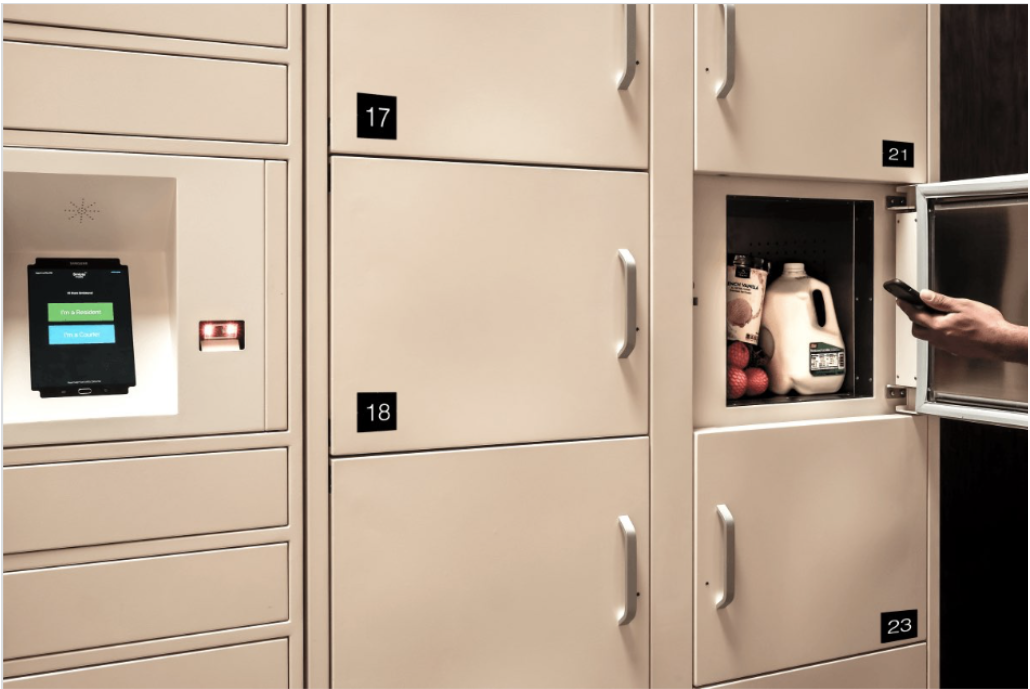
One of the biggest concerns with grocery and meal deliveries is spoilage. Items like dairy, meat, seafood, frozen meals, and temperature-sensitive medicine require specific storage conditions to remain safe and usable. Traditional lockers can’t offer that level of care, but refrigerated smart lockers can.
These lockers use built-in temperature controls to keep items chilled or frozen until residents are ready to pick them up. Whether it’s a late-night meal kit drop-off or an early morning grocery delivery, the freshness is preserved until retrieval.
Why this matters:
- Prevents spoilage of time-sensitive items like fresh produce, frozen meals, or prescription medications.
- Ensures food safety by meeting proper temperature guidelines.
- Offers peace of mind to residents who can’t retrieve deliveries right away.
- Reduces the risk of product loss or health concerns due to improper storage.
By delivering freshness and safety, temperature-controlled lockers make online grocery shopping and food delivery services more viable and appealing for residents. Plus, they encourage more frequent use of delivery services, giving residents an added layer of daily convenience.
2. 24/7 Secure Access for Residents
Life doesn’t follow a 9-to-5 schedule and neither do package deliveries. With 24/7 access to refrigerated lockers, residents no longer need to rush home or coordinate pickups during specific hours. They can simply retrieve their packages whenever it’s convenient.
These lockers are part of the broader Smiota smart locker ecosystem and offer flexible access through mobile apps, QR codes, or Bluetooth. That means no front desk waiting, no missed packages, and no stress.
Why this matters:
- Residents can access their items at any hour, whether it’s early morning or after midnight.
- Reduces missed deliveries and enhances the overall delivery experience.
- Creates a completely contactless pickup process, supporting better hygiene.
- Enhances privacy and independence for residents who prefer minimal staff interaction.
This level of convenience is particularly helpful for residents with irregular schedules, such as medical professionals, night-shift workers, or busy parents. It ensures that delivery services work around residents’ lives, not the other way around.
3. Reduce Staff Workload and Improve Efficiency
Managing packages, especially perishable ones, can become overwhelming for building staff. It often requires manual tracking, temporary storage, and frequent resident communication. Refrigerated lockers take that burden off staff by automating the entire process.
When a delivery arrives, couriers deposit it directly into a secure locker compartment. Residents are automatically notified via text, email, or mobile app, allowing them to retrieve the package without any staff involvement.
Why this matters:
- Reduces time spent by staff handling, tracking, or redistributing deliveries.
- Minimizes resident inquiries and complaints about package status.
- Prevents overcrowding of storage rooms and mailrooms.
- Increases overall staff productivity and allows them to focus on higher-value tasks.
By reducing human touchpoints and streamlining the workflow, property management teams can better allocate resources and create a more professional, stress-free environment.
4. Add a Competitive Edge with Tech-Forward Amenities
Smart lockers, especially temperature-controlled ones, aren’t just functional. They’re a powerful marketing tool. Today’s renters are digitally savvy and value technology that makes life easier. When they see advanced amenities like refrigerated lockers, they see a property that understands their lifestyle.
These lockers appeal to renters who regularly use grocery delivery apps, meal kits, or subscribe to services like FreshDirect, HelloFresh, or Instacart. It’s the kind of modern touch that stands out during apartment tours and online listings.
Why this matters:
- Attracts renters looking for convenience and innovation.
- Adds significant value to a property’s amenity package.
- Encourages lease renewals by improving resident satisfaction.
- Positions your property as future-ready and resident-focused.
In today’s competitive housing market, a forward-thinking amenity like this could influence a prospect’s leasing decision. It’s a small investment with the potential for big returns in tenant acquisition and retention.
5. Integrate Seamlessly with the Smiota Smart Locker Ecosystem
Refrigerated lockers are most effective when they’re part of a larger, integrated system. That’s where Smiota excels. These lockers work hand-in-hand with standard parcel lockers, mailroom automation software, and cloud-based tracking tools.
Everything can be managed through one centralized dashboard, from locker assignments to usage reporting. Integration with property management software means minimal disruption and easy onboarding.
Why this matters:
- All package types, including standard, refrigerated, or oversized, can be managed in one place.
- IT and maintenance teams can monitor locker performance remotely.
- Real-time alerts and reporting help with performance tracking.
- Scalable design supports properties of any size, from boutique buildings to multi-site portfolios.
The ability to scale and adapt ensures your investment remains relevant as your property grows or evolves. This integrated approach also enhances the overall resident experience by providing a consistent, dependable delivery solution.
6. Promote a Contactless Lifestyle
In the post-pandemic era, contactless amenities are more than a convenience. They’re a necessity. With refrigerated lockers, residents can pick up sensitive deliveries without touching shared surfaces or interacting with staff or couriers.
This feature is especially attractive in high-density properties, senior living facilities, or communities focused on wellness.
Why this matters:
- Minimizes touchpoints for added hygiene.
- Ideal for delivering sensitive items like medication and food.
- Supports the lifestyle of health-conscious residents.
- Reduces in-person interactions while maintaining service quality.
Providing a contactless solution also sends a clear message. It shows that your property prioritizes resident well-being and understands the evolving preferences of modern renters.
7. Reduce Carbon Footprint and Waste
Sustainability is a growing concern for both renters and property managers. Refrigerated lockers can help reduce waste and improve delivery efficiency. Couriers make fewer trips when deliveries are successful the first time, and fewer spoiled goods mean fewer returns or replacements.
Smiota’s smart lockers are also built with energy-efficient technology and materials, supporting green building initiatives.
Why this matters:
- Decreases number of missed deliveries and repeat trips by couriers.
- Reduces food waste from spoiled perishable items.
- Supports LEED certification and sustainability goals.
- Appeals to eco-conscious residents and helps build a greener brand image.
More than just an amenity, refrigerated lockers reflect your commitment to sustainability and social responsibility. These values increasingly influence renters’ decisions and can elevate your property’s reputation.
8. Support Special Deliveries and Resident Wellness
Refrigerated lockers aren’t just for groceries. They’re perfect for other temperature-sensitive deliveries such as skincare products, pet food, flowers, and wellness kits. This expanded usage supports modern living habits and creates a more personalized resident experience.
Why this matters:
- Accommodates a wider range of resident needs.
- Enhances satisfaction for residents with specific dietary, medical, or lifestyle requirements.
- Adds thoughtful convenience to pet-friendly and wellness-focused communities.
When residents see that their niche needs are supported, they’re more likely to feel at home and more likely to stay long-term.
Final Thoughts
Temperature-controlled smart lockers are no longer a novelty. They are an essential part of modern package management. With the rise of grocery and meal delivery, along with increased resident expectations, properties that offer refrigerated lockers stand out for all the right reasons.
They add value. They boost resident satisfaction. They make life easier for everyone involved.
Whether you manage a luxury high-rise, a student housing complex, or a large-scale multifamily community, Smiota’s temperature-controlled lockers offer the flexibility, reliability, and technology you need to stay ahead.
Want to see how temperature-controlled lockers can work for your property?
Book a free demo or contact us to get started.
The post Temperature-Controlled Lockers for Apartments: The Future of Secure Deliveries in 2025 appeared first on Smiota.
]]>The post 5 Benefits of Adding a Smart Locker to Your Modern Apartment Complex appeared first on Smiota.
]]>
Smart Lockers in Modern Apartment Complexes
Smart lockers are electronically managed storage units designed to securely hold parcels until the recipient is ready to collect them. Emerging from the need to handle the growing volume of online deliveries efficiently, these systems have evolved with technological advancements, featuring secure access, digital tracking, and automated notifications.
Modern apartment complexes continually seek ways to enhance the living experience for their residents. Installing smart lockers is more than just a passing trend in urban living, as they offer tangible advantages that can enhance the living experience for residents. Let’s examine the top 5 benefits of incorporating smart lockers into your modern apartment complex, highlighting how they can revolutionize parcel delivery and the day-to-day convenience and security for residents.
5 benefits of a smart locker system in your modern apartment complex
Integrating smart lockers into modern apartment complexes is critical to enhancing security and streamlining parcel handling, offering numerous benefits. Here are five key advantages:
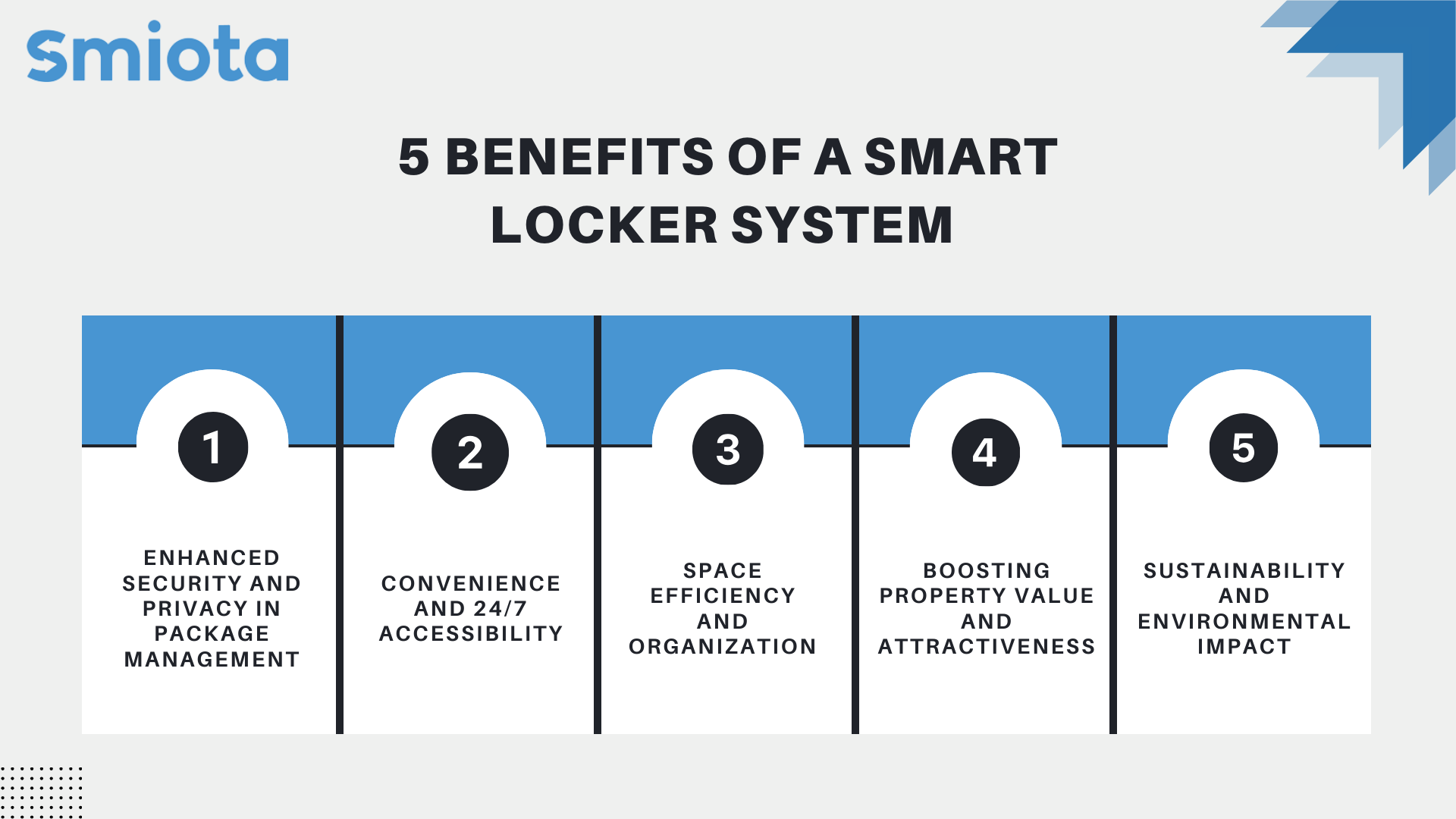
1. Enhanced Security and Privacy in Package Management
- Improved Parcel Security: Introducing smart lockers in an apartment complex addresses a crucial concern: parcel security. These systems are adept at minimizing the risks associated with theft and loss. Once a delivery is made, the parcel is securely stored in a locker, accessible only by the intended recipient. This safeguard ensures that residents’ packages are safe until they can personally retrieve them, adding a layer of security that traditional delivery methods often lack.
- Privacy Benefits: Beyond security, smart lockers offer substantial privacy benefits. Deliveries are kept from public view, particularly important for sensitive or personal items. This setup prevents the inadvertent exposure of residents’ parcels, ensuring that privacy is maintained throughout delivery.
2. Convenience and 24/7 Accessibility
- Round-the-Clock Access: Smart lockers offer residents the convenience of accessing their parcels at any time of the day or night. This 24/7 accessibility is a significant upgrade from traditional mailroom limitations, especially for residents working irregular hours or often away from home. The freedom to pick up parcels on their own schedule is a valued perk in today’s fast-paced lifestyle.
- Ease of Use: These systems are not just about accessibility; they are also designed for ease of use. Smart lockers typically feature user-friendly interfaces, making parcel collection straightforward. Residents can quickly retrieve their packages without hassle, enhancing their overall living experience. For instance, Smiota’s smart locker solution for apartments comes with an intelligent and user-friendly mobile app for quick and hassle-free pickup of packages.
3. Space Efficiency and Organization
- Maximizing Space: In apartment complexes where space can be scarce, smart lockers offer an efficient solution for managing parcel storage. These systems occupy minimal space while providing a secure place for deliveries, thus avoiding clutter in communal areas like lobbies or mailrooms.
- Organizational Impact: The presence of smart lockers streamlines the process of package management, reducing the workload on property managers and keeping the mailroom or parcel collection areas neat and orderly. It simplifies handling high volumes of deliveries, which is often a challenge in larger complexes.
4. Boosting Property Value and Attractiveness
- Increased Property Value: Installing smart lockers can be a strategic move to enhance the market value of an apartment complex. They add a contemporary edge to the property as a modern amenity, appealing to potential buyers or renters. This feature can be a differentiator in a competitive real estate market.
- Attracting Modern Tenants: Smart lockers are particularly attractive to a demographic that values technology and convenience. By catering to the preferences of tech-savvy and convenience-oriented tenants, an apartment complex with smart lockers can stand out, attracting a wider pool of potential residents.
5. Sustainability and Environmental Impact
- Reducing Carbon Footprint: Smart lockers contribute positively to environmental sustainability. By providing a centralized point for parcel deliveries, these systems can reduce the carbon footprint associated with delivery vehicles making multiple attempts or stops. This efficiency in the delivery process is a step towards more eco-friendly living arrangements.
- Encouraging Green Practices: In addition to reducing emissions, smart lockers promote green practices. They encourage efficient routing and scheduling for couriers by streamlining the delivery process. This can lead to less congestion and a reduction in the environmental impact of delivery services. Furthermore, residents may be encouraged to think more about their consumption and delivery choices, fostering a more eco-conscious community.
These are but a few of the advantages of smart locker systems. But they are more than enough to invest in systems like Smiota smart lockers to ensure efficiency in apartment management.
How Smiota Smart Lockers Enable Innovative Property Management
Smiota Smart Lockers are revolutionizing how properties are managed, enhancing security, efficiency, and tenant satisfaction. These systems streamline various aspects of property management, from parcel delivery to maintenance request handling. Here’s an in-depth look at how Smiota Smart Lockers are enabling innovative property management:
Secure Parcel Management
- 24/7 Access: Tenants can pick up their packages anytime, which is convenient for those with varying schedules.
- Reduced Package Theft: With a sensor-based chain of custody, Smiota’s smart lockers provide a secure environment, significantly reducing the risk of package theft, a growing concern in many urban areas.
- Automated Notifications: Residents receive instant notifications when their packages arrive, improving communication and efficiency.
Enhanced Tenant Experience
- Convenience: Smiota’s Smart Lockers’ ease of use significantly increases residents’ convenience, improving their overall experience. The easy-to-use mobile app offers a hassle-free delivery experience to tenants.
- Reduced Management Burden: Property managers spend less time handling deliveries, freeing them up to focus on other essential tasks.
- Customizable Solutions: The lockers can be tailored to fit the specific needs and aesthetics of the property, enhancing the visual appeal and functionality.
Efficient Maintenance and Operations
- Tool and Equipment Management: Lockers can be used for storing and managing maintenance tools and equipment, ensuring they are only accessed by authorized personnel.
- Key Management: They can also be used for secure key exchanges for maintenance teams, avoiding the need for face-to-face interactions.
Improved Security
- Controlled Access: Only authorized individuals have access to the lockers, which enhances the property’s overall security.
- Surveillance Compatibility: The system can often be integrated with existing surveillance systems, providing an additional layer of security.
Sustainability and Environment
- Reduced Carbon Footprint: Centralized delivery points mean fewer delivery attempts, which can reduce the carbon footprint associated with parcel delivery.
- Energy Efficiency: Smart lockers are often designed with energy efficiency in mind, contributing to a more sustainable property management approach.
Data and Analytics
- Usage Tracking: Property managers can track the usage and efficiency of the lockers, providing valuable insights into tenant behavior and needs.
- Predictive Maintenance: Data collected can help in predictive maintenance of the lockers, ensuring they are always in optimal condition.
Scalability and Flexibility
- Adaptable to Property Size: Smiota Smart Lockers are scalable and can be adapted to small apartment complexes to large residential communities.
- Customizable Features: The system offers various customizations, including different locker sizes & user interfaces and the option to add UV-C technology for surface sanitization, to best suit the property’s needs.
Integrations with Property Management Software
- Seamless Integration: These smart lockers can be integrated with existing property management software, streamlining operations and data management.
- Automated Record-Keeping: This integration helps maintain an automated record of deliveries and pickups, which is crucial for security and operational efficiency.
[button link=”/multifamily/” type=”big” newwindow=”yes”] Explore Multifamily Solutions [/button]
Final thoughts about smart lockers for apartments
The addition of smart lockers in modern apartment complexes offers numerous benefits, from enhanced security to increased property value. For property managers and developers, investing in this technology is not just about meeting current needs but also about anticipating the future of smart living and innovative property management. As we move forward, integrating such technologies will continue redefining the standards of modern living spaces.
The post 5 Benefits of Adding a Smart Locker to Your Modern Apartment Complex appeared first on Smiota.
]]>The post 5 Necessary Apartment Amenities to Attract Millennials in 2022 appeared first on Smiota.
]]>Millennials catch a lot of slack in popular discourse. It comes from generations before and after them. As our country undergoes big shifts, having a handle on what various generations need and desire is the first step in successful marketing and a thriving business. Here’s some important background on the millennial generation. And, importantly, 5 necessary apartment amenities to attract Millennials in 2022.
Millennial Basics
The millennial population today is around 72.1 million people. This generation, born between 1985 and 1996, recently passed the boomers and is now the biggest generation to date.
Making sweeping generalizations about a group of people this large can be difficult. Often, stereotypes are very wrong. However, there are trends to consider and integrate into building and management practices of apartment amenities. In doing so, you can make your building an increasingly attractive option. Perfect for Millenials on the hunt for a particular living situation.
For example, millennials are generally better educated than previous generations. They often delay or forgo marriage. Often, this generation leans more to the left than earlier generations. And, due to financial recessions and rising costs of living, Millenials are more likely to have lived with their parents for longer stretches of time and have accumulated less wealth.
And while millennials have gained a reputation for job and apartment hopping, the data says otherwise. This generation is more tech-savvy and often requires their living situation to accommodate these cultural and technological shifts.
Taking all of these factors into consideration, we can better anticipate what millennials need and crave of their apartment amenities. Here are 5 factors to consider.
Affordable Prices
The best way to attract millennials to apartments is to maintain prices that are competitive and affordable. This is, of course, not a glamorous thing to undertake as a building manager and contractor. At the end of the day, though, for millennials – especially the ones that have spent long stints in their parent’s homes navigating economic recessions – affordability is key.
This means that you want to use amenities in a smart, frugal way that benefits you and your tenants. In-building gyms and laundry, free or affordable parking, and complimentary co-working offices spaces are just a few ideas. Overall, amenities that create affordable living quarters will be the most attractive selling point.
High-Speed Internet
In the unfolding phenomenon of the coronavirus pandemic, more and more workers depend on high-speed internet to conduct their work from home. Even as restrictions lift and workers return to the office, the lay-of-the-land has shifted and apartments that offer the amenity of reliable, efficient internet will certainly grab the attention of abode-hunting millennials.
This can look like providing high-quality internet for an entire building or providing information on what providers work best in your location and building.
Smart Lockers
Smart lockers are increasingly prevalent in public spaces – libraries, grocery stores, college campuses to name a few. This amenity can be a big draw for Millenials in an apartment environment as well.
Smart lockers are a major upgrade for convenience. This is because smart lockers are secure and available outside of office hours – tenants will love this. With smart lockers, millennials can retrieve their deliverables at various hours, with instantaneous messaging. Whether they use the smart lockers for important professional equipment deliveries or groceries (or both) Millenials are fluent tech users and will appreciate an apartment complex that reflects those values.
Additionally, smart lockers are also an amenity that can blend into a colorful, hip aesthetic. With customizable designs, it’s a smart systems upgrade that can fill in and improve a hip, millennial ambiance.
Green Amenities And Renewable Practices
Ecological responsibility and “green amenities” are of growing importance to tenants and consumers. Millennials and other future generations not only expect but demand that their living situations reflect their values – and sustainability is a biggie.
Green amenities and renewable practices can look a lot of different ways, depending on a building and community context. Possibilities include solar panels, food composting, rain gardens on the property, or even a neighborhood microgrid – a growing trend. Implement the practices that make sense for your building and then use these amenities to attract millennials.
And while green practices are key to attracting millennials, cultivating green spaces for tenants to utilize is another big boon for both individual and collective mental health. This is the kind of thing that Millennials consider when deciding where to call home.
Cameras And Reliable Building Security
Amenities that improve a building’s overall safety and security will definitely attract millennials in 2022. Effective security doesn’t always look one way. Smart lockers are a great amenity to efficiently improve the security of deliverable items while cameras and on-site building managers can also provide security support that Millenial tenants will appreciate.
Again, this sort of amenity will depend greatly on the size of the building and its location. Whatever the case, implement amenities that boost the safety and security of your building and be vocal about communicating that in marketing – Millenials will appreciate it and make their choices accordingly.
The post 5 Necessary Apartment Amenities to Attract Millennials in 2022 appeared first on Smiota.
]]>The post 6 Surprising Statistics About Millenial Apartment Living appeared first on Smiota.
]]>
What Exactly Are Millennials?
Millennials are the largest generation in the U.S. with 75 million people. While the exact cutoff for millennials can be squishy depending on who you ask, millennials are generally thought of as people born between 1981-1996. This means that millennials are between 24 to 40 years old in 2021.
The generation above millennials is Gen X (1965-1980), whereas the generation below millennials is Gen Z (1997-2012). Common cultural cut-offs between millennials and Gen Z are that millenials remember the 9/11 attacks and that millenials experienced at least some of their childhood without the existence of smartphones.
Six Surprising Statistics About Millennial Apartment Living
1. About 1 in 5 Millennials Plans to Rent Forever.
It’s no secret that buying a house is difficult for millennials. House prices have increased at a much faster rate than wages, making buying a house more challenging for millennials than previous generations. Millennials were also just entering the workforce as the Great Recession hit. Because recessions hit younger generations harder, the recession made buying a house even more difficult for millennials. This difficulty in buying property has caused many millennials to give up on the housing market and plan to be forever renters.
In fact, each year more millennials believe they will be forever renters. In 2016, only 10.7% of millennials planned to be forever renters, but by 2020 this number was 18.2%. Among the millennials who plan to be forever renters, 74% of them say it is due to the unaffordability of houses, not out of preference for the more flexible lifestyle renting may allow.
2. During Their 20’s, Millennials Will Spend About Half of Their Income on Rent
From age 22-30, millennials spend about 45% of their total income on rent. This amounts to $93,000! This percentage of income is substantially higher than it was for Gen Xers (41%), and significantly higher than it was for baby boomers (36%). Unfortunately, Gen Zers, who will spend over $100,000 on rent during the same ages, will likely face an even tougher burden than millennials when it comes to renting in their 20’s.
3. A Majority of Millennials Get a Package Delivered Every Week
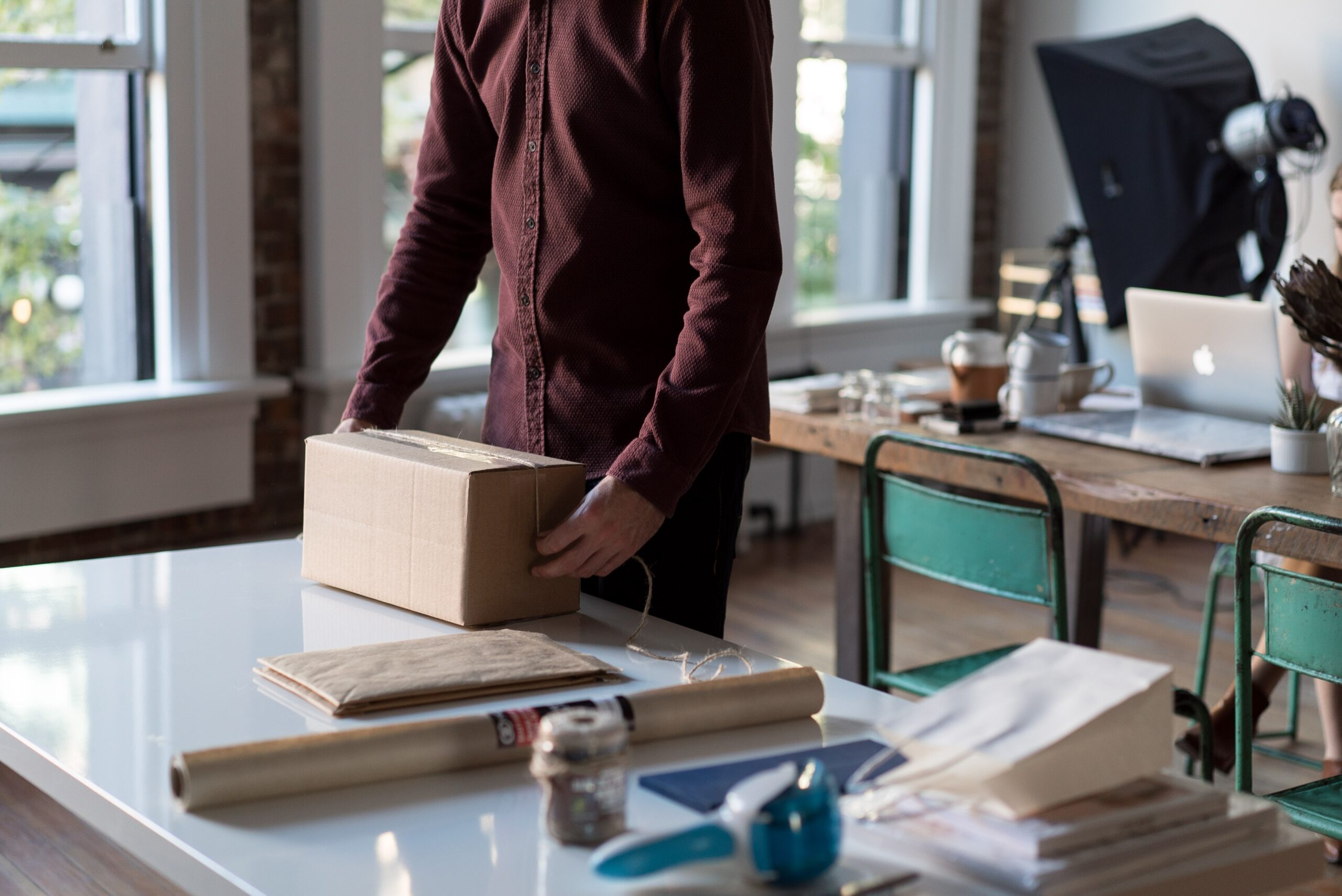
63% of millennials get a package delivered each and every week. For apartment buildings, this is a big logistical hassle. Apartment building managers need to figure out how to securely get every package to every resident. This task becomes even more daunting when considering that over a third of Americans have experienced package theft, with the average value of a stolen package being over $100. With so much money on the line and such an abundance of packages to sift through, many residential apartment building managers are opting for smart lockers as a safe, efficient way to sort and distribute packages.
4. Most Millennials Renters Live in Apartments
As of 2015, 60% of millennial renters lived in apartment buildings or condominiums. Millennials’ preference for location over size is one reason that more millennials live in apartments. Another reason is that apartment units are typically easier to rent than single family homes, and as noted above, housing costs are substantial for millennials.
Moreover, millennial renters are much more likely to live in cities as compared to millennial homeowners, who are more likely to live in the suburbs or exurbs.
5. Millennials Will Pay More to Live in a Walkable Place
Rather than being out in the suburbs, many millennials prefer a more urban lifestyle. 68% of millennials would pay more to live in a walkable area. Perhaps even more surprising, 25% of millennials will pay ‘a lot more’ to live in a walkable place. This preference can be partly explained by millennials’ preference to modes of transport other than cars. Fewer millennials own drivers’ licenses than older generations, and more millennials prefer public transit, walking, or biking compared to driving.
One reason millennials are more likely to live in apartments rather than single family homes is precisely because apartments tend to be in more walkable areas.
6. Millennials Have a Strong Preference for Amenities
Millennials who rent apartments want more than a room to sleep in at night. Millennials want amenities in their apartment complex. This preference has led to an astonishing growth in apartment construction across the U.S. Builders are erecting apartments at three times the frequency they were just a decade ago, at a rate of about 340,000 units per year. The amenities millennials desire include fitness gyms, outdoor recreational facilities, wifi, and a lounge area or party area. Millennials want these amenities much more often than their Boomer counterparts.
The landscape of housing in America is always changing. As millennials age into parenthood, there will likely be a shift out of the cities and towards the suburbs. However, we have yet to see how dramatic that shift will be. Will as many millennials move to the suburbs as Gen Xers and Boomers did? Or will significantly fewer leave the city centers? As the millennial story unfolds over the next decade, Gen Zers will age into an increasingly difficult housing market.
The post 6 Surprising Statistics About Millenial Apartment Living appeared first on Smiota.
]]>The post 6 Amenities an Apartment Millennial Community is Searching For appeared first on Smiota.
]]>
1. A Nature Oasis
Natural spaces improve mood, cognitive ability, and emotional well-being. Investing in the green spaces around your apartment adds an air of serenity while also functioning as community spaces. Consider developing a rooftop garden or patio with an outdoor kitchen and grill. Residents can reserve the space for their own gatherings, and you can host apartment-wide events to develop a sense of community.
Tip: Even just adding real houseplants to an indoor common area can boost morale.
2. Co-Working Space
Millennials have always loved flexible workspace options. In light of the COVID pandemic, this trend is sky high with over 50% of millennials working at least part-time from home. Though the generation prefers flexibility, creating an at-home workspace can be an obstacle.
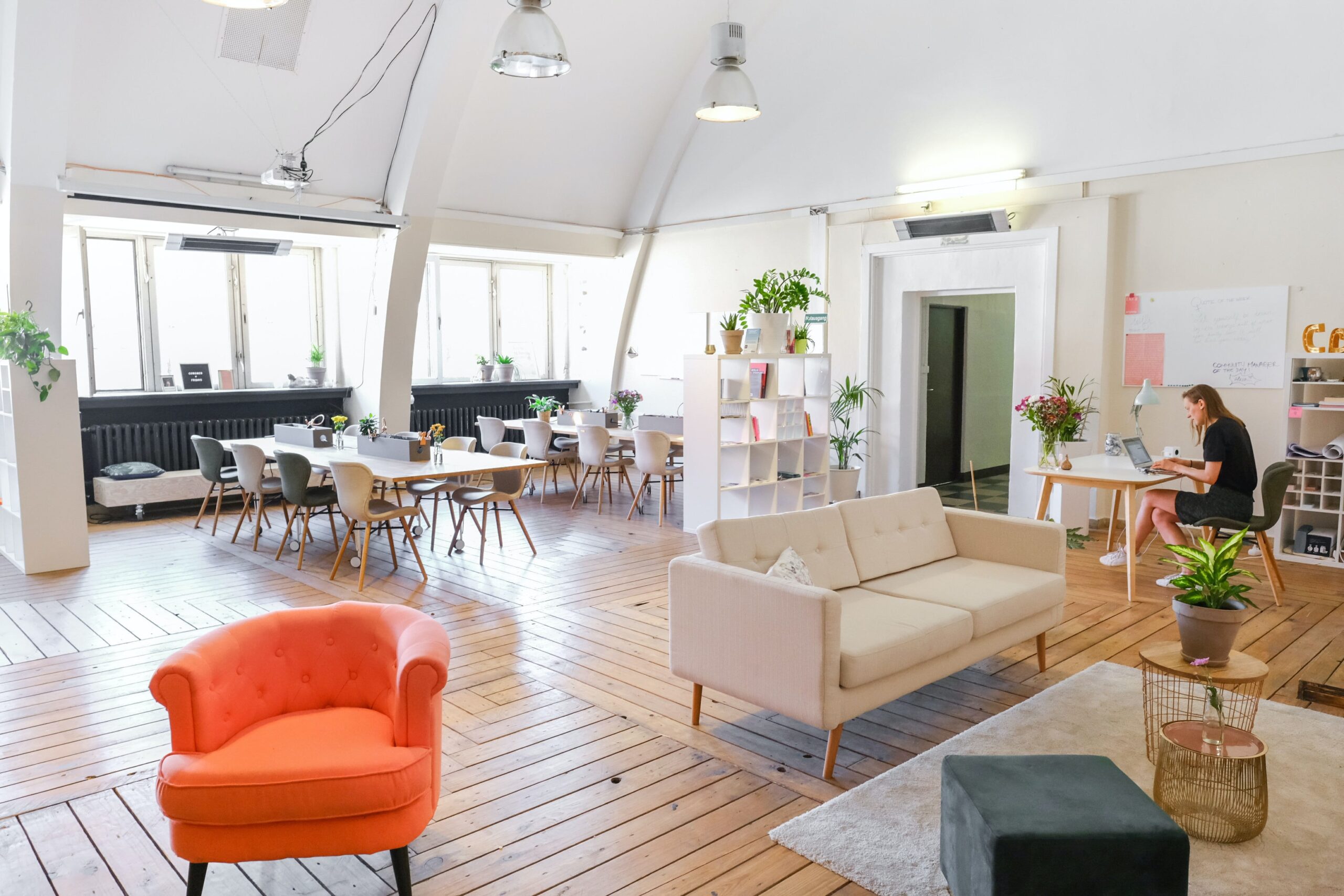
A simple solution? Add a co-working space to your apartment’s common areas! While you can go to the nines by including reservable offices and meeting rooms, it doesn’t have to be so complicated. The space can easily overlap with other common areas.
Tip: For a simple solution, include a community table with ergonomic work chairs and a couple of private call rooms.
3. Complimentary Beverage Station
Among the stereotypes of millennials, their affinity for coffee is one of the most prevalent. But it’s not completely unfounded. According to the Food Network, millennials account for 44% of the nation’s coffee consumption. Including a complimentary beverage station in the common area will not only attract millennial clientele but will also help with retention. Employers see a jump in staff retention and office culture when they provide free food and beverage, and these trends extend to the relationship between a tenant and landlord.
Tip: Start simple with a coffee and tea station, or go all-in with kombucha and cold brew on tap or setting up a drink swap fridge.
4. Fitness Center
What’s another way to boost emotional health and productivity for your tenants? A fitness center! Over 75% of millennials engage in weekly exercise, and many expect some form of a fitness center in their apartment. Design your fitness center based on the space you have available, or, in the case of apartment complexes, you can consider adding an additional building for the fitness center. Most apartments offer both cardio equipment alongside weight-training machines, and many others are branching into other wellness opportunities. Yoga studios, nutrition counseling, and saunas can be enticing additions to your property.
Tip: Many millennials not only want access to a gym, but they also want training. Partner with local fitness groups in your area to bring in teachers for yoga, high-intensity interval training (HIIT), and strength and conditioning classes.
5. Smart Lockers
The generation of millennials appreciates creative ways to increase the efficiency of daily tasks. On the scales of a work/life balance, many millennials struggle to find the time for general chores like grocery shopping and picking up mail. As property managers, you can provide a powerful solution and opportunity for your residents: smart lockers.
Smart lockers are secure modular systems of individual lockers that keep deliveries in a safe and protected environment at your doorstep. You can get them completely customized to your common space or even get the weather-resistant locker to place outside!
What does this mean for you? No more overwhelmed mailrooms, package drop-off completely facilitated by the mail courier, and full documentation of the item’s chain of custody.
What does this mean for your residents? Convenient 24 hr pickup, no mailroom lines, easy notification, and tracking system, and a sanitary and contactless process.
Tip: Get a temperature-controlled Smart locker system for residents to receive refrigerated grocery delivery in addition to the smart locker in your mailroom.
6. Digital Connectivity
Raised alongside the emergence of smartphones, tablets, and social media, millennials are one of the most tech-savvy demographics. Streamlining processes through online forms and apps will attract the millennial community. These younger renters are used to paying bills with an app and transferring money using platforms like Venmo, Google Pay, and Apple Pay. Catering to these proclivities will take some stress off your residents. As a result, you will have full digital documentation with each of your residents. On a single platform, residents can pay rent and utilities, submit and track maintenance requests, and communicate with property management.
Tip: Many software providers want to make things easier for you. Look for programs like Smiota Mailroom that can integrate into a system you already have, so even your smart devices can be synced up.
Appealing To a Generation’s Values
Millennials appreciate when tedious tasks are streamlined to give more space for life’s luxuries. Even more so, millennials like convenience and community. They want to live in a central area with access to culture, while also being a safe neighborhood. In your apartment, you can add to both the sense of community and security by providing appropriate amenities for your residents. Creating enticing common spaces and digitized communication systems cater directly to the millennial values of time efficiency and autonomy.
The post 6 Amenities an Apartment Millennial Community is Searching For appeared first on Smiota.
]]>The post Why Are My Residents Using an Apt Courier Service? appeared first on Smiota.
]]>
In the midst of all this change and disruption, chances are that your residents are using a courier service of some sort at increasing levels. Perhaps you’re wondering why that is, and what it means for you as you make smart choices for your properties. Why are your residents using an apt courier service?
What Is An Apt Courier Service?
First of all, let’s review what a courier service even does:
Courier services are a business model based on quick, door-to-door deliveries. Some form of this work has been around for time immemorial for individuals intent on securing the safe delivery of valuable items.
Obviously, your residents are not necessarily land-owning kings sending a dowry across rough terrain. But for a person depending on the delivery of their prescription medication, or someone sick with COVID who needs to eat, the importance of these deliveries can take on epic-Arthurian importance. Our societies have morphed through the centuries – but our basic needs and desires have not.
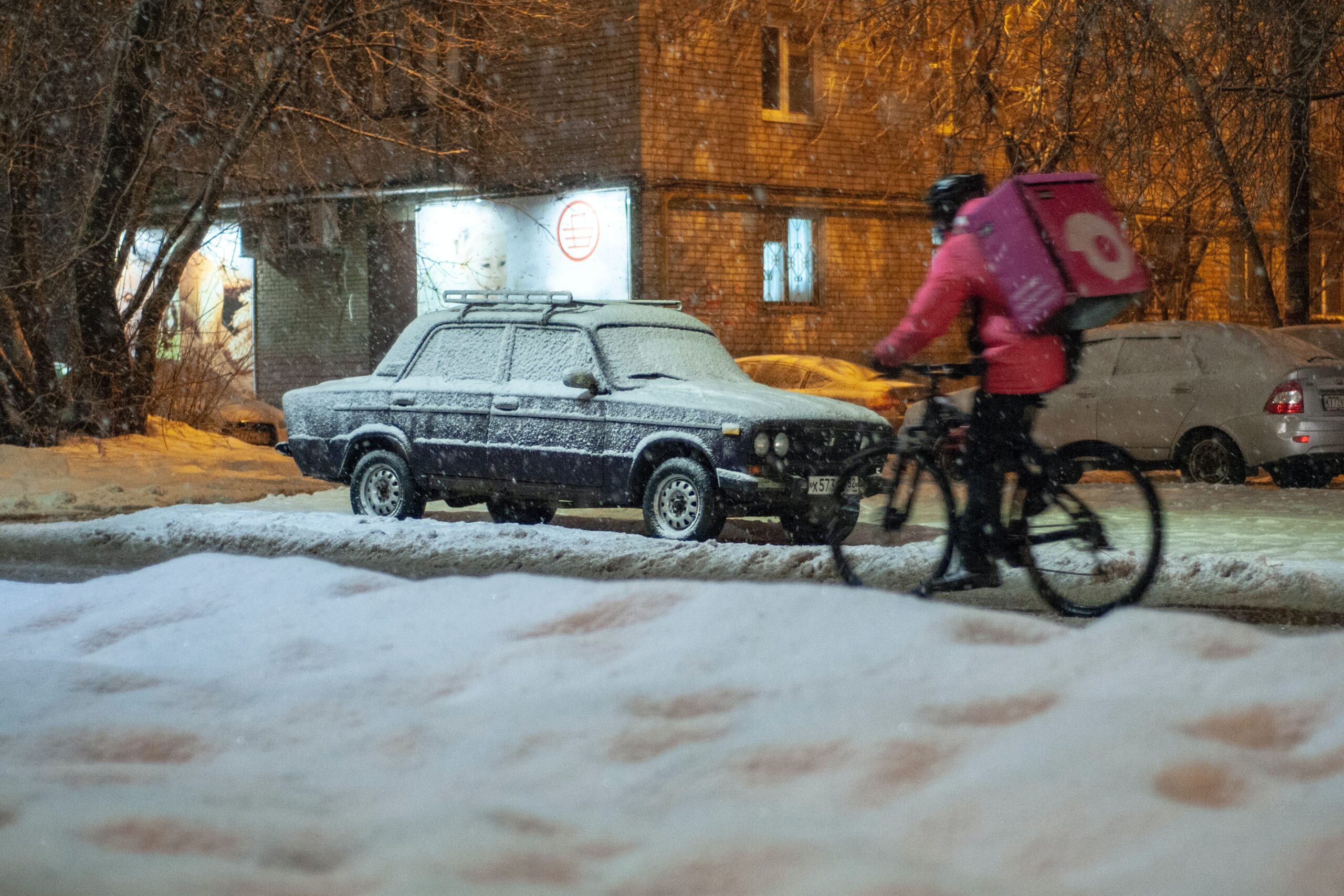
Today, depending on the type of courier service, these delivery professionals will use various forms of transportation – bus, car, or bike usually – to personally deliver items to a client’s front door.
So Why Do People Use It?
Courier services add a level of accountability that consumers often desire, or need. But people also use courier services because it gives them more control over the delivery process. When using a courier, delivery times are often quicker and might include on-demand pick up or time-definite delivery. This can make a huge difference for people – whether they are parents juggling a hectic schedule, young professionals working intense hours, or students navigating finals week.
The stats around online shopping and home delivery have been sky-rocketing for years. By mid-2021, e-commerce alone amounted to over 200 Billion dollars in the United States, according to the government census data. That’s a lot of deliveries – and doesn’t even account for orders people made over the phone with local businesses. These numbers will continue to increase, especially now that people have become even more familiar with items arriving at their front step. Additionally, companies have adapted to make the process increasingly convenient in response to social distancing practices and other disease-mitigation tactics.
Porch Pirates
With these increases in consumer demand, however, comes some shadowy increases of package theft and porch pirates as well. Almost half of all Americans have reportedly experienced package theft at one time or another.
For residents living in apartments, multi-family units, and other larger housing buildings, these concerns are even more paramount. According to one online poll, 60% of people living in condominiums experienced package theft, with apartment dwellers not far behind. Both were at higher risk than single-family homes according to this poll.
With a “shared” front door and often more limited delivery options for regular shipping and post, people living in residential buildings can work with a courier service as a way to guarantee that they are home when deliveries arrive and that the items they are paying for (and often depending on) are not stolen from the front steps of their building.
So apart from the scheduling conveniences, it’s not hard to understand why these features of a courier service will appeal to residents with well-founded safety and security concerns.
What Does That Mean For Multiliving Residential Buildings?
People are depending more and more upon delivery services to complete necessary tasks like grocery shopping, prescription fulfillment, and home goods. This means that your multi-living residential buildings need to adapt to accommodate these shifting consumer habits. Doing so promotes both the satisfaction and well-being of ideal, long-term residents while also increasing safety and lowering theft around your building. It’s a win-win.
The use of smart lockers is taking off in public places such as grocery stores, libraries, and even college campuses. And the same is true for forward-thinking management regarding residential buildings as well. Smart lockers can essentially eliminate package theft and security concerns for residents while incorporating the increasing use of courier services. Smart lockers are also an efficient organization system in a place where multiple people share public space.
Conclusion
Making smart, efficient, secure decisions is a critical step in owning and managing residential buildings in a sustainable way. Utilizing user-friendly technology is a simple and effective way to do just that. Your residents are using an apartment courier service because it meets their needs. Understanding these needs and reacting to them in a proactive way will increase the value of your property and the functionality of the space for those who inhabit it.
The post Why Are My Residents Using an Apt Courier Service? appeared first on Smiota.
]]>The post Success Story: Mariner’s Village appeared first on Smiota.
]]>
The challenge: A Mountain of Packages
Mariner’s Village is a large complex serving over 2,500 residents. Dealing with the volume of mail that comes with that many residents can be a problem. Marc says, “we have two dedicated package rooms to support our community. Essentially one room supports small and medium-sized packages and one room supports large and extra-large deliveries. We average 300 package deliveries per day.”
One of the challenges of having so many packages is physically storing them while waiting for residents to pick them up. “Before Smiota, packages were being delivered to each resident’s building and being left outside at the general mailbox area for the building. Often packages would pile up before being retrieved by residents.”
Once residents came to pick up packages, it often would take up valuable staff time to help sort through the mess. “There was a lot of time and resources being dedicated to package retrieval. Since packages would be left in a general area, residents often came to the staff to verify if their package was delivered or that they couldn’t find it and if we had any knowledge of where it was.”
In the worst-case scenario, residents couldn’t find their packages – whether because of misdelivery, accidental pickup, or theft. “Often we had very limited ability to assist residents, as only the resident would receive notification of their package delivery and status” said Marc.
The Solution: Smiota Smart Lockers
Smiota smart lockers have allowed Mariner’s Village to not only simply and streamline their mail delivery process, but it has also been extremely popular with their residents. “Since implementing Smiota Package Rooms, our customer service ratings have improved 100%. Our residents have the comfort and knowledge of knowing they can get their packages anytime, day or night, from a secure, comfortable location.”
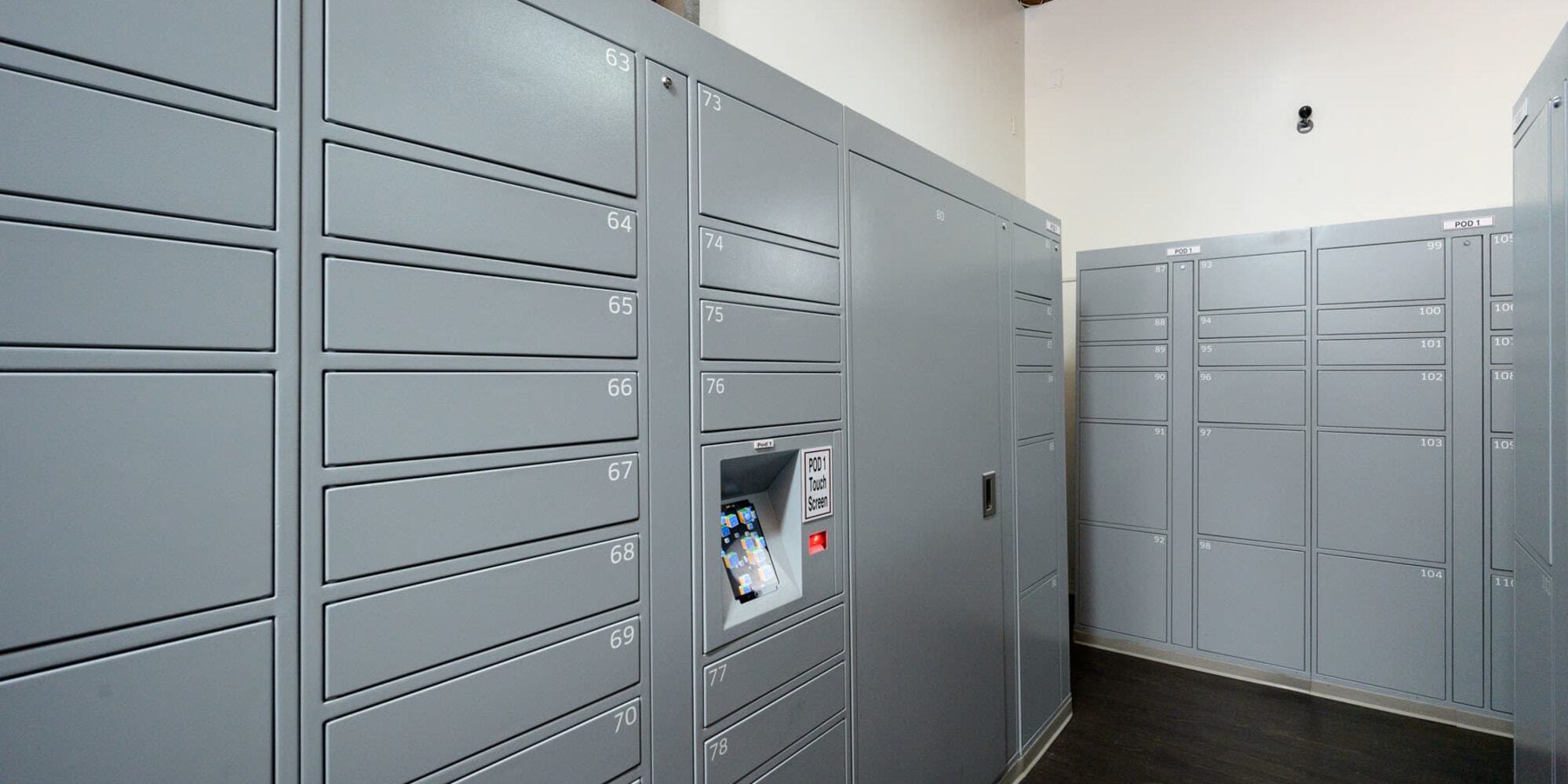
Mariner’s Village began by installing 373 package lockers. These are directly accessed by mail carriers and delivery persons, and residents receive real-time up-to-date notifications as to the status of their packages.
Not only do the smart lockers solve many logistical problems, but Smiota’s customer service term has also been with Marc every step of the way to ensure a smooth transition. “The team goes above & beyond to ensure a smooth installation experience and ongoing support. With Smiota, anytime we’ve reached out for support, they’re literally always there. No auto-bot chat boxes or “please contact your representative” auto-replies. You need help, you can call or email anyone, anytime, and get a Smiota team member who knows their product and can resolve the issue.”
The Result: Expanded Smart Lockers
Mariner’s loved their smart locker system, but COVID began to put a strain on their 373 locker system that wasn’t being felt before. “When we opened our 1st package room of 373 lockers for our 981 units a couple of years ago, this room certainly met our needs averaging 65% – 70% capacity.”
But, an increase in shipments changed this. “The pandemic seemed to be the game changer where daily deliveries literally began doubling every day. As a result, we had to create an “overflow” room for the largest packages. In response to the increase, we converted a 2nd room, adding an additional 107 lockers. Since then, the lockers average about 75% capacity so we’re meeting our current needs with room for continued growth.”
As an added bonus, the smart locker system has helped Mariner’s maintain their competitive edge in the housing market. “[Our residents] not only love it, in today’s online shopping environment, they expect it. Our competitiveness with other communities has greatly improved.”
The post Success Story: Mariner’s Village appeared first on Smiota.
]]>The post Pick-Up Lockers: 3 Scenarios Your Residents Will Love appeared first on Smiota.
]]>
As you transition delivery systems to include smart lockers, here are three scenarios that make these updated systems so popular with residents.
Scenario One: Late Night Retrieval
One of the most convenient aspects of pick-up lockers is that residents can retrieve packages at their leisure – independent of office hours, available staff, and holiday schedules. This is a huge bonus for people at all life stages: college kids, working professionals, busy mothers, retired globe-trotters returning home from a sunny beach. The list goes on.
Picture this: a young law student is working at a firm as a summer associate. Her work this summer will determine her future job prospects and area of expertise. Because of this, she is working grueling hours and at home sporadically at odd times. Her stress level is high and she feels isolated from friends and family.
On an evening when she returns late to her apartment building, she remembers that her smartphone alerted her to a delivery earlier in the day. At 1 am, she approaches the smart lockers and quickly enters the code to retrieve the package. The locker automatically pops open. Inside is a care package and a note from her mother, who lives in another state, with well wishes and words of encouragement. Being able to pick up her package at such a late hour results in a feeling of contentment and support that lasts through the week – allowing her to wake up in the morning and begin the day with newfound vigor. If this young and driven professional had had to wait for available desk hours, who knows when she would have been able to carve out time to pick up this package?
Scenario Two: Protected From Porch Pirates
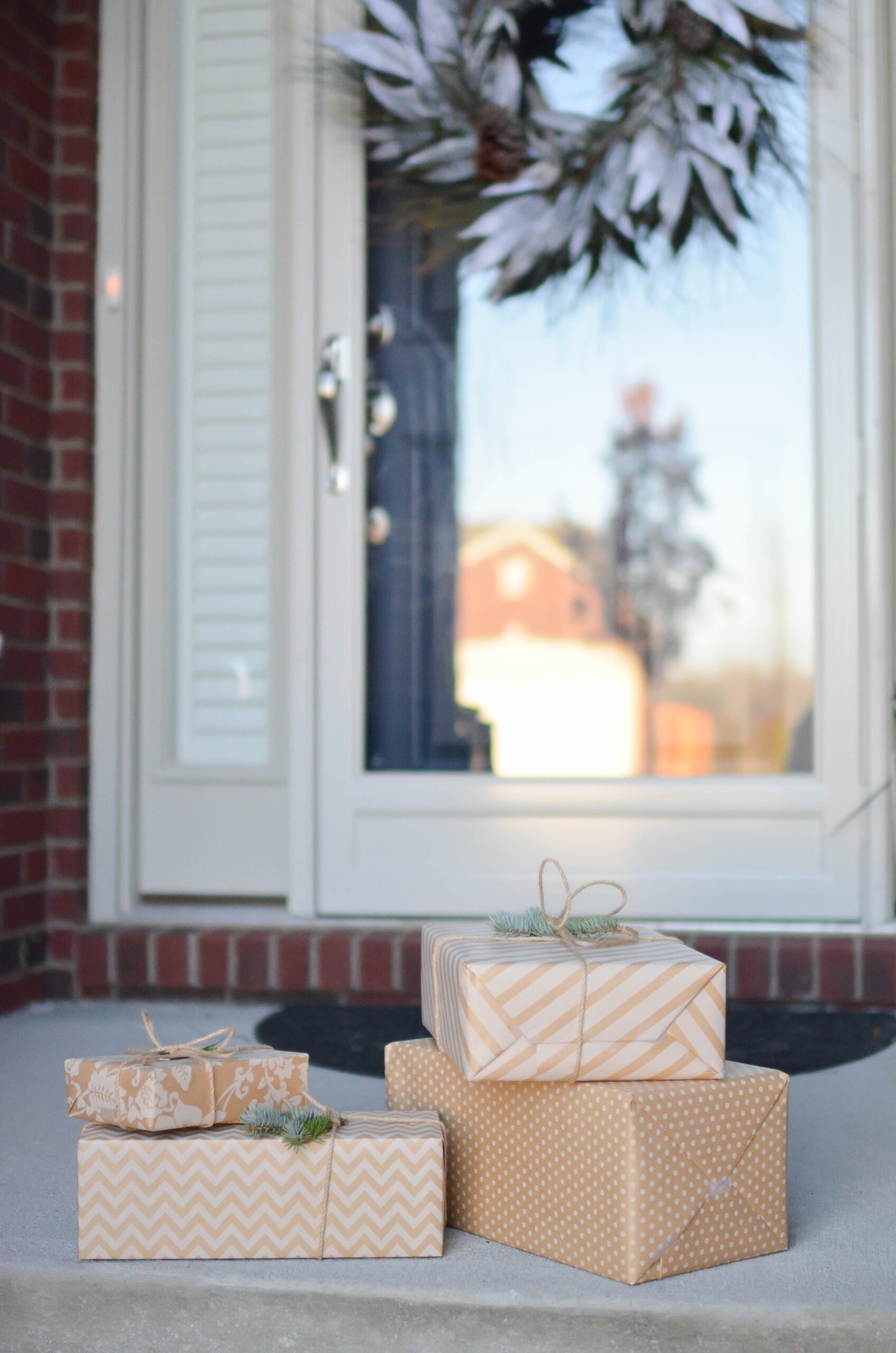
Another aspect of pick-up lockers that your residents will love is the added security these smart lockers provide. With porch piracy skyrocketing in these online-delivery times, this is a growing concern for consumers everywhere. There are all sorts of security measures that are gaining traction as a means to mitigate this problem, including cameras and apps like Amazon Key where delivery professionals gain access to the garage or house for a short period of time.
But not everyone is comfortable with a stranger in their home – for good reason. And not everyone has a garage or the capacity to institute these technologies on their own. For apartment complexes, dorms, libraries, and other situations, however, smart lockers are an effective option for securing the deliveries of all residents.
In a scenario where a local filmmaker has ordered a new hard drive for a project that needs to be saved as soon as possible, that package will be securely stored in a dry, temperature-controlled environment until it is picked up by the resident, eliminating the possibility for theft and weather exposure in the meantime.
Scenario Three: Multi-package pick-up
In our society today, it is important to emphasize efficient and sustainable means of going about our daily activities. There are certainly cases where instituting technology can complicate a situation, instead of simplifying things as it intended – luckily smart lockers are not one of those situations.
In addition to 24/7 customer support, there’s another way that smart lockers help us to avoid complications altogether: delivery professionals, couriers, FedEx, and UPS can put multiple items into one locker for a resident. This may seem like a small feature, but it is a massive time-saver for residents on the go.
For example, let’s say there’s a busy mom with 3 young children. Waiting for her at home, one locker contains multiple deliveries, ready to be retrieved by her at her earliest convenience. Mid-morning, on the way home from the park, she whizzes by the smart lockers on the way back to the apartment to retrieve a small bag of groceries, an order of reusable diapers she bought online, and a letter from grandma for the kids. What might otherwise be an entire day of errands is becomes a 3-minute detour for her on her way to get the kids upstairs for nap time. She now has ample time to take care of her own needs as a human, while simultaneously providing love and care for her family.
Whatever the Scenario – Smart Lockers Make For Easy Pick-Up
Consumer habits, office culture, and community needs continue to shift quickly in the world. As we adjust and move through a global pandemic, new technologies, and a growing emphasis on environmentally-conscious options, so will the situations we encounter in our everyday lives. Whatever the scenario, smart lockers are an effective and efficient way to make the delivery process as quick and easy as possible so that we are better able to focus on the challenges at hand.
The post Pick-Up Lockers: 3 Scenarios Your Residents Will Love appeared first on Smiota.
]]>The post How to Manage Your Deliveries With An Apartment Package Locker appeared first on Smiota.
]]>But to clear up any question you might have about how this process works, here’s a step-by-step guide to apartment package lockers. This will irradicate any inkling of confusion or stress as you go about incorporating these smart lockers into your residents’ daily routines. Plus, you’ll have a better understanding of what all is possible. Food deliveries, IT hand-offs, and more!
Step One: Update Your Smartphone And Download The Smiota App
It’s true: in order to use these smart lockers, your residents will need to have access to a smartphone, computer, or tablet of some kind. This is an important link in connecting the steps to the process, so make sure that all phones and Smiota POD apps are up-to-date and ready for smooth sailing. Trust me, it will make the whole process that much smoother.
Step Two: Courier Drop Off
Once the smart locker process is underway, it will look strikingly similar to how mail and packages have always been delivered from warehouses, restaurants, and businesses, via courier.
When the courier arrives at your apartment package lockers, they use their own smart tablet to select the appropriately sized locker for each package. Then, they enter the recipient’s name to assign the locker to them.
The courier will carefully place the deliverables inside the locker and will securely close and lock the compartment before departing.
The locker will stay locked until the recipient arrives to collect the package – and the delivered goods will stay safe and secure from package thieves – a huge problem plaguing people all over the world. And it’s not just take-out food that goes missing. Many of us cannot afford to miss or lose a delivery of prescriptions, work supplies, or important equipment. Because the courier is now able to secure the delivery in a smark locker, these items will be safe and waiting for your residents’ arrival. What a relief.
Step Three: “You’ve Got A Package”
As the courier assigns the locker, the Smiota app will alert each resident. These messages arrive in an immediate fashion, so they’ll know right away when your goods have arrived. No more wondering, double-checking, or hassling. They’ll know.
Step Four: Visit Locker At Earliest Convenience
Package lockers are made for your convenience. When residents receive the notification that mail has arrived, they can immediately run to grab it. But maybe a resident’s day is hectic and long, and they aren’t able to get around to picking up the package until late in the evening – that’s okay too!
A package locker will enable your residents to work with their own schedules. Package delivery is no longer determined by a front desk, office hours, or vulnerability to package thieves. You can mosey down to the apartment lockers at a time that works in your day, eliminating inconvenient time constraints and making things easier for you and your residents.
Step Four: Open Locker With Passcode or Cell Phone
When it comes to opening your assigned smart locker, you can choose your own adventure.
Some people prefer to use their 5 digit passcode to open their locker. Others automatically open the locker with a simple swipe of their smartphone via the Smiota POD app. Either way, it’s a piece of cake. As residents familiarize themselves with the process, they’ll get a sense of their own preferences and can choose accordingly.
Step Five: Grab and Go!
Last, residents need to only enter their passcode or open the locker via the app and voilà! The assigned locker will open. They can retrieve their package or delivery, grab it and go on with life – without using the time and resources of your other staff.
Smart lockers are temperature controlled, which means that deliveries like food, flowers, and other perishables will have a longer life span while awaiting their arrival in their eager hands.
If any questions do arise as you go about this process, smart lockers have 24/7 customer support options. It is yet another perk of these forward-thinking systems – you can ask for help at any hour of the day or night.
Thus concludes this step-by-step guide of what to expect with smart lockers, and also a showcase of just how user-friendly this technology can be. It’ll take you no time at all to feel comfortable with this new delivery method and enjoy the ease and security these lockers provide.
The post How to Manage Your Deliveries With An Apartment Package Locker appeared first on Smiota.
]]>