The post Smart Locker Security: How They Protect Packages 24/7 appeared first on Smiota.
]]>Smart locker security combines physical reinforcement, encrypted digital access controls, complete audit trails, and optional video surveillance to create a layered protection system that has near-zero theft rates. Each compartment is built with reinforced steel, controlled by authenticated software, and monitored continuously through the cloud platform — every interaction logged with timestamps, user identity, and chain-of-custody data.
Compared to unattended package rooms (where 26 percent of Americans report theft) or porch deliveries (where 49 million packages were stolen in 2024), smart lockers are dramatically more secure. They are also compliant with major regulatory standards including HIPAA, SOC 2 Type II, GDPR, and FIPS 140-2 for government and military deployments.
Physical Security Features
Reinforced steel construction: Smart locker units are built with 14-16 gauge steel walls, doors, and frames, far stronger than typical mailbox or package room enclosures.
Tamper-resistant locks: Electronic locks are recessed and protected by anti-pry plates. Physical override keys (for emergencies) are stored in tamper-evident enclosures.
Reinforced hinges and frames: Doors are mounted on heavy-duty hinges and welded to the frame, resisting prying or kicking attempts.
Anti-drilling protection: Lock mechanisms are protected by hardened steel plates that resist drilling attacks.
Tamper alerts: Built-in sensors detect impacts, prying attempts, and unauthorized access. Alerts are sent to administrators in real time via SMS or email.
Outdoor protection: Outdoor-rated lockers include weatherproofing (IP54 or higher), UV-resistant coatings, and reinforced anti-vandal exteriors.
Digital Security and Encryption
AES-256 encryption: All data in transit and at rest is encrypted with AES-256, the same standard used by banks and government agencies.
Secure authentication: Users authenticate via unique PIN codes (one-time use), mobile app with biometric login (Face ID, Touch ID), QR codes, or RFID cards. Codes are time-limited and tied to specific compartments.
Multi-factor authentication for administrators: Locker administrators must use 2FA (typically password plus authenticator app) to access the management portal.
Secure key exchange: Communication between lockers and the cloud uses TLS 1.3 with certificate pinning to prevent man-in-the-middle attacks.
Role-based access control: Different user roles (resident, courier, admin, super-admin) have different permissions to prevent privilege escalation.
Access Control Methods
PIN codes: One-time PINs sent via SMS or email when a package arrives. Codes expire after pickup or after a configurable time period (typically 7 days).
Mobile app: Residents authenticate via the mobile app using biometric login. The app displays available packages and opens compartments with a tap.
QR codes: Notifications include scannable QR codes that open compartments at the locker kiosk camera.
RFID cards: Many corporate and university deployments use RFID badge access integrated with existing access control systems.
Carrier authentication: Couriers (FedEx, UPS, USPS, Amazon, DoorDash) authenticate with their own credentials, ensuring only authorized delivery personnel can drop off packages.
Biometric (optional): Some high-security deployments add fingerprint or facial recognition for additional authentication.
Audit Trails and Chain of Custody
Every interaction with a smart locker is logged in the cloud platform with a timestamp, user identity, compartment number, package ID (if scanned), and event type (delivery, pickup, attempted access, alert).
Audit logs are immutable and exportable, satisfying requirements for HIPAA (healthcare), evidence chain-of-custody (law enforcement), Sarbanes-Oxley (financial records), and FERPA (student records).
Some systems also capture photo evidence at every transaction using a built-in camera, creating visual proof of who accessed which compartment and when.
Camera and Surveillance Integration
Smart lockers integrate with existing video surveillance systems (Axis, Hanwha, Avigilon, Verkada) for additional accountability.
When a tamper alert fires, the system can automatically pull video from nearby cameras and attach it to the alert notification, giving administrators immediate visibility.
For high-security deployments, lockers can include built-in cameras at the kiosk that capture every user interaction and store the footage in cloud or on-premise storage.
Compliance and Regulatory Standards
HIPAA (healthcare): Smart lockers used for medication, lab specimens, or PHI must meet HIPAA standards including encryption, audit logs, access controls, and breach notification procedures.
SOC 2 Type II: Smart locker software providers should be SOC 2 Type II audited annually, demonstrating strong controls around security, availability, confidentiality, and privacy.
GDPR: For deployments in Europe or with European users, GDPR compliance includes data minimization, consent management, the right to deletion, and data protection impact assessments.
FIPS 140-2: Government and military deployments may require FIPS 140-2 Level 2 or higher cryptographic modules.
FERPA: University deployments handling student records must meet FERPA requirements for student privacy.
PCI DSS: If smart lockers process payments (vending, paid pickup), PCI DSS compliance is required.
Incident Response and Tamper Detection
Real-time alerts: Tamper detection sensors trigger immediate notifications to administrators via SMS, email, push notification, or webhook to a SIEM/SOC system.
Automatic lockdown: In response to tamper attempts, the system can automatically lock all compartments and require administrator override to resume normal operation.
Forensic logs: All security events are logged in detail, with the ability to export forensic data for law enforcement or insurance investigations.
Service-level agreements: Premium providers offer 24/7 monitoring and incident response SLAs with guaranteed response times.
Smart Lockers vs Traditional Storage Comparison
Traditional package rooms: No authentication, no audit trail, packages visible to anyone with building access. Theft rates: 15-30 percent in unsecured environments.
Front desk holding: Limited to staff hours, manual logging, prone to errors and lost packages. Staff time intensive.
Lobby tables and shelves: Worst-case scenario for theft and lost packages. No accountability.
Smart lockers: Authenticated access, complete audit trail, 24/7 availability, near-zero theft rates, integration with security systems.
Frequently Asked Questions
How secure are smart lockers?
Smart lockers use reinforced steel construction, AES-256 encryption, multi-factor authentication, tamper detection, and complete audit trails. They have near-zero theft rates compared to unattended package rooms.
Can smart lockers be hacked?
Reputable smart locker systems use enterprise-grade security including AES-256 encryption, TLS 1.3, multi-factor authentication, and SOC 2 Type II audited cloud platforms. While no system is 100 percent unhackable, smart lockers are dramatically more secure than traditional alternatives.
What happens if someone tries to break into a smart locker?
Tamper sensors detect prying, drilling, or impact attempts and trigger immediate alerts to administrators. Many systems also automatically lock down all compartments until an administrator clears the alert.
Do smart lockers have cameras?
Many smart lockers include built-in cameras at the kiosk that capture every user interaction. They can also integrate with existing video surveillance systems for additional monitoring.
Are smart lockers HIPAA compliant?
Yes. HIPAA-compliant smart lockers are used in healthcare facilities for medication management, lab specimen tracking, and other PHI-related workflows. They include encryption, audit logs, access controls, and breach notification procedures.
Do smart lockers comply with SOC 2?
Reputable smart locker software providers are SOC 2 Type II audited annually, demonstrating strong controls around security, availability, confidentiality, and privacy.
What encryption do smart lockers use?
Smart lockers use AES-256 encryption for data at rest and TLS 1.3 for data in transit. This is the same encryption standard used by banks and government agencies.
How are pickup codes secured?
Pickup codes are unique, one-time use, time-limited (typically 7 days), and sent only to the verified recipient via SMS, email, or in-app notification. They cannot be reused or guessed.
Can administrators see what’s in each locker?
Administrators can see metadata (which compartment is occupied, who delivered it, who’s authorized to pick it up) but cannot see the contents of packages without physical access. Camera-equipped systems may capture exterior photos at delivery.
What audit trails do smart lockers create?
Every interaction is logged with timestamp, user identity, compartment number, event type, and (optionally) photo evidence. Audit logs are immutable, exportable, and meet HIPAA, FERPA, and chain-of-custody requirements.
The post Smart Locker Security: How They Protect Packages 24/7 appeared first on Smiota.
]]>The post More Than Storage: How Smart Lockers Are Strengthening Campus Security appeared first on Smiota.
]]>This combination often results in overcrowded mailrooms, misplaced packages, and limited control over who accesses stored items. These aren’t just operational inefficiencies but genuine security concerns.
Smart lockers are emerging as a practical solution to these challenges. While often seen as a convenience feature, they are quickly becoming an essential part of modern campus security by introducing structure, control, and accountability.
The Security Gaps in Traditional Campus Systems
Traditional campus storage and delivery systems rely heavily on manual processes. Staff members are responsible for receiving, sorting, and distributing large volumes of packages daily. Under such pressure, errors are almost inevitable.
Packages can be misplaced, handed over to the wrong person, or left unattended in shared spaces. In many cases, there is no reliable way to track where things went wrong. The lack of a proper audit trail makes it difficult to investigate issues or assign accountability.
Common gaps include:
- Limited tracking of package movement
- Unauthorized access to storage areas
- High dependency on staff availability
- Increased chances of human error during peak times
These vulnerabilities highlight the need for a more structured and secure system.
What Makes Smart Lockers “Smart”?
Smart lockers bring automation and digital intelligence into what was traditionally a manual process. They use secure authentication methods such as PIN codes, QR codes, or RFID-enabled ID cards to ensure that only authorized users can access specific compartments.
Once an item is placed in a locker, the intended recipient is instantly notified with access details. This removes the need for manual coordination and reduces delays. More importantly, every interaction, whether it’s delivery, access, or retrieval, is automatically recorded in a digital system.
Key capabilities include:
- Controlled, user-specific access
- Instant notifications for pickups
- Automated logs for every transaction
- Integration with campus systems and apps
These features work together to create a system that is not only efficient but also highly secure and transparent.
Key Ways Smart Lockers Strengthen Campus Security
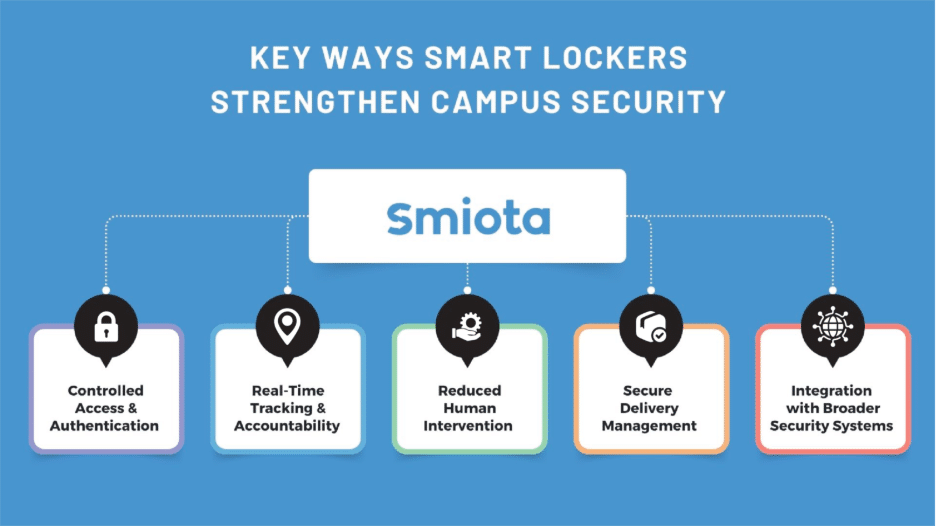
Controlled Access & Authentication
One of the most significant advantages of smart lockers is their ability to restrict access. Unlike traditional storage areas, where multiple people may have entry, smart lockers ensure that only the intended recipient can open a specific compartment. This eliminates ambiguity and significantly reduces the risk of unauthorized access or theft.
Real-Time Tracking & Accountability
Every interaction with a smart locker is recorded and time-stamped, creating a clear digital trail. This level of visibility allows administrators to track the exact journey of a package from delivery to pickup. In case of disputes, this data becomes invaluable, enabling quick resolution and improved accountability.
Reduced Human Intervention
By automating the handling process, smart lockers reduce the need for manual involvement. Staff no longer need to manage every package directly, which minimizes the chances of human error. It also reduces internal risks associated with mishandling or miscommunication.
Secure Delivery Management
With smart lockers, delivery personnel can securely deposit packages into designated compartments without needing staff assistance. This ensures that items are not left unattended or exposed to theft. In many ways, this system addresses the campus equivalent of “porch piracy,” providing a safe and reliable last-mile delivery solution.
Integration with Broader Security Systems
Smart lockers do not operate in isolation. They can be integrated with existing campus infrastructure such as surveillance systems and access control platforms. This creates a more cohesive security environment where multiple systems work together to enhance visibility and control.
Use Cases Beyond Package Delivery
While package management is the most common application, smart lockers serve multiple purposes across campus. Their flexibility makes them a valuable asset in different departments and scenarios.
For instance, libraries can use lockers to facilitate contactless book pickups and returns, reducing queues and ensuring secure handling. IT departments can streamline the distribution and collection of devices like laptops, maintaining a clear record of asset movement. Similarly, lockers can be used to store lab equipment, ensuring that only authorized individuals can access sensitive materials.
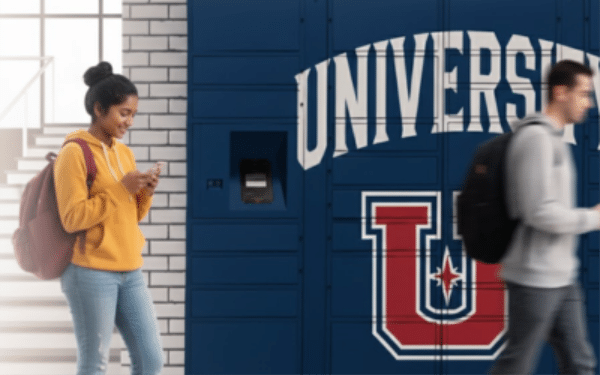
Additional use cases include:
- Contactless food delivery on campus
- Temporary storage for students and staff
- Secure exchange of documents or materials
This versatility makes smart lockers more than just a delivery solution – they become a shared infrastructure for secure access.
Impact on Campus Safety Culture
The adoption of smart lockers has a broader impact beyond operations. It influences how safety is perceived on campus. When students and staff know that their belongings are stored securely and can only be accessed by them, it builds a sense of trust in the system.
It also introduces a culture of accountability. Since every interaction is recorded, users become more conscious of their actions. This transparency reduces misuse and encourages responsible behavior.
Over time, these systems contribute to a more secure and organized campus environment. They also signal that the institution is investing in modern, technology-driven solutions to enhance safety and convenience.
Implementation Considerations for Universities
Implementing smart lockers requires thoughtful planning to maximize their benefits. Placement plays a crucial role and lockers should be installed in accessible yet secure locations such as residence halls, libraries, and academic buildings.
Equally important is integration with existing campus systems. A seamless connection with ID cards, mobile apps, and IT infrastructure ensures a smooth user experience. Universities should also consider scalability, ensuring that the system can expand as demand grows.
Other key considerations include:
- Ensuring user awareness and easy onboarding
- Providing clear instructions for use
- Addressing data privacy and security requirements
A well-executed implementation ensures that both security and usability goals are met.
Final Thoughts: Why Universities Are Turning to Smarter Locker Solutions
As campuses evolve, so do their security challenges. Traditional systems are no longer sufficient to handle the scale and complexity of modern university operations. Smart lockers offer a practical solution by combining security, efficiency, and convenience into a single system.
They strengthen campus security by:
- Restricting access to authorized users
- Creating a transparent audit trail
- Securing deliveries and shared resources
Solutions like Smiota lockers are helping universities take this step forward. With advanced access control, seamless integration, and scalable deployment options, Smiota enables institutions to modernize their infrastructure without added complexity.
For universities aiming to create safer, smarter campuses, smart lockers are no longer optional but an essential part of the security ecosystem. Learn more about how Smiota lockers can enhance student and staff experience in your university by talking to one of our locker experts.
The post More Than Storage: How Smart Lockers Are Strengthening Campus Security appeared first on Smiota.
]]>The post Temperature-Controlled Lockers for Apartments: The Future of Secure Deliveries in 2025 appeared first on Smiota.
]]>These advanced lockers are specifically designed to store perishable items like groceries, fresh meal deliveries, medications, flowers, and more. For multifamily properties, they’re more than just a cool amenity, they’re a game-changing service that improves daily life for residents while making operations smoother for property staff.
Let’s explore why temperature-controlled smart lockers are quickly becoming a necessity for residential communities and how they deliver immense value for everyone involved.
1. Keep Perishables Fresh and Safe
One of the biggest concerns with grocery and meal deliveries is spoilage. Items like dairy, meat, seafood, frozen meals, and temperature-sensitive medicine require specific storage conditions to remain safe and usable. Traditional lockers can’t offer that level of care, but refrigerated smart lockers can.
These lockers use built-in temperature controls to keep items chilled or frozen until residents are ready to pick them up. Whether it’s a late-night meal kit drop-off or an early morning grocery delivery, the freshness is preserved until retrieval.
Why this matters:
- Prevents spoilage of time-sensitive items like fresh produce, frozen meals, or prescription medications.
- Ensures food safety by meeting proper temperature guidelines.
- Offers peace of mind to residents who can’t retrieve deliveries right away.
- Reduces the risk of product loss or health concerns due to improper storage.
By delivering freshness and safety, temperature-controlled lockers make online grocery shopping and food delivery services more viable and appealing for residents. Plus, they encourage more frequent use of delivery services, giving residents an added layer of daily convenience.
2. 24/7 Secure Access for Residents
Life doesn’t follow a 9-to-5 schedule and neither do package deliveries. With 24/7 access to refrigerated lockers, residents no longer need to rush home or coordinate pickups during specific hours. They can simply retrieve their packages whenever it’s convenient.
These lockers are part of the broader Smiota smart locker ecosystem and offer flexible access through mobile apps, QR codes, or Bluetooth. That means no front desk waiting, no missed packages, and no stress.
Why this matters:
- Residents can access their items at any hour, whether it’s early morning or after midnight.
- Reduces missed deliveries and enhances the overall delivery experience.
- Creates a completely contactless pickup process, supporting better hygiene.
- Enhances privacy and independence for residents who prefer minimal staff interaction.
This level of convenience is particularly helpful for residents with irregular schedules, such as medical professionals, night-shift workers, or busy parents. It ensures that delivery services work around residents’ lives, not the other way around.
3. Reduce Staff Workload and Improve Efficiency
Managing packages, especially perishable ones, can become overwhelming for building staff. It often requires manual tracking, temporary storage, and frequent resident communication. Refrigerated lockers take that burden off staff by automating the entire process.
When a delivery arrives, couriers deposit it directly into a secure locker compartment. Residents are automatically notified via text, email, or mobile app, allowing them to retrieve the package without any staff involvement.
Why this matters:
- Reduces time spent by staff handling, tracking, or redistributing deliveries.
- Minimizes resident inquiries and complaints about package status.
- Prevents overcrowding of storage rooms and mailrooms.
- Increases overall staff productivity and allows them to focus on higher-value tasks.
By reducing human touchpoints and streamlining the workflow, property management teams can better allocate resources and create a more professional, stress-free environment.
4. Add a Competitive Edge with Tech-Forward Amenities
Smart lockers, especially temperature-controlled ones, aren’t just functional. They’re a powerful marketing tool. Today’s renters are digitally savvy and value technology that makes life easier. When they see advanced amenities like refrigerated lockers, they see a property that understands their lifestyle.
These lockers appeal to renters who regularly use grocery delivery apps, meal kits, or subscribe to services like FreshDirect, HelloFresh, or Instacart. It’s the kind of modern touch that stands out during apartment tours and online listings.
Why this matters:
- Attracts renters looking for convenience and innovation.
- Adds significant value to a property’s amenity package.
- Encourages lease renewals by improving resident satisfaction.
- Positions your property as future-ready and resident-focused.
In today’s competitive housing market, a forward-thinking amenity like this could influence a prospect’s leasing decision. It’s a small investment with the potential for big returns in tenant acquisition and retention.
5. Integrate Seamlessly with the Smiota Smart Locker Ecosystem
Refrigerated lockers are most effective when they’re part of a larger, integrated system. That’s where Smiota excels. These lockers work hand-in-hand with standard parcel lockers, mailroom automation software, and cloud-based tracking tools.
Everything can be managed through one centralized dashboard, from locker assignments to usage reporting. Integration with property management software means minimal disruption and easy onboarding.
Why this matters:
- All package types, including standard, refrigerated, or oversized, can be managed in one place.
- IT and maintenance teams can monitor locker performance remotely.
- Real-time alerts and reporting help with performance tracking.
- Scalable design supports properties of any size, from boutique buildings to multi-site portfolios.
The ability to scale and adapt ensures your investment remains relevant as your property grows or evolves. This integrated approach also enhances the overall resident experience by providing a consistent, dependable delivery solution.
6. Promote a Contactless Lifestyle
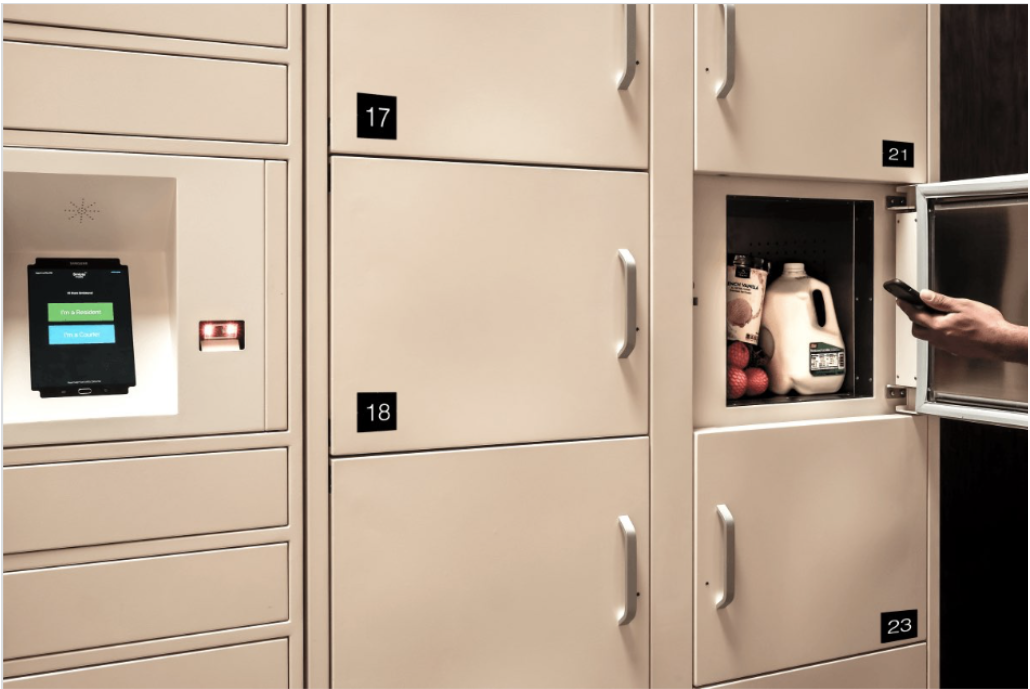
In the post-pandemic era, contactless amenities are more than a convenience. They’re a necessity. With refrigerated lockers, residents can pick up sensitive deliveries without touching shared surfaces or interacting with staff or couriers.
This feature is especially attractive in high-density properties, senior living facilities, or communities focused on wellness.
Why this matters:
- Minimizes touchpoints for added hygiene.
- Ideal for delivering sensitive items like medication and food.
- Supports the lifestyle of health-conscious residents.
- Reduces in-person interactions while maintaining service quality.
Providing a contactless solution also sends a clear message. It shows that your property prioritizes resident well-being and understands the evolving preferences of modern renters.
7. Reduce Carbon Footprint and Waste
Sustainability is a growing concern for both renters and property managers. Refrigerated lockers can help reduce waste and improve delivery efficiency. Couriers make fewer trips when deliveries are successful the first time, and fewer spoiled goods mean fewer returns or replacements.
Smiota’s smart lockers are also built with energy-efficient technology and materials, supporting green building initiatives.
Why this matters:
- Decreases number of missed deliveries and repeat trips by couriers.
- Reduces food waste from spoiled perishable items.
- Supports LEED certification and sustainability goals.
- Appeals to eco-conscious residents and helps build a greener brand image.
More than just an amenity, refrigerated lockers reflect your commitment to sustainability and social responsibility. These values increasingly influence renters’ decisions and can elevate your property’s reputation.
8. Support Special Deliveries and Resident Wellness
Refrigerated lockers aren’t just for groceries. They’re perfect for other temperature-sensitive deliveries such as skincare products, pet food, flowers, and wellness kits. This expanded usage supports modern living habits and creates a more personalized resident experience.
Why this matters:
- Accommodates a wider range of resident needs.
- Enhances satisfaction for residents with specific dietary, medical, or lifestyle requirements.
- Adds thoughtful convenience to pet-friendly and wellness-focused communities.
When residents see that their niche needs are supported, they’re more likely to feel at home and more likely to stay long-term.
Final Thoughts
Temperature-controlled smart lockers are no longer a novelty. They are an essential part of modern package management. With the rise of grocery and meal delivery, along with increased resident expectations, properties that offer refrigerated lockers stand out for all the right reasons.
They add value. They boost resident satisfaction. They make life easier for everyone involved.
Whether you manage a luxury high-rise, a student housing complex, or a large-scale multifamily community, Smiota’s temperature-controlled lockers offer the flexibility, reliability, and technology you need to stay ahead.
Want to see how temperature-controlled lockers can work for your property?
Book a free demo or contact us to get started.
The post Temperature-Controlled Lockers for Apartments: The Future of Secure Deliveries in 2025 appeared first on Smiota.
]]>The post 5 Ways to Identify and Prevent Package Theft in Apartment Buildings appeared first on Smiota.
]]>Smiota Smart Lockers provide unique security measures that are designed to keep multifamily building packages safe, secure, and out of the way. Let’s explore how you can prevent package theft in apartment buildings using cost-effective smart locker solutions as well as methods on identifying theft risks.
[button link=”/package-lockers/” type=”big” newwindow=”yes”] Find Your Package Security Solution[/button]
Beefing Up Security With Smiota
In 2022, nearly one in seven Americans had at least one package stolen from them. With eCommerce only increasing in ubiquity, it seems in order to bring those numbers down, it’s on property owners and managers to beef up security measures to keep bad actors out.
The best way to do this is by installing smart lockers from Smiota. Here are just a few security features that can help keep your tenants’ packages safe:
- User security: Each of our locker solutions boast role-based security access, password policies, and OAuth token-based security to ensure the only user able to access a locker is the owner of that package.
- Data security: TLS 1.2 ensures end-to-end encrypted communication so savvy cybercriminals are kept out.
- Real-time monitoring: Automated, regular reporting of locker unit integrity, hardware malfunctions, break-in attempts, and other security issues.
- Locker security: The lockers themselves are constructed with heavy-gauge steel to ensure maximum security. They are also locked down with MDM from 2Gears.
While the security features are certainly crucial to protecting packages, Smiota Smart Lockers have additional benefits, such as keeping mailrooms and common areas tidy, UV-C and antimicrobial protection, and 24/7/365 accessibility for extra convenience for package recipients.
How to Identify Package Theft in Apartment Buildings
The first step toward mitigating package theft risks is understanding where they come from. Here are some ways you can gain insights on flaws in your building’s security:
1. Ask the neighbors
Perhaps your property is in a neighborhood that’s already experiencing some level of crime. You can stay in the loop by joining community forums, apps such as Nextdoor, email lists, or police department newsletters. If nearby neighbors are reporting package theft, your renters could be the next victims.
2. Check the cameras
Surveillance cameras might not prevent theft on their own, but if you have them installed, the footage can give you an idea of where and how those thefts may occur. Look for questionable activity in and around the building, especially unauthorized visitors or strangers loitering on the premises.
And don’t be fooled by uniforms — some thieves dress as couriers or food delivery drivers to avoid suspicion while they snatch packages.
3. Gaps in security
Where do deliveries end up? In an unattended lobby, with a doorman, or even right outside the front door? When boxes start to stack up in plain sight, it’s an invitation for thieves.
You may think packages are safe as long as they’re delivered inside the building. But it can be pretty easy for strangers to gain access to the lobby. If your building doesn’t have a physical or virtual doorman, residents could be buzzing anyone and everyone through the front door. This is how one thief got into several apartment buildings in Manhattan to steal over $2,500 worth of goods. Additionally, make sure tenants know not to hold open the door for people they don’t recognize as a neighbor.
In some cases, the thieves may be already inside the building — tenants could be stealing their neighbors’ packages from common areas and doorsteps. Even if you haven’t yet heard complaints from tenants about missing mail, if packages are left out in the open, it’s likely only a matter of time before a theft occurs.
4. Residents are shipping elsewhere
Maybe you’ve noticed that tenants are taking matters into their own hands. Nationwide, nearly 35% of online shoppers have shipped to an alternative address to avoid theft, and 53% reorganized their schedules to make sure they’re at home for deliveries. Your residents might be staying home from work to receive a package, choosing to pick up packages at a shipping center, or having items delivered to their work address or a friend’s house. This is a sure sign that residents don’t feel their building is a safe place for packages.
Also look for notes to couriers requesting that they leave packages in a designated area, ring a doorbell, or take some sort of extra precaution to protect the delivery.
5. Reports of package problems
If residents are coming to you directly with security concerns or theft reports — or your prospective tenants don’t seem impressed with the building’s current package management — it’s time to take action. Solutions such as mailroom software, smart-lock technology, and package lockers can help ensure last-mile delivery to your residential building.
These add-ons impress tenants, too. In fact, 28% of renters rated package lockers as a “very important” amenity. The majority of those surveyed had some level of preference for these lockers, and 30% said they’d even be willing to pay extra for this solution. Those percentages are only going to go up as online ordering continues to rise.
If your renters aren’t comfortable receiving deliveries at your building, check out how smart solutions like package lockers can help.
Smiota Smart Lockers are Your Number One Resource for Preventing Package Theft in Apartment Buildings
With top-of-the-line security features and sturdy materials, Smiota’s smart lockers are your best resource for protecting against package theft in apartment buildings. Make your shipping and receiving efforts a breeze with automated, 24/7 access, heightened security, a customizable platform, and an app that easily integrates with your existing software.
Schedule a demo or give us a call today to find out how we can help!
The post 5 Ways to Identify and Prevent Package Theft in Apartment Buildings appeared first on Smiota.
]]>The post How to Prevent Package Theft at Your Business appeared first on Smiota.
]]>Protecting your bought-and-paid-for goods is critical whenever you buy online, so we’ve put together some tips on how you can prevent package theft at both your business or other facility.
Preventing Package Theft at a Business
Businesses and other facilities — universities, government offices, libraries, and more — tend to deal with shipping and receiving quite a bit, leaving them susceptible to bad actors. This is particularly true during the holiday season. Package theft not only eats into your bottom line and becomes a headache, it creates a negative perception of your business when customers can’t rely on you to deliver what they paid for, even if it isn’t your fault.
But all hope is not lost! Here are some tips to help you protect your goods:
1. Invest in a Smart Locker System
Smiota Smart Lockers provide 24/7/365 security features that monitor and protect all goods stored within. They log all instances of access and automatically notify owners if somebody attempts a break-in or if a maintenance issue arises.
Smiota’s smart lockers, for instance, include innovative technology and enterprise-grade security to ensure every delivery reaches its final destination safely. They also include:
- Role-based security access to deter unauthorized users
- OAuth token-based security
- End-to-end communication encryption
- Real-time security auditing and monitoring with both software and hardware security testing
- Data encryption
- Key rotation
In addition to state-of-the-art security features, the lockers themselves are powder-coated steel to ensure physical integrity. This is accompanied by 24/7 support, automatic updates, and a detailed analytics dashboard that generates real-time mailroom performance reports.
2. Enhance Other Building Security Measures
If package theft has become a thorn in your side and is eating into operational costs, it may be time to consider upgrading overall security infrastructure. This includes installing visible security cameras, posting signage that indicates the area is being surveilled, establishing formalized delivery and storage protocols and guidelines, and limiting access to package and inventory areas through access keycards. For good measure, install motion sensors and an alarm system that can notify local authorities in the event of a break-in.
Note: For a limited time, Smiota is offering a free Nest camera with every locker installation!
3. Train Employees
When implementing or upgrading your facility’s security measures, be sure to train all employees on how the new technology works, who is responsible for various duties, and who has access to which areas. It’s also a good idea to draft formalized guidelines for all employees regarding how to handle and store packages safely and what to do in the event of a theft or attempted theft.
Create feedback channels for employees to report any concerns they have about suspicious behavior. Foster a culture that allows staff to be vigilant, but not overzealous in their observations.
Smiota Smart Lockers Help Prevent Package Theft
With top-of-the-line security features and sturdy materials, Smiota’s smart lockers are your #1 resource to taking preventative measures against package thieves. Our lockers make your shipping and receiving efforts more efficient and automated by providing 24/7 access, heightened security, a customizable platform, and an app that easily integrates with your existing software, your package solutions are just a phone call away.
Schedule a demo or give us a call to get started on your customized smart locker solution today!
The post How to Prevent Package Theft at Your Business appeared first on Smiota.
]]>The post University Smart Lockers: Fighting Food Insecurity appeared first on Smiota.
]]>But why stop at mailroom logistics, when smart lockers create windows of opportunity in a plethora of areas?
Most importantly, university smart lockers have an important role to play in one of the most desperate issues facing students today: food insecurity.
It’s an exciting prospect to implement, especially because there are already organizations working to solve food waste and food redistribution issues within various campus communities.
Smart lockers are a way for academic institutions to collaborate with these often student-led initiatives and align with important legislation. In doing so, we better support students facing food insecurity and could eventually eliminate the scenario entirely.
Student Food Insecurity
When we think of young students working hard to earn their education, we think of strenuous exams, long research papers, study abroad exchanges, and pulling all-nighters to pass a particularly difficult class. These “living myths” of the university and college experience are not erroneous – but they do not always account for the financial burden and insecurities that students must take on in order to even enroll.
And unfortunately, with the sky-rocketing cost of living, paired with exorbitant tuition costs, and now, a global pandemic, food insecurity for students is a very real, detrimental occurrence today.
According to a recent report from Chegg in partnership with Swipe Out Hunger, nearly one-third – 29% – of students have missed meals at least once a week in 2020. 35% of college students report that hunger has impacted their ability to study at various points in their education.
Additionally, over half of the surveyed students report that they use off-campus food banks – some of them depending on these food shelves once or more per month. This is especially true for students who are also parents or are working to support their families and seems to impact female students in higher numbers. Over half of all students must reach out to their family members for money for food, while 24% of students take out loans to cover food costs. One-third of students report that they know a peer who has had to drop out of school due to food insecurity.
These numbers are staggering – it is a problem that must be solved. In the midst of the ongoing pandemic, these numbers do not even take into account the mind-boggling amount of student debt awaiting these recent graduates after they are handed their diplomas – leading to further financial insecurity and food stress.
Smart Lockers And Food Distribution On Campus
The challenges that students face are widespread – but in the spirit of education, creativity, and innovation, there’s no reason for something as solvable as food insecurity to exist going forward.
There are initiatives that have already hit the ground running, with student activists leading the way. For example, students are calling on universities to set up campus food banks – more accessible than food banks off-campus. Another call-to-action is for campuses to provide Supplemental Nutrition Assistance Program (SNAP)/food stamps for students and to provide assistance for students needing access to this type of support.
At a time when nearly a quarter of students say they’ve considered dropping out of school due to food insecurity, these initiatives can empower students to continue their studies, and more than that, thrive at a critical juncture in their lives.
Big ideas come with logistical challenges. This is where smart lockers come in, providing the efficient, accessible systems that will be the backbone of lasting change for student food insecurity.
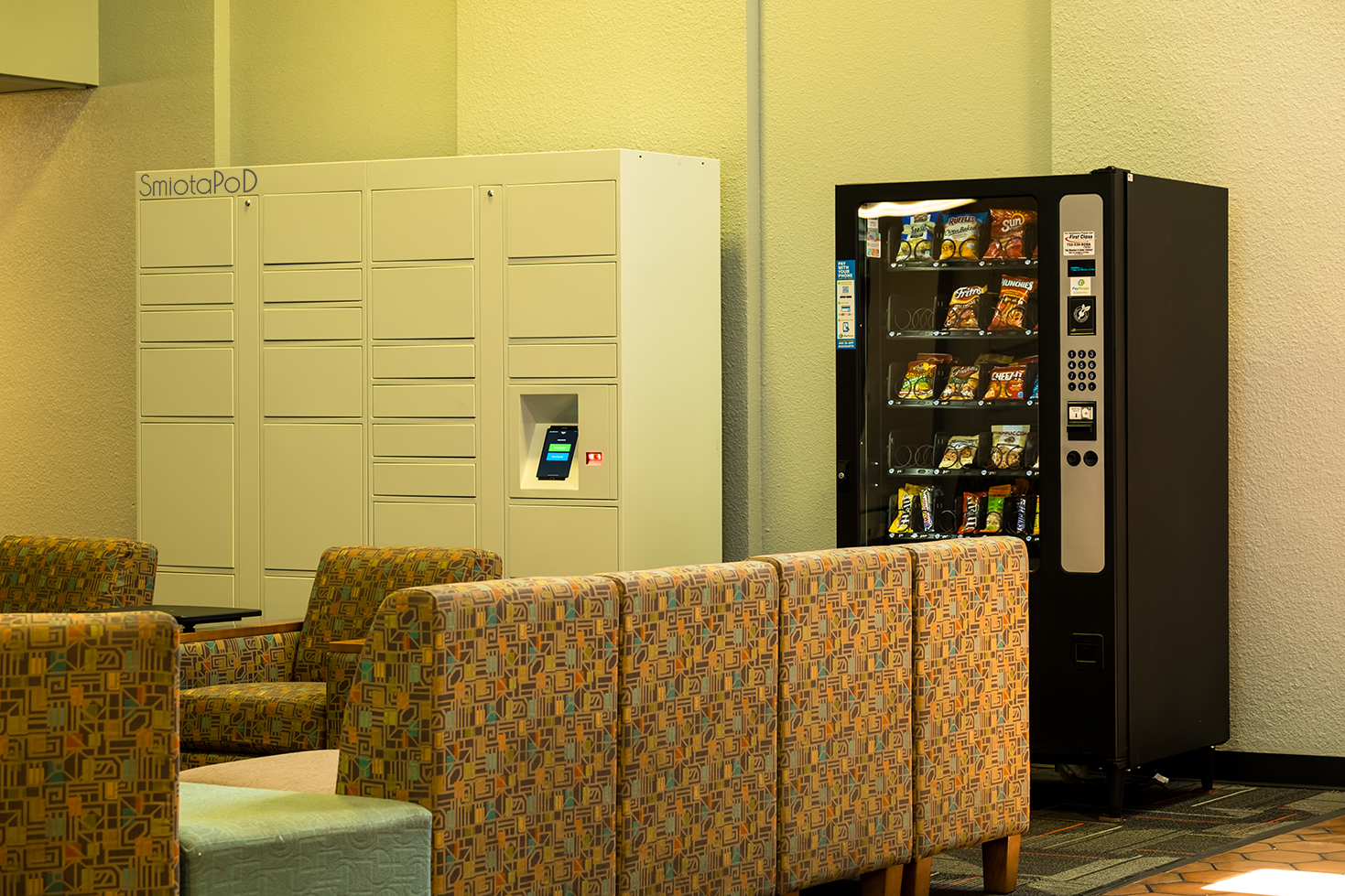
First, smart lockers are quick and easy. With a simple tap on a smart tablet, lockers become available for food delivery and pick-up with instantaneous messaging, secure codes, and 24/7 support should problems arise. These will increase the efficiency of students donating their extra meal plan dollars, as well as in redistributing food from various events on campus, making sure that as little food as possible goes to waste and that students facing hunger have quick access to available food.
Secondly, and this is important regarding food, smart lockers are temperature controlled – meaning that the lockers can be used for transporting all sorts of food in a timely manner. This means that non-perishable food can be exchanged, as well as food and beverage options that require a more consistent environment for consumption.
Eliminating Hunger For Students
The reasons why students face food insecurity are complex – each person with their own story and context that informs and defines their experience.
But no matter the story, students need to eat. Smart lockers are the integral tool that will connect the wide-ranging initiatives into real-life exchanges that ensure all students have access to the food they need to study and thrive as individuals and as members of a campus community.
As we await the day that the U.S. government finally moves to eliminate the student debt crisis, we can chip away at the other stresses and insecurities that surround the industry of education. And while we work to pass effective legislation that protects students, we can make sure they have access to healthy, sustaining food – ready and waiting for them in a smart locker nearby.
The post University Smart Lockers: Fighting Food Insecurity appeared first on Smiota.
]]>The post Smart Lockers Are Convenient, But Are They Secure? appeared first on Smiota.
]]>A defining feature of tech culture and innovation is the speed at which these shifts and changes occur within the industry. Often, consumers are left to wonder: does security improve or suffer with added convenience? Is this new feature safe for me, my family, and my community?
These questions are important to ask and investigate. While technology undoubtedly makes the nuts and bolts of our lives easier, it is equally important to maintain integrity around safety and security. Today we’re looking at the ways in which smart lockers are incredibly convenient and secure – the best of both worlds – making these smart lockers an exciting innovation for companies, community centers, and multi-family living situations in regard to safety, security, convenience, and efficiency.
Smart Locker Convenience
Smart lockers are becoming a common sight around the world. This is true of grocery stores in North America and pharmacies in South Africa. The more people utilize the lockers, the more interesting ideas crop up in conjunction with what smart lockers make possible.
Smart lockers provide convenience to businesses and consumers from a few vantage points. Features such as easy accessibility, immediate message alerts, temperature, and weather-controlled inner-locker environments, customizable color and size, and minimizing labor cost and task duration are some of the biggies regarding smart locker convenience.
Ultimately, with a simple swipe on a smartphone, residents, colleagues, managers, and customers can retrieve their deliverable items in a matter of seconds. That type of convenience is hard to beat. But here’s the important follow-up question: are smart lockers secure?
Smart Locker Security
To put it simply: yes. Smart lockers are secure. It’s an easy answer to an important question. If only other quandaries were so easily satisfied! Here are some of the specifics behind the what and the how of smart locker security.
Locked Compartments
First and foremost, smart lockers are locked. They are virtually impossible to break into without a code. These containers keep deliverable items secure until individuals arrive to pick up their packages. Items are not waiting on the front stoop of an apartment complex. They are not smashed into a pile of other parcels in a mailroom. With smart lockers, the crisis of porch theft is essentially eliminated. Delivered items await, efficiently well-organized until people come to collect them. This may seem simplistically obvious, but it’s amazing what can happen in the “last mile” – a conundrum that has stumped supply chains for time immemorial. The importance and real-life effectiveness of this most important element of a locker can not be overlooked.
Minimal Person-To-Person Interactions
Person-to-person interactions are the bread-and-butter of some business enterprises. These sorts of interactions also take time and energy. In this particular global moment, when our supply chains are strained beyond the brink and extended person-to-person exchanges come at the heightened risk of spreading a very contagious and deadly virus, minimizing the time we are face-to-face becomes an accurate acute crisis response. It is the responsible, ethical business choice for employees and customers.
And looking to the future: We all hope that our communities will soon emerge from this COVID era. The projections for this being the case aren’t exactly heartening, but either way, in using technology like smart lockers, we have minimized risk between people while also adding greater efficiency to the systems we all depend on. It’s a win-win.
Immediate Communication And One-time Codes
When deliverable items arrive, individuals are immediately notified with this information – empowering them to plan their day accordingly. This communication is clear and accessible with a simple notification on a smart tablet. This immediacy adds an element of security to a variety of scenarios: fresh food has arrived and should be eaten and/or processed in a timely manner. A desperately-needed medical prescription is available for immediate pick-up. With a one-time code, colleagues can transfer important equipment between one another for time-sensitive projects. This immediacy is an added security blanket in many situations.

Smart, Safe, Secure
From these examples, we can see that not only are smart lockers secure, but they are also in fact a vast improvement on existing delivery and office space systems of transferable items.
Our world changes quickly – and that means our systems have to improve along with the changing times. Smart lockers are efficient, adaptable, and perfectly suited to the challenges and opportunities we face in the community and as part of an improving societal structure. Convenience is king, but security sustains.
The post Smart Lockers Are Convenient, But Are They Secure? appeared first on Smiota.
]]>The post 6 Amenities an Apartment Millennial Community is Searching For appeared first on Smiota.
]]>
1. A Nature Oasis
Natural spaces improve mood, cognitive ability, and emotional well-being. Investing in the green spaces around your apartment adds an air of serenity while also functioning as community spaces. Consider developing a rooftop garden or patio with an outdoor kitchen and grill. Residents can reserve the space for their own gatherings, and you can host apartment-wide events to develop a sense of community.
Tip: Even just adding real houseplants to an indoor common area can boost morale.
2. Co-Working Space
Millennials have always loved flexible workspace options. In light of the COVID pandemic, this trend is sky high with over 50% of millennials working at least part-time from home. Though the generation prefers flexibility, creating an at-home workspace can be an obstacle.
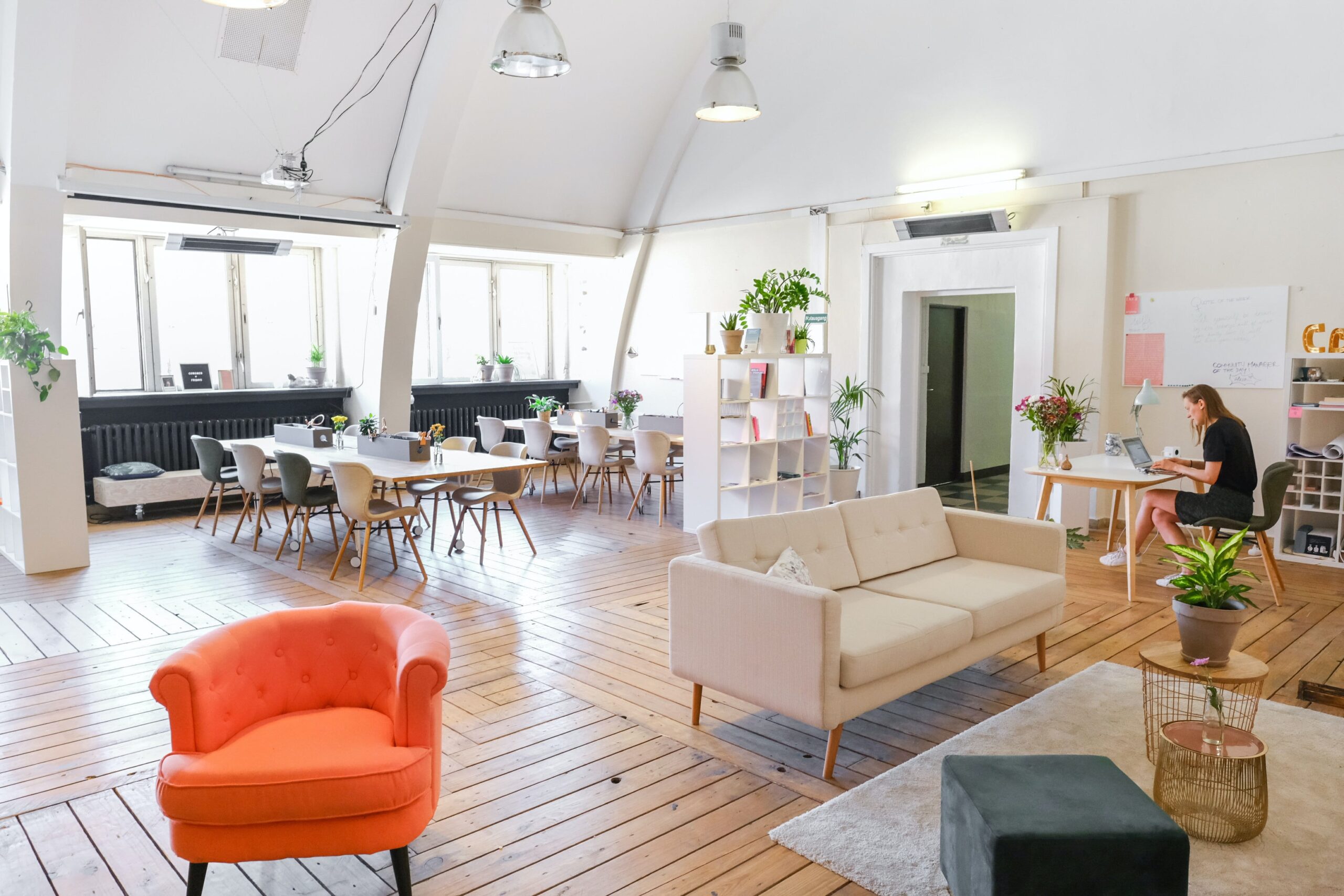
A simple solution? Add a co-working space to your apartment’s common areas! While you can go to the nines by including reservable offices and meeting rooms, it doesn’t have to be so complicated. The space can easily overlap with other common areas.
Tip: For a simple solution, include a community table with ergonomic work chairs and a couple of private call rooms.
3. Complimentary Beverage Station
Among the stereotypes of millennials, their affinity for coffee is one of the most prevalent. But it’s not completely unfounded. According to the Food Network, millennials account for 44% of the nation’s coffee consumption. Including a complimentary beverage station in the common area will not only attract millennial clientele but will also help with retention. Employers see a jump in staff retention and office culture when they provide free food and beverage, and these trends extend to the relationship between a tenant and landlord.
Tip: Start simple with a coffee and tea station, or go all-in with kombucha and cold brew on tap or setting up a drink swap fridge.
4. Fitness Center
What’s another way to boost emotional health and productivity for your tenants? A fitness center! Over 75% of millennials engage in weekly exercise, and many expect some form of a fitness center in their apartment. Design your fitness center based on the space you have available, or, in the case of apartment complexes, you can consider adding an additional building for the fitness center. Most apartments offer both cardio equipment alongside weight-training machines, and many others are branching into other wellness opportunities. Yoga studios, nutrition counseling, and saunas can be enticing additions to your property.
Tip: Many millennials not only want access to a gym, but they also want training. Partner with local fitness groups in your area to bring in teachers for yoga, high-intensity interval training (HIIT), and strength and conditioning classes.
5. Smart Lockers
The generation of millennials appreciates creative ways to increase the efficiency of daily tasks. On the scales of a work/life balance, many millennials struggle to find the time for general chores like grocery shopping and picking up mail. As property managers, you can provide a powerful solution and opportunity for your residents: smart lockers.
Smart lockers are secure modular systems of individual lockers that keep deliveries in a safe and protected environment at your doorstep. You can get them completely customized to your common space or even get the weather-resistant locker to place outside!
What does this mean for you? No more overwhelmed mailrooms, package drop-off completely facilitated by the mail courier, and full documentation of the item’s chain of custody.
What does this mean for your residents? Convenient 24 hr pickup, no mailroom lines, easy notification, and tracking system, and a sanitary and contactless process.
Tip: Get a temperature-controlled Smart locker system for residents to receive refrigerated grocery delivery in addition to the smart locker in your mailroom.
6. Digital Connectivity
Raised alongside the emergence of smartphones, tablets, and social media, millennials are one of the most tech-savvy demographics. Streamlining processes through online forms and apps will attract the millennial community. These younger renters are used to paying bills with an app and transferring money using platforms like Venmo, Google Pay, and Apple Pay. Catering to these proclivities will take some stress off your residents. As a result, you will have full digital documentation with each of your residents. On a single platform, residents can pay rent and utilities, submit and track maintenance requests, and communicate with property management.
Tip: Many software providers want to make things easier for you. Look for programs like Smiota Mailroom that can integrate into a system you already have, so even your smart devices can be synced up.
Appealing To a Generation’s Values
Millennials appreciate when tedious tasks are streamlined to give more space for life’s luxuries. Even more so, millennials like convenience and community. They want to live in a central area with access to culture, while also being a safe neighborhood. In your apartment, you can add to both the sense of community and security by providing appropriate amenities for your residents. Creating enticing common spaces and digitized communication systems cater directly to the millennial values of time efficiency and autonomy.
The post 6 Amenities an Apartment Millennial Community is Searching For appeared first on Smiota.
]]>The post Prevent Package Theft: How to Hide Your Package appeared first on Smiota.
]]>
For example, in New York City alone, 90,000 packages are stolen every single day. And that number is on the rise. There also isn’t strong evidence to suggest that fences, people being home, and video surveillance do much to thwart determined porch pirates. And in the case of video surveillance, there are legitimate security concerns around popular home video systems like Ring.
So while there’s no foolproof way to protect ourselves from risk and accidents, there are steps we can take to ensure the safety and efficiency of deliverable items. And luckily, none of the ideas listed below are very tricky. Keep reading for some suggestions on how to prevent package theft and how to hide your package from nefarious individuals trolling the streets.
Pick The Time And Place
Often, delivery companies will provide options for customers on when and where their packages are going to arrive. This is an opportunity for you to think strategically about what will be best for you, your family, your clients, and your schedule.
Perhaps you spend a lot of time at work – consider routing packages to the office, where you or one of your co-workers are available to receive them and store them safely until it’s time for you to head home for the day.
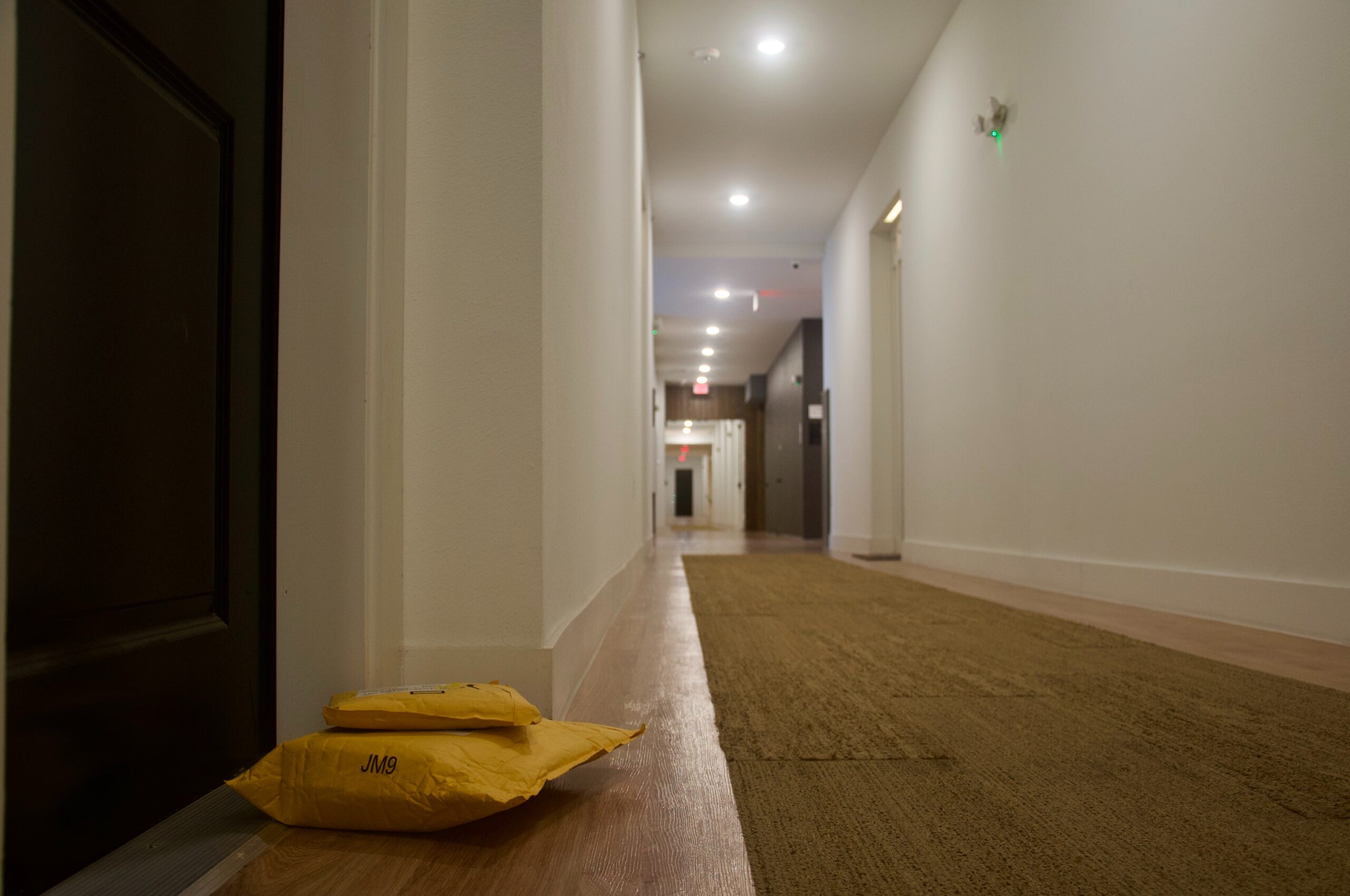
In a lot of instances, you can adapt the time and place to best fit your needs and avoid a lingering package on your doorstep – a tempting treat to swipe if left out in the open for too long.
Use Smart Lockers
Another great option that is gaining traction around the world is the use of Smart Lockers. You may have seen these popping up in your local grocery store, office, or apartment building. And while it can feel intimidating to incorporate new technology into your life, it’s really quite easy with smart lockers.
It’s as simple as downloading an app and letting the process unfold in a way that is significantly more efficient for companies, delivery professionals, and you. Smart lockers are a safe, secure means of transfer and many are even temperature-controlled, making them a great fit for food deliveries. They are all the rage in certain communities where prescription fulfillment has been historically challenging – smart lockers can make medicine, technology, and other necessities available to people. It’s an exciting change in how we exchange items.
Also, with this technology, it’s nearly impossible for a porch pirate to do their dirty work, and better yet, you can retrieve your package whenever it works for you. Plus, smart locker companies often offer 24/7 customer support, so if for some reason you do run into a snag, you’ll be able to sort it out immediately.
Talk To Your Neighbors
An obvious suggestion, perhaps, but effective all the same! Talking to your neighbors and developing deep community ties to where you live not only enhances the safety of packages, it strengthens the bonds between humans and can often provide a sense of purpose in an increasingly isolated society.
In addition to trading eggs, flour, sugar, and plant watering duties when the needs arise, we can ask our neighbors to keep an eye out for packages that arrive throughout the day – they can hide your package for you in a pre-determined location or simply keep an eye on the goings-on of the block.
And while the issue of package theft might seem like an individual, personal attack, the truth is that this affects all of us. When packages are stolen, there is added pressure on the supply chains and businesses that provide the goods that were unfortunately stolen. Across the country, nearly 2 million packages are stolen per day. Some industry professionals estimate that this amounts to 25 million lost goods and services. Numbers like that impact all of us.
So the moral of the story? Knock on your neighbors’ doors. Get to know each other, and help each other out. It can make all the difference.
Directions For Delivery Professionals
Another idea to utilize is specific directions for delivery professionals.
Now, it’s important to keep this within reason or risk infuriating a person who is working to meet your needs. You don’t need to send a FedEx delivery driver on a pseudo-scavenger hunt, per se. But you can list things like “inside the porch door” or “behind the big flower pot” to ensure that your package is somewhat concealed from strangers passing by.
“Out of sight, out of mind” is a powerful framework – it works just as well on us as it does on porch pirates.
Conclusion
With a little intention and effort, you can prevent package theft and hide your packages in an effective way. At the risk of sounding like a nagging grandmother, those couple extra steps at the onset of the process can save you time, stress, and also money.
Do your future self a favor – prevent package theft, hide those packages, and bask in the satisfaction of receiving what you need, when you need it.
The post Prevent Package Theft: How to Hide Your Package appeared first on Smiota.
]]>The post Stolen Packages? 5 Tips to Stop Porch Pirates appeared first on Smiota.
]]>
And with these hefty percentages comes – you guessed it – porch pirates. While Americans wait at home or at work for their packages to arrive, thieves wait in the wings for an opportunity to take advantage of delivered opportunities when no one is watching and valuable deliveries are vulnerable for snatching. And this is no small thing – 43% of Americans have experienced package theft.
When porch pirates sail away with your packages, it’s a huge inconvenience – and sometimes a big expense, too. Here are 5 tips to consider when minimizing your vulnerability to this frustratingly common occurrence.
Tip #1: BOPIS and Smart Lockers
BOPIS stands for “buy online pick-up in store”. For goods and services local to you, this is an excellent way to cut down on thievery risk and is a method of decreased personal contact between people, so it absolutely skyrocketed in popularity during the pandemic.
The basics of BIPOS and smart lockers in case you have yet to dabble: you order online at your convenience. When items are ready, you are able to drive, walk, or bike to the store and quickly receive your items that are stored securely, just for you. Many shops including grocery stores and pharmacies, are beginning to incorporate smart lockers into their process. This means you are immediately notified when your items are ready for you. Often, you can pick up your packages at any hour, too, which is a huge selling point for busy customers.
As mentioned above, this method also cuts down on contact and contaminants between people. Not only are your prescriptions, technology, or meals safe from porch pirates, but you are also less likely to come into contact with viruses floating and sticking around in public places. As the Delta variant of the COVID virus rampages its way across the globe, and it can be hard to trust the choices of those around you, this is a huge comfort and likely to continue increasing demand around these consumer options.
Tip #2: Delivery Directions
Even if you are unable to BOPIS, there are some easy steps to take to minimize opportunities for porch pirates to swipe your goods away. An easy place to start is with delivery directions.
Delivery directions don’t have to sound like a scavenger hunt for the courier who is doing their job as best they can. Simple directions like “inside the porch door” or “behind the yew shrub to the left of the door” can help as packages are less visible, and therefore, less tempting to passing opportunists.
Tip #3: Reroute
With most online companies, it is simple and easy to reroute where your packages are delivered to accommodate your whereabouts. If you spend most of your time at work, consider rerouting packages to your work address instead of your home one. This way, packages won’t be lingering on your front step for hours while you finish up your tasks at the office.
Tip #4: Utilize Delivery Services
Depending on your personal comfort level and preferences, there are also a handful of apps that pretty much guarantee the safe arrival of your online purchases.
For example, Amazon Key boasts a system of secure deliveries inside your garage. Drivers recieve one-time, temporary access to your garage. The technology confirms the driver’s identify with multi-step authentication. Cameras can also be integrated into the system for extra peace of mind if you would like.
Tip #5: Talk To Your Neighbors
If tip #4 made you a bit uneasy, consider this fifth and final tip an ode to the old-school sensibility of real-life interactions and community engagement. Talking with your neighbors, knowing their names, and looking out for one another shouldn’t be such a radical concept, but in many parts of the world it can be a rare relationship indeed.
Being friendly with neighbors can be a delight – and also a safety practice. Not only can you borrow flour or an egg in a time of need, but you can also ask that people keep an eye out for you – and the packages you are awaiting – and you can do the same for them.
There are a lot of aspects of our society that promote isolationist, individualized thinking. Ultimate, a connected neighborhood is a safer neighborhood and it is within all of our power to cultivate that dynamic in the areas where we live.
The post Stolen Packages? 5 Tips to Stop Porch Pirates appeared first on Smiota.
]]>