The post The Role of Smart Lockers in Automated Last Mile Delivery appeared first on Smiota.
]]>These scenarios highlight a universal truth: the last mile of delivery, though the shortest part of the logistics chain, is often the most unpredictable. Missed deliveries, weather exposure, package theft, inconvenient timing, and restricted access all contribute to inefficiencies and rising costs. Consumers want speed and convenience; carriers want predictability and productivity. Retailers want streamlined fulfillment. Property managers want order and security.
This gap between expectations and reality is exactly where smart lockers step in – providing a modern, automated, and highly practical solution to last-mile challenges.
In this article, we explore how smart lockers are transforming automated last-mile delivery, the scenarios where they excel, and why companies like Smiota are leading the way in secure, convenient, and scalable package management.
Last Mile Delivery: The Most Complex Step of the Journey
Last-mile delivery is the final stage of the logistics process – getting the package from a local distribution hub to the customer. Despite being the shortest distance, it is typically the most expensive and labor-intensive segment, accounting for up to 53% of total delivery costs. Why?
- Delivery drivers often navigate unpredictable traffic
- Packages must be dropped at scattered locations
- Gated communities, offices, and apartment complexes create access challenges
- Failed delivery attempts require costly redeliveries
- Porch theft continues to rise
- Customers expect flexible, near-instant delivery
As e-commerce volumes surge, carriers, retailers, and service providers are searching for ways to automate and streamline this final step. Smart lockers provide a centralized, secure, and efficient way to do exactly that.
Smart Lockers: Today’s Answer to Last-Mile Delivery Challenges
Smart lockers are secure, tech-enabled storage units that serve as automated drop-off and pickup points. Instead of leaving items at the door – or making several delivery attempts – drivers deposit packages into lockers. Recipients get a notification with a unique code or app authentication, allowing them to retrieve the package whenever it suits them.
But to understand their impact, it helps to visualize real-life situations where smart lockers shine.
Everyday Scenarios Where Smart Lockers Make a Difference
The Working Professional
You ordered an urgent replacement part for your laptop, but your workday is packed with meetings. By the time you get home, the delivery window has passed. A smart locker in your apartment complex eliminates the stress – you pick up the parcel anytime.
The Busy Parent
A parent juggling work, family, and errands doesn’t have time to monitor delivery windows. With smart lockers, packages remain secure until they’re ready to pick up, even late at night.
The Multi-Tenant Resident
Apartments often receive hundreds of packages daily. Instead of piling boxes at the front desk or waiting for building staff, smart lockers create an organized, automated system where every resident has a reliable pickup point.
The Retail Customer (BOPIS & Curbside)
Customers who use Buy Online, Pick Up In Store (BOPIS) don’t want to wait in line or search for store associates. A smart locker placed outside or near the front entrance speeds up the process – especially during peak hours or language-barrier situations.
The Office Worker
Corporate campuses receive shipments ranging from personal parcels to equipment deliveries. Lockers reduce mailroom congestion and support self-service pickup.
These examples show how smart lockers remove friction from daily routines while making last-mile delivery more predictable and cost-effective for businesses.
Why Smart Lockers Work: Core Benefits for Automated Last Mile Delivery
24/7 Secure, Contactless Pickup
Customers no longer worry about:
- Package theft
- Missed delivery attempts
- Weather damage
Smart lockers provide a safe, private, and always-available handoff location – perfect for sensitive items, surprise gifts, or high-value electronics.
Reduced Operational Burden for Carriers
Delivery drivers can drop multiple packages in one centralized location. This:
- Cuts fuel usage
- Shortens delivery routes
- Increases package density per stop
- Slashes the number of failed deliveries
Fewer redeliveries mean significant cost savings.
Convenience Without Complication
People don’t want to wait on staff, track precise delivery windows, or rearrange schedules. Smart lockers offer:
- Anytime access
- Instant notifications
- Simple PIN or QR-based retrieval
The process is quick, predictable, and user-friendly.
Sustainability Through Route Optimization
Consolidating deliveries into smart lockers reduces:
- Vehicle miles traveled
- Fuel consumption
- Carbon emissions
For cities facing congestion, pollution, and high delivery traffic, locker networks provide environmental relief.
Smart Lockers in the Broader Delivery Ecosystem
Smart lockers are no longer isolated tools. They are becoming integrated into delivery networks across:
- E-commerce carriers
- Retail businesses
- Residential communities
- Corporate campuses
- Local governments
Cloud-based software connects carriers, retailers, and residents, ensuring:
- Real-time status updates
- Remote monitoring
- Compartment assignment
- Automated notifications
- Secure access control
Lockers can function as micro-hubs within city neighborhoods or residential clusters – creating a predictable, structured delivery infrastructure that improves logistics efficiency for all stakeholders.
Where Smart Lockers Fit: Key Use Cases
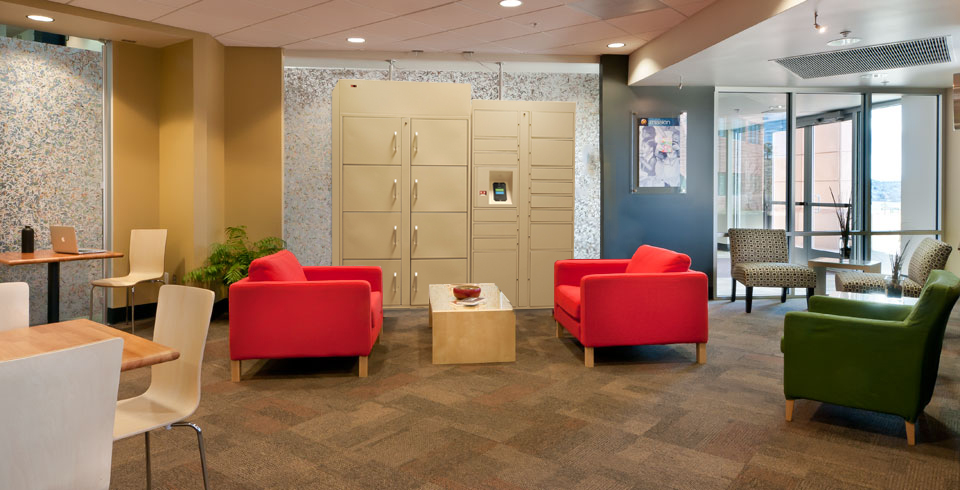
Residential Buildings
Whether luxury properties or multi-family apartments, residents rely heavily on online ordering. Smart lockers eliminate front-desk overload and ensure safe, organized package management.
Retail (BOPIS)
For retail stores, especially those with limited staffing, smart lockers reduce:
- Customer wait times
- Lines at pickup counters
- Administrative burden on associates
They also help travelers or non-native speakers bypass communication barriers.
Corporate Offices and Campuses
Large workplaces often receive hundreds of personal and business packages daily. With lockers:
- Mailrooms operate more efficiently
- Employees collect items privately and conveniently
- Security teams have better oversight
Open Locker Networks
Cities and municipalities are increasingly adopting open locker networks to reduce delivery truck traffic, support local businesses, and offer centralized pickup points accessible to all. This is especially helpful in dense urban districts, college towns, or tourist-heavy areas.
Smiota Smart Lockers: Enabling Modern Last-Mile Delivery
As organizations across industries embrace smart lockers, Smiota has emerged as a trusted partner offering flexible, secure, and intuitive locker solutions that fit into any last-mile strategy. With a wide range of locker solutions such as indoor lockers, outdoor lockers, asset management lockers, etc., Smiota has a locker for every use case. Check out the package lockers page to explore our products and offerings.
Conclusion: Transforming Last-Mile Delivery with Smart Lockers
As we’ve seen, the demand for reliable, efficient, and convenient last-mile delivery solutions continues to grow. Smart lockers offer a practical, proven answer to this modern logistics challenge. By enabling secure, contactless pickup options and reducing the burden on carriers, smart lockers are reshaping how packages move through the final step of the delivery journey.
For retailers seeking to streamline click-and-collect services, logistics providers aiming to reduce failed deliveries, or residential communities looking to enhance package management, smart lockers deliver a powerful and scalable solution. They not only meet today’s operational needs but are built to adapt as consumer expectations and delivery volumes continue to evolve.
The post The Role of Smart Lockers in Automated Last Mile Delivery appeared first on Smiota.
]]>The post The Future of Smart Lockers in Last-Mile Delivery appeared first on Smiota.
]]>In this challenging landscape, smart lockers are emerging as one of the most promising technologies to shape the future of last-mile logistics. They provide a secure, automated, and cost-efficient way to deliver parcels and streamline distribution. More importantly, they resolve many of the long-standing problems associated with traditional delivery methods, including missed deliveries, porch theft, and inefficient route planning. As e-commerce continues to expand, smart lockers are no longer an optional amenity—they are becoming an essential part of modern delivery ecosystems.
The Growing Pressure on Last-Mile Delivery Networks
Last-mile delivery is historically the most expensive and unpredictable step in the logistics chain. As package volumes rise, carriers face the challenge of delivering individually to thousands of households every day. Traffic congestion, unavailable recipients, and address inaccuracies increase failed deliveries, leading to operational waste.
Smart lockers address these obstacles by offering a single secure destination for multiple deliveries. Instead of attempting multiple doorstep drop-offs, carriers can deliver dozens of packages to one locker location in a single stop. This dramatically reduces the time spent on individual routes, lowers fuel consumption, and increases overall delivery productivity. As cities become more crowded and package volumes continue to rise, this type of consolidation will be essential for maintaining efficient delivery operations.
The Rise of 24/7, Contactless Delivery Solutions
Customer expectations have evolved, especially since the rise of contactless services during the pandemic. People want the freedom to pick up parcels at any time without depending on carrier schedules. Smart lockers fulfill this need by allowing customers to collect parcels 24 hours a day, 7 days a week. When a delivery arrives, the recipient receives a digital code or QR link, enabling them to retrieve their package in seconds. This eliminates the frustration of waiting for drivers or missing important deliveries due to work or travel constraints. At the same time, contactless access provides additional safety and peace of mind, especially for those who prefer minimal human interaction. This blend of flexibility and convenience is a major reason why smart locker systems are rapidly gaining popularity among consumers.
Enhancing Security in the Era of Package Theft
With millions of parcels left unattended on doorsteps daily, package theft—often called porch piracy—has become a major concern for both retailers and consumers. Traditional deliveries offer very little protection once a parcel is dropped off, leaving it vulnerable until the customer retrieves it.
Smart lockers eliminate this risk entirely. The secure, steel-built compartments protect parcels from tampering, unauthorized access, and weather damage. Every package drop-off is logged in the system, and retrieval requires a unique access code or QR scan. Advanced systems like Smiota’s also integrate optional surveillance and monitoring features for added security. As the demand for safer deliveries grows, these security benefits make smart lockers an indispensable part of last-mile operations.
The Role of Smart Lockers in Micro-Fulfillment and Hyperlocal Delivery
As retailers and logistics providers search for faster delivery options, micro-fulfillment centers have become an important part of supply chain innovation. These small warehouses place inventory closer to customers, enabling faster pickup and delivery. Smart lockers extend the efficiency of micro-fulfillment by serving as the final distribution point. Instead of requiring customers to interact with staff or wait in line, lockers allow for instant, self-service order collection. This creates an ecosystem where inventory is stored nearby and distributed seamlessly. Whether customers choose same-day pickup or on-demand delivery, lockers help retailers meet expectations for speed without increasing operational complexity. In the future, as same-hour delivery models expand, lockers will likely become the backbone of hyperlocal logistics.
Conclusion
Smart lockers are redefining what last-mile delivery can achieve. They simplify logistics, reduce operational costs, improve security, and provide customers with unprecedented flexibility. As e-commerce continues to grow, the challenges of traditional delivery methods will only intensify. The answer lies in automated, intelligent distribution systems that can handle high demand without sacrificing efficiency or customer satisfaction. Companies like Smiota are leading this transformation with advanced locker solutions that integrate seamlessly into modern delivery networks. Looking ahead, smart lockers will not just complement last-mile delivery—they will become central to its evolution.
FAQs
1. Are smart lockers more reliable than home deliveries?
Yes. Smart lockers reduce the likelihood of missed deliveries, failed attempts, or stolen parcels, making them significantly more reliable than doorstep drop-offs.
2. Do customers need an app to retrieve packages from smart lockers?
Not necessarily. With Smiota lockers, customers can use QR codes, PINs, or mobile links to access their packages without needing a dedicated app.
3. How do smart lockers help carriers save time and money?
By consolidating multiple deliveries into one stop, lockers shorten delivery routes, reduce fuel usage, and eliminate the need for repeat attempts.
4. Can smart lockers support high package volumes during peak seasons?
Absolutely. Locker systems are designed to handle high traffic and large volumes, making them ideal for holiday seasons and major sales events.
The post The Future of Smart Lockers in Last-Mile Delivery appeared first on Smiota.
]]>The post How Smart Lockers Are Solving the Last-Mile Delivery Crisis in 2025 appeared first on Smiota.
]]>But 2025 marks a notable shift. As e-commerce surges and same-day or next-day deliveries become standard expectation, companies and property managers are turning to a smarter, more secure final solution: automated smart lockers.
Among the leaders steering this change is Smiota – offering a cloud-based smart locker ecosystem that promises 24/7, contactless pickup and drop-off for packages, groceries, food, and other goods.
In this post, we explore why smart lockers have become a key answer to the last-mile crisis, and how systems like Smiota can transform delivery efficiency, convenience, security, and sustainability.
The Last-Mile Problem: Why Deliveries Fail
The “last mile” – the final step in getting a product from dispatch to customer – is often the most expensive, inefficient, and error-prone part of the supply chain. Common issues:
- Missed deliveries: recipients are not home; couriers leave packages in common areas or with neighbours.
- Package theft or loss: unattended packages left in lobbies or outside homes are easy targets.
- Failed delivery attempts & re-deliveries: wasted time, fuel, and extra cost.
- Urban density & restricted access environments: apartment buildings, gated communities, high-rise lobbies complicate doorstep delivery.
- Environmental impact: multiple failed delivery attempts mean more fuel consumption, more carbon emissions.
These pain points not only frustrate customers, they raise operational costs for carriers and merchants.
Why Smart Lockers Make Sense
Smart lockers, particularly those backed by robust software platforms and enterprise-grade hardware address many of these problems. Here’s how:
- 24/7 Contactless Pickup & Drop-off
With smart lockers, deliveries are not tied to residents being home. Couriers simply deposit packages into a secure compartment; recipients get notified via app or text and pick up when convenient. Smiota supports this with secure lockers, automated notifications and accessible apps. - Built-in Security & Chain of Custody
Steel-built lockers, secure access via PIN/QR, package sensors, and a full locker operating system (L-DOS) ensure chain-of-custody reducing risk of theft or loss. - Flexible Locker Types (Indoor, Outdoor, Temperature Controlled)
From standard parcels to food, groceries, or temperature-sensitive items like medication or meal kits – some smart lockers support refrigerated, frozen, ambient or standard storage, extending usability beyond simple parcels. - Integration & Scalability for Volume
Modern locker platforms (like Smiota’s) offer APIs, integration with backend logistics and software tools, and modular configurations – ideal for residential, retail, corporate, university settings or high-volume e-commerce fulfillment. - Convenience & Customer Satisfaction
In a world where customers expect immediacy – quick delivery, easy pickup – smart lockers convert waiting and failed delivery stress into convenience: the package is delivered securely, the recipient picks it up whenever suits them.
Real-World Applications & Use Cases
Smart lockers are no longer futuristic concepts, they already serve a wide variety of industries and use cases:
- Residential & Multifamily Properties: apartment buildings, multi-tenant homes use lockers to handle growing package volume. Residents receive food kits, online shopping, parcels, groceries, and pick up securely on their time.
- Retail & BOPIS (Buy Online, Pick Up In Store): Retailers can ship orders to lockers instead of delivering to doorsteps, giving customers more pickup flexibility while reducing failed drops.
- Student Housing & Universities: Students ordering online deliveries or receiving study-material packages benefit from secure, 24/7 parcel access.
- Corporate Offices & Mailrooms: Companies can simplify internal mail/package handling, IT-asset distribution, returns, courier pickups – saving time and reducing overhead.
- Food & Grocery Delivery, Meal Kits, Pharma: With temperature-controlled lockers, perishable goods and sensitive items can be delivered and stored safely until pickup.
The Bigger Picture: Efficiency, Cost-Saving & Sustainability
- Reduced failed deliveries: fewer repeat tries means lower fuel consumption, fewer emissions, and less wasted time.
- Cost-savings for carriers & retailers: automated drop-offs and 24/7 pickup minimise failed delivery costs and rescheduling.
- Improved customer satisfaction & convenience: flexibility, security, and on-demand pickup increase consumer trust and loyalty.
- Scalable infrastructure for urban density: lockers help manage high volume deliveries in dense residential or commercial spaces, avoiding lobby congestion and lost packages.
In short, smart lockers represent a structural upgrade to how goods are delivered in a high-demand, high-expectation world.
Why Smiota Stands Out
Smiota isn’t just a locker manufacturer, it’s an integrated platform combining hardware, cloud-based locker operating system (L-DOS), real-time APIs, and flexible configurations.
- Its lockers support multiple configurations – indoor, outdoor, standard, refrigerated, frozen – adapting to varied needs (parcels, groceries, meal-kits, medical supplies).
- The system maintains full chain-of-custody tracking and enterprise-grade security with sensors, touchscreens, access controls, and audit logs.
- Through APIs and integrations, Smiota’s solution can connect with property management, retail, or logistics software enabling seamless workflows at scale.
- For properties and organisations, that means a turnkey solution – not just hardware, but software, maintenance, support, and customization.
Challenges & Considerations
Smart lockers aren’t a magic bullet – a few challenges must be addressed for them to succeed:
- Courier adoption: couriers need to adapt to selecting locker size, using touchscreen/QR, which may slow down initial delivery speed. Some logistic teams may resist due to habit or perceived complexity.
- Locker capacity & sizing limitations: extremely large items (furniture, oversized packages) may not fit standard locker compartments, requiring alternative logistics.
- Initial installation cost & space requirements: for building owners/ property managers, installing locker banks requires space, investment, and sometimes retrofitting common areas.
- User education & adoption: residents, employees or customers need to understand and adopt the locker-pickup workflow. Without buy-in, lockers may remain under-used.
Still, for many delivery-heavy, high-volume, high-density environments the trade-off leans strongly in favor of smart lockers, especially when operated by a mature platform like Smiota.
Conclusion
As e-commerce demands grow, consumer expectations rise, and delivery challenges multiply, the last mile remains one of the most complex and costly parts of the supply chain. Smart lockers, especially those powered by comprehensive, flexible systems like Smiota are rapidly becoming a proven solution.
They offer security, convenience, flexibility, efficiency, and sustainability – delivering not just packages, but peace of mind for property managers, couriers, retailers, and recipients alike.
If you’re evaluating solutions for apartments, offices, retail, or any high-volume delivery setting, smart lockers may not just solve a logistics problem. They may reshape how we think about delivery entirely.
The post How Smart Lockers Are Solving the Last-Mile Delivery Crisis in 2025 appeared first on Smiota.
]]>The post Why D2C Brands Are Turning to Smart Lockers to Win the Last Mile appeared first on Smiota.
]]>However, as D2C has evolved, so too has one of its biggest challenges – last-mile delivery. Consumers demand same-day delivery, easy returns, and a flawless experience. For growing brands, balancing customer expectations with logistics costs can quickly erode profits.
That’s where smart locker technology comes in. By offering secure, 24/7 access points for pick-up and returns, lockers are redefining how D2C brands approach fulfilment and customer convenience.
The Last-Mile Problem for D2C Brands
The final stage of order delivery – from distribution centre to doorstep – is often the most expensive and unpredictable.
- Failed deliveries lead to higher costs and poor customer satisfaction.
- Missed drop-offs or theft can damage brand trust.
- Limited delivery time slots reduce flexibility for customers.
For D2C brands that rely heavily on reputation and repeat purchases, this last-mile friction can have major long-term impacts.
Smart Lockers: The New Standard for Convenience
Smart lockers are secure, automated compartments where couriers or brand teams can deposit parcels. Customers then receive a digital code or mobile app notification to retrieve their package anytime – day or night.
Key benefits include:
- 24/7 accessibility: Customers can pick up or return items whenever they want.
- Contactless convenience: Safe, no-touch delivery enhances trust and hygiene.
- Reduced costs: Fewer failed deliveries mean less operational waste.
- Centralised hubs: Brands can consolidate multiple deliveries to one locker bank.
For D2C operations, these advantages translate to lower costs, happier customers, and faster turnaround on returns.
How Smart Lockers Strengthen D2C Brand Experience
Unlike third-party courier experiences, smart lockers let D2C brands retain control over every step of delivery. They can:
- Offer branded locker designs with custom colours and logos.
- Send personalised notifications through the brand’s own app.
- Collect data on delivery speed, customer preferences, and pickup times.
This transforms a purely functional step – receiving a package into another branded customer experience that reinforces loyalty.
Real-World Use Cases
- Click-and-Collect Campaigns:
Brands can position lockers in malls, offices, and universities to support same-day pick-up for local buyers. - Reverse Logistics:
Returns are simplified – customers drop items in lockers and the brand retrieves them in batches. - Subscription Models:
D2C brands offering weekly deliveries (e.g., wellness kits, beauty boxes, pet supplies) can use lockers to streamline distribution. - Temperature-Controlled Fulfilment:
For food, meal kits, or pharmaceuticals, refrigerated lockers ensure freshness and compliance.
Smart Lockers as a Profitability Driver
Locker systems significantly reduce delivery overheads by:
- Cutting last-mile kilometres per delivery route.
- Lowering customer service costs due to fewer “where’s my order?” queries.
- Improving customer retention through reliability and speed.
For growing D2C players, this operational edge can be the difference between a profitable scale-up and unsustainable delivery costs.
Implementation Blueprint for D2C Success
- Audit current fulfilment data and identify regions with high delivery failure rates.
- Deploy lockers in those areas as pilot hubs.
- Integrate locker software with your e-commerce and logistics platforms.
- Promote the new pick-up option through emails, social media, and website banners.
- Measure performance: cost per delivery, locker usage, and customer satisfaction scores.
Conclusion
In today’s D2C economy, customer expectations and logistics pressures are only increasing. Smart lockers bridge that gap, giving brands the power to offer faster, safer, and more convenient delivery experiences – all while optimising operational costs.
With the right strategy, D2C brands can turn their last-mile challenge into a loyalty-building advantage and smart lockers are the key.
The post Why D2C Brands Are Turning to Smart Lockers to Win the Last Mile appeared first on Smiota.
]]>The post Eco-Friendly Deliveries: How Smiota’s Smart Lockers Help Reduce Carbon Footprint and Waste appeared first on Smiota.
]]>For property owners and residents who care about sustainability, these are not minor inconveniences; they are cumulative environmental costs. Traffic congestion, noise, wasted packaging materials, and higher carbon emissions are real and quantifiable problems.
Smiota offers smart locker solutions including cloud-based platforms, secure APIs, outdoor/indoor and temperature-controlled lockers designed to shift this delivery model. Their systems reduce unnecessary courier trips, protect perishable goods, and streamline package collection so that fewer resources are used while delivering more security and convenience.
1. Centralized Deliveries Reduce Carbon Emissions
Traditional delivery models often have carriers stopping at multiple individual mailboxes or doorsteps in a building complex or neighborhood. When someone is not home, or access is inconvenient, the carrier may leave the item in a lobby or attempt redelivery later, increasing fuel usage and emissions.
Smart lockers change this dynamic in the following ways:
- Couriers can drop off all packages for a building or site at once into a centralized bank of lockers.
- No more driveway or lobby drop-offs for each unit. Instead, one secure location serves dozens or more residents.
- This model cuts down on the total driving distance per day, route congestion, and the associated emissions from idle or slow-moving trucks.
Over time, reductions in truck miles translate into tangible reductions in CO₂ output. For large multifamily communities, the saved miles and repeats add up significantly.
2. Energy-Efficient Locker Design
“Smart locker” does not just refer to access. It also refers to efficiency behind the scenes. Smiota’s locker systems incorporate design features that lower power usage and minimize waste:
- Insulated locker panels and climate zones (especially for refrigerated or temperature-controlled lockers) prevent energy loss.
- LED lighting and motion or proximity sensors only turn lights on when a user approaches.
- Low-power display panels and app-based or QR access to reduce physical interface power drain.
- Cloud-based monitoring that allows remote diagnostics, reducing the need for maintenance travel or unscheduled service calls.
By optimizing for these factors, properties with smart lockers achieve lower baseline energy use and derive greater efficiency over the lifespan of the equipment. These features also help with green building standards and energy audit requirements.
3. Less Packaging and Less Spoilage
Packaging and spoiled items create a lot of waste in the delivery process.
Smart locker systems help reduce this waste in several ways:
- Perishable items (groceries, meal kits, flowers, pharma) stored in temperature-controlled lockers delay spoilage. This reduces the need for ice packs or insulated shipping materials that end up as trash.
- Because residents can pick up when convenient, items are less likely to be left out in weather or heat and degrade, which in turn avoids re-orders or replacement shipments.
- Secure lockers reduce theft or damage which might require repackaging or refunding, both of which carry additional environmental cost.
- Use of durable, long-life materials in lockers ( strong metal hinges, sealed doors) reduces frequency of replacements compared to cheaper or less durable drop-box solutions.
Each avoided waste event (discarded packaging, spoiled food, repeated shipments) has ripple effects in reduced resource use and lower emissions.
4. Support for Green Building and ESG Goals
Many property developers now measure success not only by occupancy and rental income but also by environmental performance and social governance. Smiota’s smart locker systems support these goals by:
- Reducing transportation emissions by cutting the number of vehicle miles required for deliveries.
- Improving energy efficiency with low-power locker hardware and streamlined operations.
- Lowering waste generation through less packaging, reduced spoilage, and fewer replacement shipments.
- Providing measurable data for ESG (Environmental, Social, and Governance) reports, lease marketing materials, and resident communications to highlight sustainability achievements.
By combining convenience with measurable environmental benefits, Smiota smart lockers help properties demonstrate a strong commitment to sustainability and responsible growth.
5. Resident Engagement in Sustainability
Even the best technology depends on how people use it. Smart locker systems influence resident behavior in positive ways:
- Instant notifications show exactly when a package arrives, so items spend less time in lockers or common areas and are less likely to need extra refrigeration or risk getting lost.
- Contactless pickup through an app or QR code makes collecting packages faster and easier, which reduces delays.
- Shared data dashboards give property managers clear numbers on avoided delivery trips and reduced packaging waste, and these results can be shared with residents to create a shared sense of purpose.
- Features like scheduling deliveries for times when residents are home or combining several packages into one trip help cut down on unnecessary travel and waste.
These resident habits multiply the environmental benefits of the smart locker technology.
6. Lower Traffic and Noise Pollution
Online shopping has increased the number of delivery vehicles in residential areas. Trucks making several stops each day not only add to carbon emissions but also create noise, traffic jams, and safety risks for residents. Smiota’s smart locker system helps solve this problem by allowing multiple packages to be delivered to one secure location.
When delivery drivers can drop off all packages in one stop, fewer trucks need to enter the neighborhood. This means quieter streets, safer sidewalks, and less damage to local roads. Residents enjoy a calmer and more peaceful place to live, while property managers can show that the community cares about sustainability and safety.
Some of the Key Benefits are:
- Fewer Vehicle Stops: Drivers can deliver many packages at once, reducing traffic.
- Less Noise: Fewer truck visits make neighborhoods quieter.
- Safer Streets: Lower traffic keeps pedestrians and cyclists safer.
- Reduced Road Damage: Fewer heavy trucks mean less wear on streets.
- Better Living Experience: Creates a more pleasant and eco-friendly community.
By bringing deliveries together in one place, Smiota lockers make neighborhoods cleaner, safer, and more peaceful.
7. Seamless Integration with Renewable Energy
Smiota lockers are designed to be energy-efficient, requiring minimal electricity to operate. This makes them ideal for integration with renewable energy sources such as rooftop solar panels, wind microgrids, or other community-based sustainable energy solutions. By powering locker systems with clean energy, properties can significantly reduce their reliance on conventional electricity grids, lowering overall carbon emissions and contributing to net-zero energy goals.
This capability also supports a closed-loop sustainable delivery process, where the entire last-mile delivery from storage to retrieval is powered by renewable energy. For property managers, this means not only cutting operational costs but also enhancing the property’s environmental credentials, making it more attractive to eco-conscious residents and stakeholders.
Building on these advantages, Smiota’s renewable-ready locker systems offer the following key benefits:
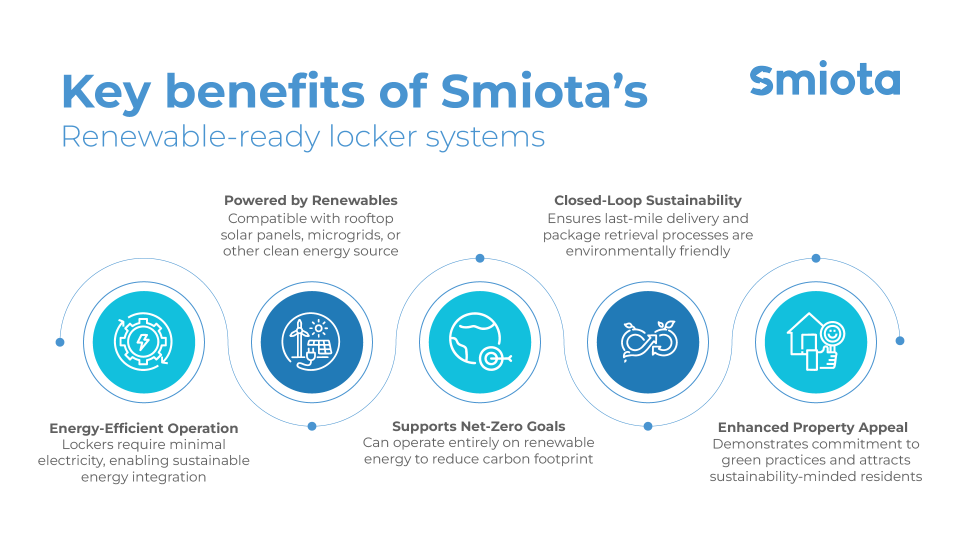
- Energy-Efficient Operation: Lockers require minimal electricity, enabling sustainable energy integration.
- Powered by Renewables: Compatible with rooftop solar panels, microgrids, or other clean energy sources.
- Supports Net-Zero Goals: Can operate entirely on renewable energy to reduce carbon footprint.
- Closed-Loop Sustainability: Ensures last-mile delivery and package retrieval processes are environmentally friendly.
- Enhanced Property Appeal: Demonstrates commitment to green practices and attracts sustainability-minded residents.
By combining low-energy design with renewable energy integration, Smiota lockers help properties achieve a truly eco-conscious delivery ecosystem that balances efficiency, convenience, and environmental responsibility.
8. Scalability Prevents Over-Building
As e-commerce continues to grow, traditional mailrooms often struggle to keep up with increasing package volumes. Expanding these spaces usually requires major renovations, additional materials, and significant labor, all of which contribute to higher embodied carbon and increased construction waste. Smiota’s modular locker design offers a smarter alternative. Properties can easily scale locker capacity as demand grows, without the need for costly structural changes or disruptive construction projects.
This approach not only supports operational flexibility but also minimizes the environmental impact of over-building, helping properties align with sustainability goals. By planning for scalable growth from the start, property managers can accommodate future needs while reducing material waste, energy consumption, and construction-related emissions.
To highlight the value of this solution, Smiota’s scalable locker design delivers several key benefits:
- Modular Design: Expand locker capacity quickly without structural renovations.
- Reduced Material Use: Avoid unnecessary construction materials and associated carbon footprint.
- Cost Efficiency: Save on renovation costs while meeting growing delivery demands.
- Environmental Impact Reduction: Prevents over-building, construction waste, and embodied carbon emissions.
- Future-Proof Infrastructure: Ensures properties can handle rising package volumes without major upgrades.
With Smiota’s scalable solution, properties can adapt to growth efficiently and sustainably, offering both convenience for residents and measurable environmental benefits.
9. Operational Efficiency Cuts Hidden Waste
Traditional delivery methods often come with hidden inefficiencies that go unnoticed but consume significant resources. Paper delivery slips, manual logs, repeated delivery attempts, and frequent staff involvement all add up to wasted time, energy, and materials. Smiota’s smart locker system addresses these inefficiencies by automating key processes such as notifications, package tracking, and access management through a centralized cloud dashboard.
This digital-first approach eliminates paper waste, reduces errors, and frees up staff to focus on higher-value tasks, improving overall operational efficiency. In addition, every action: drop-offs, pickups, and locker usage is recorded digitally, providing precise data on energy consumption and carbon reductions. This allows property managers to generate accurate sustainability reports, monitor environmental impact, and make informed decisions for continuous improvement.
Together, these improvements translate into several important benefits for both property managers and the environment:
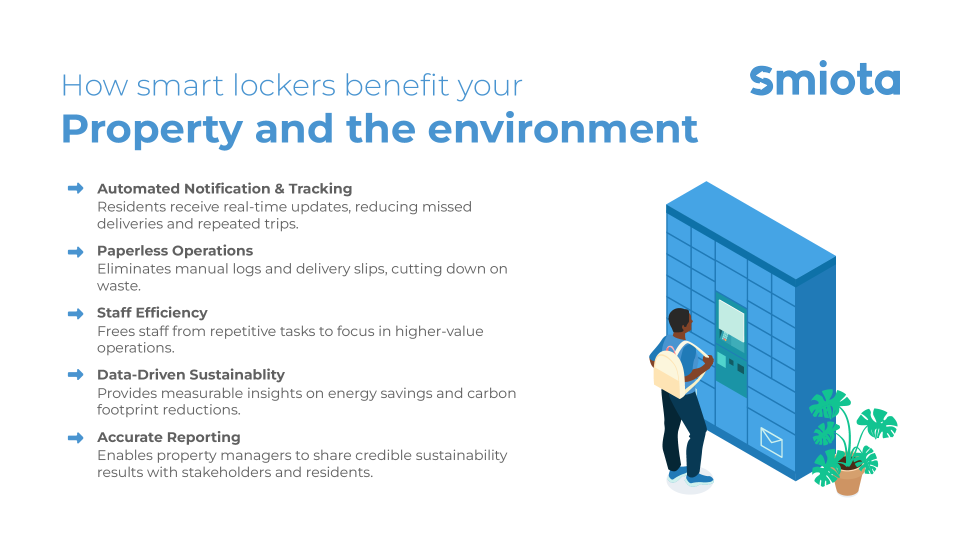
- Automated Notifications & Tracking: Residents receive real-time updates, reducing missed deliveries and repeated trips.
- Paperless Operations: Eliminates manual logs and delivery slips, cutting down on waste.
- Staff Efficiency: Frees staff from repetitive tasks to focus on higher-value operations.
- Data-Driven Sustainability: Provides measurable insights on energy savings and carbon footprint reductions.
- Accurate Reporting: Enables property managers to share credible sustainability results with stakeholders and residents.
By combining automation, digital tracking, and actionable insights, Smiota ensures that operational efficiency translates directly into environmental impact reduction and improved resident satisfaction.
10. Future-Ready for Low-Emission Logistics
The logistics industry is undergoing a massive transformation, with electric delivery vans, autonomous drones, and AI-optimized routing systems reshaping how goods move from warehouses to doorsteps. As these low-emission delivery models become mainstream, properties need infrastructure that can seamlessly integrate with them and this is where Smiota’s smart lockers play a crucial role.
To stay aligned with these emerging delivery trends, Smiota’s smart lockers provide several key advantages for properties and their residents:
- Centralized Drop-Off Points: Reduce multiple vehicle stops, improving delivery efficiency and saving time.
- Battery and Energy Optimization: Minimize battery usage for electric fleets and support cost-effective, eco-friendly logistics.
- AI-Optimized Routes: Fixed locker locations allow delivery algorithms to design ultra-efficient routes, reducing travel distance and emissions.
- Drone-Ready Infrastructure: Secure storage ensures packages remain protected for residents during drone deliveries.
- Future-Proof Property Amenity: Supports next-generation low-emission logistics, showcasing sustainability and forward-thinking management.
By integrating Smiota lockers, properties not only streamline deliveries but also demonstrate a strong commitment to sustainable, next-generation logistics.
11. Data-Driven Sustainability Insights
True sustainability isn’t just about implementing green solutions, it’s about measuring their impact and using that data to drive continuous improvement. Smiota’s advanced cloud-based platform captures every package drop-off and pickup, creating a rich stream of operational data.
Key Metrics Tracked:
- Delivery frequency to understand overall traffic and optimize scheduling
- Resident retrieval times to gauge user behavior and locker turnover
- Locker occupancy rates for efficient space management
- Estimated carbon savings calculated from fewer repeat delivery attempts and optimized routing
How the Data Helps:
- Identify peak usage hours and adjust locker availability to reduce congestion
- Fine-tune delivery schedules to minimize energy consumption and improve efficiency
- Quantify carbon footprint reductions, setting measurable sustainability goals and tracking progress over time
Impact on Stakeholders:
- Provide credible, data-backed reports to residents, investors, and stakeholders
- Showcase environmental responsibility and enhance property reputation
- Turn sustainability into a strategic advantage that supports smarter operational decisions
12. Enhancing Resident Experience While Staying Green
Eco-friendly solutions succeed only when they balance sustainability with convenience and Smiota lockers are designed to do exactly that.
To show how they combine resident convenience with environmental responsibility, Smiota lockers offer the following key highlights:
- 24/7 Secure Access: Residents can retrieve packages anytime, eliminating the need to wait for staff or delivery windows.
- Contactless Pickup: Smart technology ensures completely touch-free deliveries, reducing unnecessary contact and enhancing hygiene.
- Mobile App Integration: Real-time notifications, package tracking, and one-tap locker access create a smooth, paperless experience.
- Faster, Flexible Pickups: No missed deliveries or repeated trips—residents enjoy quick, hassle-free access to their items.
- Reduced Carbon Footprint: Fewer failed delivery attempts and centralized drop-off points mean lower vehicle emissions.
- Modern Property Amenity: Property managers can showcase an eco-friendly, tech-forward service that attracts sustainability-minded tenants.
By combining green technology with an exceptional user experience, Smiota proves that sustainability and convenience can go hand in hand, making eco-friendly living both practical and rewarding.
Conclusion: A Smarter Path to Sustainable Living
Eco-friendly deliveries are no longer a luxury; they are becoming a necessity in the fight against climate change and in meeting the sustainability expectations of residents, businesses, and communities. By consolidating packages, minimizing energy use, and reducing waste, Smiota’s smart lockers offer a scalable, practical solution that benefits residents, carriers, and the planet alike. These systems not only streamline last-mile logistics but also provide measurable environmental impact, helping properties demonstrate their commitment to sustainability in tangible ways.
Whether you manage a multifamily property, a university campus, or a corporate facility, Smiota smart lockers make it possible to offer modern delivery convenience while supporting a greener future. By integrating smart locker technology, you can reduce traffic, cut carbon emissions, lower operational costs, and enhance resident satisfaction, all while aligning with global sustainability goals.
Take the next step toward sustainable living and smarter delivery solutions. Explore how Smiota smart lockers can transform your property today.
The post Eco-Friendly Deliveries: How Smiota’s Smart Lockers Help Reduce Carbon Footprint and Waste appeared first on Smiota.
]]>The post AI-Powered Locker Ecosystems: The Future of Last-Mile Delivery appeared first on Smiota.
]]>
1. From Simple Storage to Intelligent Infrastructure
Traditional lockers provided security and convenience, but they were largely passive. The next generation of lockers—driven by AI and cloud platforms—are active participants in logistics. They can:
- Predict demand and usage with machine learning.
- Direct carriers to the most efficient drop points.
- Balance load across a network of lockers to reduce congestion.
For retailers, this means fewer failed deliveries. For customers, it’s a consistent, frictionless pickup experience.
2. AI Unlocks Personalization and Optimization
Imagine a locker that knows your preferred pickup times, can notify you in your language, and even adapts to your purchase behavior. AI makes this possible by analyzing patterns and automating communication. Businesses benefit too—predictive analytics forecast peak delivery times, optimize restocking, and even flag suspicious activity.
This is where Smiota’s cloud-first locker technology gives enterprises an edge, ensuring data security while delivering actionable insights.
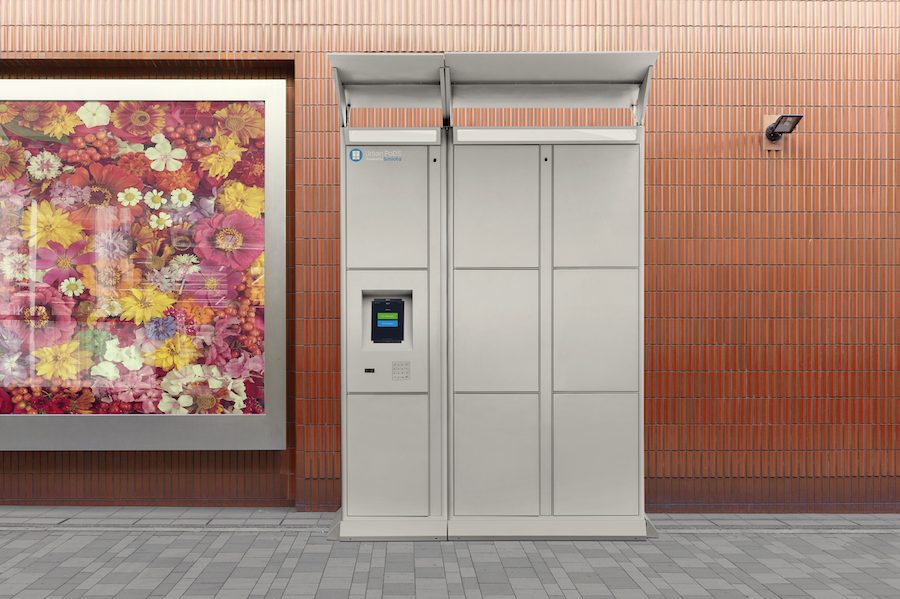
3. Industry-Specific Growth
- Retail & E-commerce: Lockers streamline click-and-collect and returns, reducing in-store chaos.
- Residential Communities: They offer 24/7 secure package retrieval without the need for staff.
- Healthcare & Education: Lockers provide controlled, traceable access to critical supplies or equipment.
The versatility of AI-powered lockers means they’re not just for parcels—they’re hubs for all kinds of transactions.
4. Sustainability at Scale
With last-mile emissions under scrutiny, smart lockers provide a more eco-friendly solution. A single locker hub consolidates dozens of deliveries, reducing vehicle trips. AI further improves efficiency by routing drivers to optimal stops, cutting both emissions and costs.
Smiota integrates sustainability into its locker designs and software, making it easier for businesses to meet green commitments.
Conclusion
AI-powered lockers aren’t just about convenience—they’re about building resilient, sustainable, and intelligent delivery networks. As shopping behaviors evolve, lockers will be a critical touchpoint between businesses and customers.
Ready to future-proof your delivery ecosystem? Contact Smiota to see how our AI-powered locker solutions can transform your operations.
The post AI-Powered Locker Ecosystems: The Future of Last-Mile Delivery appeared first on Smiota.
]]>The post AI-Powered Smart Lockers: Revolutionizing Last-Mile Delivery in 2025 appeared first on Smiota.
]]>This article explores how AI is reshaping the smart locker landscape, what it means for last-mile logistics, and how companies like Smiota are setting new standards in efficiency, personalization, and operational intelligence.
Understanding the Last-Mile Delivery Challenge
Last-mile delivery has always been the most expensive and operationally challenging part of the logistics chain, accounting for up to 41% of total supply chain costs. Common issues include:
- Missed or failed deliveries
- Long delivery windows
- Urban congestion and limited parking
- Rising customer demands for real-time updates and faster fulfillment
Traditional delivery methods struggle to meet these demands efficiently, especially at scale. Enter smart lockers—secure, self-service storage units placed in high-traffic or residential areas. But in 2025, these lockers are no longer static drop-off points. With the integration of AI, they’re becoming intelligent nodes in the delivery network.
How AI Is Powering the Next Generation of Smart Lockers
Artificial intelligence adds a layer of intelligence and adaptability to smart lockers, transforming how they operate and interact with both humans and delivery systems. Here’s how:
1. Predictive Locker Allocation
AI models analyze historical data, user behavior, seasonal patterns, and delivery trends to:
- Predict which lockers will be in demand
- Allocate compartments in advance
- Dynamically reroute deliveries to nearby available lockers when necessary
This reduces wait times and ensures optimal usage of locker real estate, particularly in high-density areas like corporate campuses, residential complexes, or transit hubs.
2. Delivery Route Optimization
AI algorithms help logistics providers integrate smart lockers into optimized delivery routes. Instead of multiple doorstep drop-offs, drivers can deliver dozens of parcels to one locker station, saving time and fuel.
AI further enables:
- Traffic-aware routing based on real-time conditions
- Vehicle load balancing
- Scheduled drop-offs during off-peak hours for cost and environmental savings
This turns smart lockers into micro-distribution centers within local neighborhoods.
3. Personalized User Notifications and Smart Scheduling
AI systems tailor notifications and pickup suggestions based on:
- Users’ past pickup behavior
- Time-of-day preferences
- Calendar integrations or location data (with consent)
For example, a user who typically retrieves packages after 6 PM will automatically receive delayed pickup suggestions or secure extensions. This adds convenience and reduces congestion at lockers during peak times.
4. Fraud Detection and Access Security
AI-enhanced surveillance and access control systems can detect unusual patterns in locker activity, such as:
- Repeated failed authentication attempts
- Suspicious drop-off times
- Unauthorized access or loitering
By integrating AI with cameras and biometric scanners, locker providers can trigger alerts, disable access, or escalate to human operators in real-time. This is particularly useful in sectors requiring higher security, like pharmaceuticals or confidential document delivery.
5. Real-Time Inventory and Maintenance Monitoring
Smart lockers outfitted with AI can:
- Track compartment occupancy and send automated alerts when nearing capacity
- Detect faults or jammed doors and initiate maintenance tickets
- Estimate compartment usage rates to inform relocation or expansion
This predictive maintenance reduces downtime and ensures better uptime for delivery partners and end users.
Use Cases Across Industries
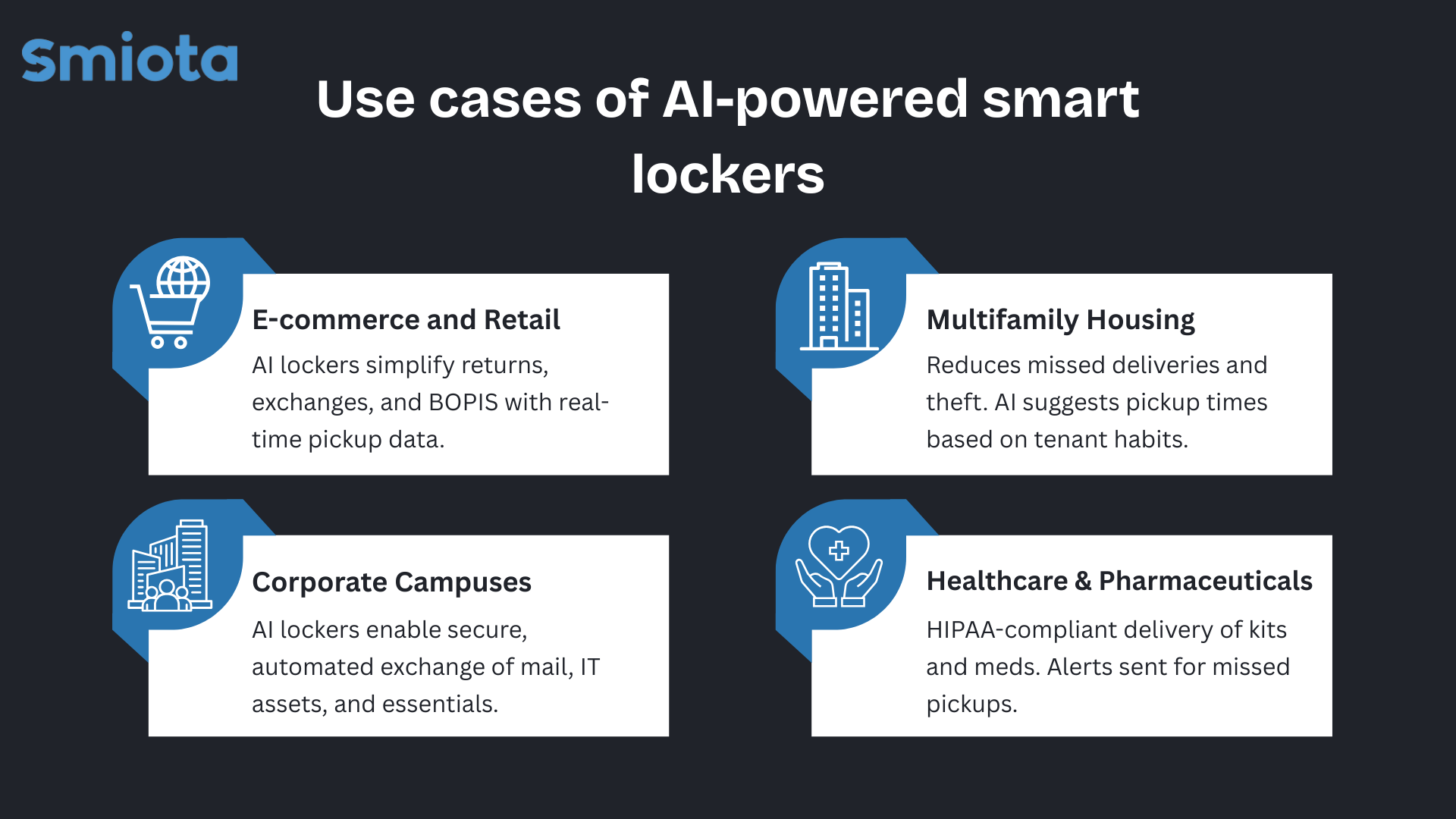
E-commerce and Retail:
AI-powered lockers streamline returns, exchanges, and BOPIS (Buy Online, Pick Up In Store) models. Customers can drop off or collect packages with minimal interaction, while retailers get real-time data on pickup rates and customer satisfaction.
Multifamily Housing:
Apartment complexes leverage smart lockers to reduce missed deliveries and package theft. AI tailors pickup suggestions based on tenant schedules, enhancing convenience and security.
Corporate Campuses:
Internal mail, IT equipment, HR documents, or even lunch orders can be securely exchanged between employees and departments via smart lockers, managed by AI-driven workflows.
Healthcare and Pharmaceuticals:
AI ensures HIPAA-compliant delivery and retrieval of test kits, medications, and patient equipment, including alerting caregivers if packages aren’t picked up within a certain window.
Environmental Benefits of AI + Smart Lockers
Efficiency isn’t just about cost—it’s about sustainability too. AI helps reduce emissions by:
- Consolidating deliveries to fewer drop-off points
- Avoiding repeated delivery attempts
- Enabling predictive locker sharing across nearby buildings or routes
This approach supports corporate ESG goals and helps cities reduce urban delivery congestion and carbon footprints.
The Smiota Edge: New-age Technologies in Action
As one of the key players in the smart locker industry, Smiota is already pioneering the use of new-age technologies across its secure locker solutions. Its platform integrates:
- Cloud-based dashboards for real-time insights
- Intelligent locker access management
- APIs for seamless integration with third-party logistics and enterprise systems
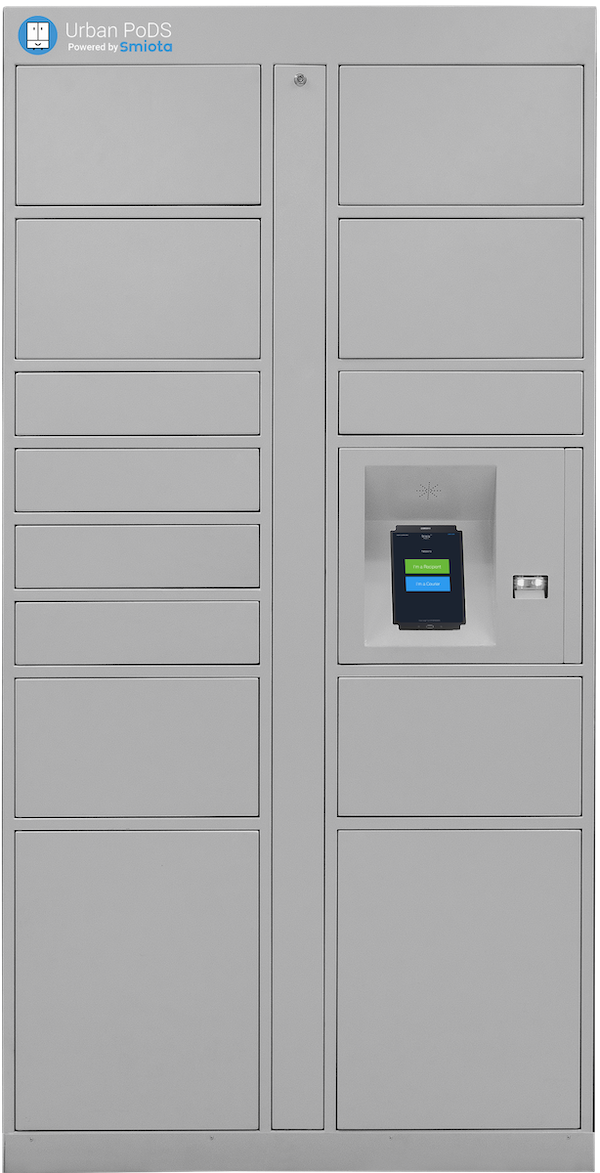
Smiota’s systems are trusted by universities, corporate offices, multifamily developments, and hospitals to deliver consistent, secure, and intelligent service—making them a front-runner in the AI-powered locker revolution.
What the Future Holds
Looking ahead to the second half of this decade, AI will continue to expand the capabilities of smart lockers through:
- Natural Language Interfaces: Voice-controlled lockers and chatbot support for instructions or customer service.
- Advanced Computer Vision: Locker cameras that verify deliveries or detect damaged packages.
- Adaptive Learning: Locker systems that self-optimize based on neighborhood dynamics and local usage trends.
Combined, these capabilities will make smart lockers not just tools of convenience, but essential infrastructure for a frictionless and resilient delivery ecosystem.
Final Thoughts
AI-powered smart lockers are not a futuristic concept—they’re a 2025 reality. By combining machine intelligence with secure, self-service storage, these systems are solving the most pressing challenges of last-mile delivery and bringing new levels of convenience, security, and sustainability to logistics.
For companies like Smiota, embracing AI isn’t just about upgrading lockers—it’s about reinventing how people and packages connect in a smarter world.
The post AI-Powered Smart Lockers: Revolutionizing Last-Mile Delivery in 2025 appeared first on Smiota.
]]>The post How Smart Lockers Help Distributors Thrive in the Omnichannel Era appeared first on Smiota.
]]>Once the unsung heroes of supply chains, distributors are now facing intense pressure to adapt or be edged out. In a landscape where manufacturers and D2C (direct-to-consumer) brands are rapidly taking control of their own fulfilment processes—building online stores, mobile apps, and integrated logistics systems—traditional distributors risk being sidelined.
What’s changed? Manufacturers no longer rely on intermediaries to manage their customer relationships. D2C brands have eliminated middlemen altogether, building robust last-mile networks that offer real-time tracking and doorstep delivery. Customers are enjoying seamless shopping experiences—from browsing to unboxing—all controlled by the brand.
To stay relevant in this new paradigm, distributors need more than just inventory and warehousing capabilities. They need to become digitally enabled service providers who can compete in an omnichannel world. That’s where smart locker technology comes in.
Smart lockers offer a bridge between digital convenience and physical efficiency, giving distributors the tools to plug into omnichannel strategies, reconnect with customers, and offer a level of service that matches modern expectations.
The Rise of Omnichannel Retail and the Distributors’ Dilemma
In today’s fast-moving commerce ecosystem, a few key shifts are reshaping how goods move from producer to consumer:
- Manufacturers are going direct: By setting up online storefronts and mobile apps, manufacturers are cutting out intermediaries and owning the customer experience end-to-end.
- D2C brands are on the rise: These nimble players leverage technology to optimize every step of the supply chain, bypassing distributors entirely and enhancing delivery efficiency.
- Customer expectations are sky-high: Modern buyers expect same-day shipping, flexible pickup options, real-time notifications, and hassle-free returns. The bar has been raised.
This evolution has left many distributors struggling to find their place.
Those who continue to operate strictly within the boundaries of warehouse logistics risk losing visibility and strategic relevance. Without direct consumer touchpoints, they’re seen as background players—not the value-adding partners they once were.
To reverse this trend, distributors need to reimagine their operations. They must start participating in customer-facing experiences, expanding their roles beyond backend fulfilment. Embracing smart locker technology is a compelling way to make this leap.
Omnichannel Explained: Why It Matters
Omnichannel commerce isn’t just a buzzword—it’s a fundamental shift in how customers interact with brands.
Rather than following a linear purchase path, consumers now engage with businesses through multiple, interconnected channels. A typical customer might:
- Order a product online,
- Pick it up from a locker at a retail outlet,
- Return it via a secure drop box near their office,
- And track every step via a mobile app.
Omnichannel is about offering choice, flexibility, and consistency—no matter where or how the customer interacts with the brand.
Distributors who want to compete must offer similar agility. That means integrating physical and digital logistics, enabling hybrid delivery and pickup models, and responding quickly to changing demands. Smart lockers act as enablers in this transition. By introducing customer-friendly pickup and return points into their distribution network, distributors can evolve from static warehouses to dynamic fulfilment partners.
What Are Smart Lockers?
At their core, smart lockers are automated, secure storage systems designed to streamline modern fulfilment needs. They make it easy for customers to pick up online orders, return items without hassle, and for businesses to manage last-mile deliveries more efficiently.
Modern smart lockers feature:
- Mobile access and PIN-based authentication for seamless, contactless interactions,
- Real-time notifications for tracking and pickup status,
- Integrated security protocols like RFID tagging, encrypted logins, and biometric verification,
- Robust software integration with ERP, CRM, warehouse management systems (WMS), and transportation management systems (TMS).
For distributors, this technology opens a new world of operational flexibility. It provides a physical touchpoint that’s automated, secure, and scalable—without the overhead of setting up retail outlets or customer service counters.
Why Smart Lockers Are Ideal for Distributors in Omnichannel
For distributors navigating this complex terrain, meeting these expectations without inflating costs or overhauling operations can be a challenge. As a modern, adaptable solution, smart lockers help distributors bridge the gap between digital demand and physical delivery, making them an ideal fit for omnichannel fulfilment strategies.
- Convenience and 24/7 Accessibility
Today’s buyers value speed and flexibility above all else. With smart lockers, customers can:
- Pick up or return products on their schedule—no more racing to a store before closing hours,
- Skip long wait lines or uncertain delivery windows,
- Select locker locations based on convenience—be it near their home, gym, or workplace.
This 24/7 accessibility not only boosts customer satisfaction but also empowers distributors to expand their reach without expanding real estate.
- Faster Fulfilment, Fewer Errors
For distributors, smart lockers are more than just drop-off points—they are fulfillment accelerators. By consolidating deliveries into locker stations:
- Failed delivery attempts are virtually eliminated,
- Fuel costs and delivery times are reduced through centralized drop locations,
- Errors associated with manual handoffs or porch piracy are minimized,
- Orders move faster through the system, improving turnover and inventory accuracy.
This results in a smoother, more reliable last-mile process, which is critical for maintaining service-level agreements with partners and customers.
- Secure, Contactless Operations
In a post-pandemic world, contactless delivery and hygiene are essential. Smart lockers offer:
- Touch-free interactions using mobile devices or QR codes,
- Encrypted authentication to safeguard privacy,
- Monitored access to prevent unauthorized entry.
This reassures both B2B and B2C customers, especially in high-traffic or shared environments such as residential complexes, commercial centers, or campuses.
- Personalized Customer Experience
Locker software isn’t just about logistics—it’s also a branding opportunity. Distributors can customize interfaces to:
- Display brand logos and messages,
- Send personalized pickup reminders or order updates,
- Save preferences for frequent customers (e.g., locker location or pickup time windows).
This humanizes the experience and keeps distributors top-of-mind, even when they’re operating behind the scenes.
By integrating smart lockers into their operations, distributors gain more than just a secure pickup point—they gain a competitive edge. Lockers enable 24/7 accessibility, reduce last-mile friction, and create a customer-centric experience that mirrors the convenience of D2C models.
Reclaiming Relevance: What Distributors Gain
Let’s face it—distributors are no longer the default middlemen in the supply chain. With manufacturers and D2C brands owning more of the customer journey, distributors must fight harder to prove their value.
Align with Manufacturers and D2C Brands
Instead of competing with D2C players, distributors can collaborate. By providing smart locker services, they can:
- Act as local fulfillment partners for brands lacking brick-and-mortar reach,
- Offer added services like product exchanges, repairs, or refurbished item drop-offs,
- Co-brand locker stations to build visibility and trust.
This allows distributors to stay embedded in the supply chain—relevant, valuable, and revenue-generating.
Optimize Supply Chain Costs
Smart locker networks offer real savings:
- They reduce last-mile delivery costs, which often account for over 50% of total logistics expenses,
- Limit reliance on in-person labor for handoffs,
- Streamline reverse logistics—an area where many distributors lose efficiency and profitability.
Fewer failed deliveries, fewer returns, and faster turnaround times mean a leaner, more profitable operation.
Enhance Trust and Loyalty
Reliable locker-based fulfilment builds trust with customers. Whether it’s a field technician getting a part on time or a B2B buyer picking up an urgent order after hours, the experience is consistent and dependable.
Over time, this builds brand loyalty and reinforces the distributor’s role as an indispensable service partner—not just a silent middleman.
Relevance in today’s market isn’t just about scale—it’s about adaptability. Smart lockers give distributors the tools to align with modern retail demands, cut costs where it matters, and reconnect with customers in meaningful ways.
How Distributors Can Implement Smart Lockers
Transitioning to smart lockers doesn’t have to be complicated. Here’s how distributors can make it work:
- Strategic Placement: Identify high-traffic areas—commercial zones, shared business parks, retail outlets, or residential hubs—and install lockers where they add the most convenience.
- Digital Integration: Seamlessly connect locker software with your ERP, WMS, and CRM platforms. This ensures real-time inventory visibility, faster order routing, and better customer communication.
- Partnership Alignment: Work alongside manufacturers and D2C brands to co-brand locker stations. Sharing usage data can help all stakeholders improve fulfillment strategies and customer engagement.
This isn’t just about installing hardware—it’s about building a future-ready logistics platform.
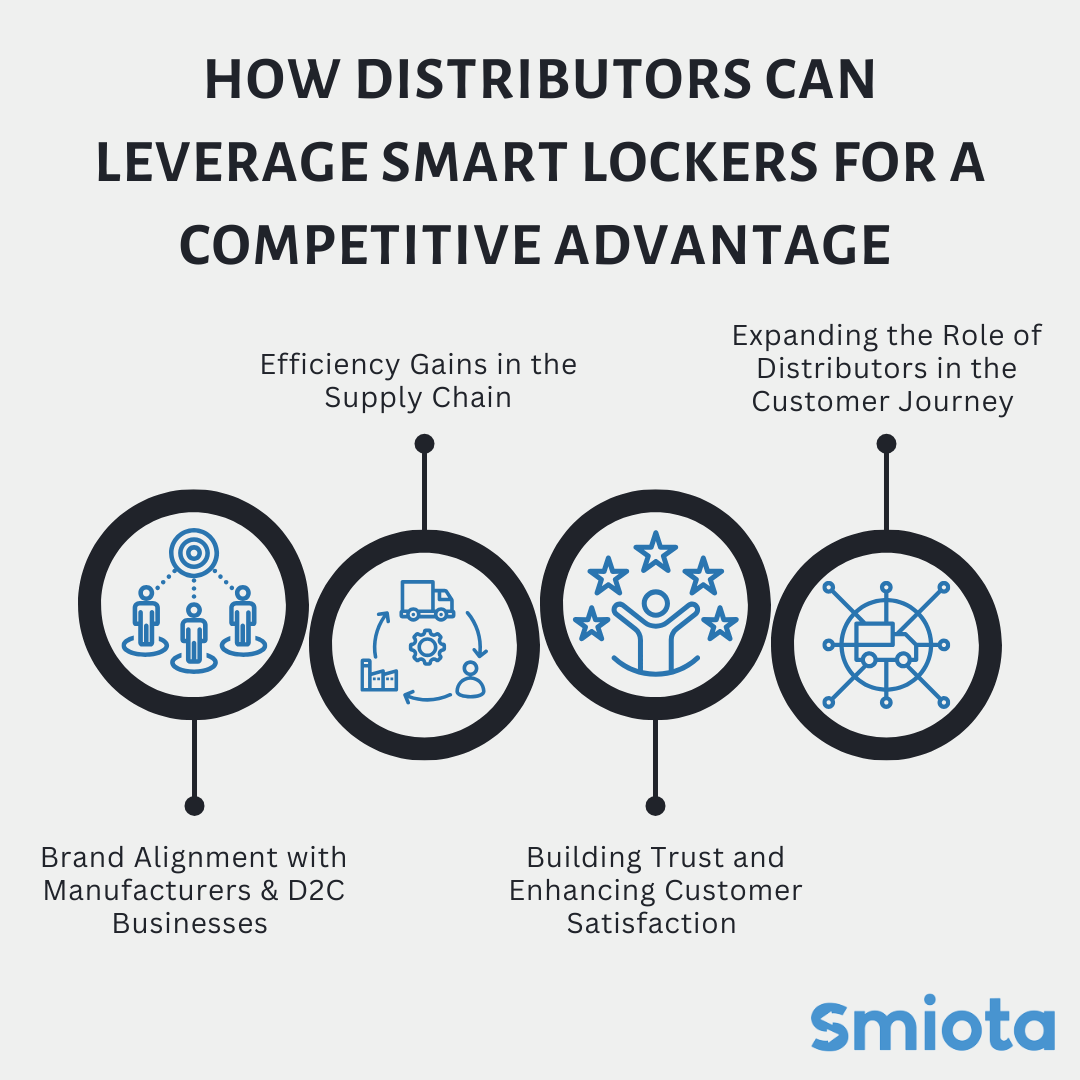
In a rapidly evolving marketplace, smart lockers provide distributors with a unique opportunity to redefine their role, streamline operations, and stay ahead in the omnichannel ecosystem.
Real-World Use Cases
Across industries, distributors are already unlocking new levels of efficiency and customer satisfaction with smart lockers. Here’s how:
- Retail Distribution: B2B clients can place orders and collect them via “click-and-collect” lockers, reducing delivery delays and paperwork.
- E-commerce Logistics: Returns and exchanges become faster and simpler with drop-off lockers, improving turnaround and customer satisfaction.
- Service Parts Fulfilment: Field technicians can retrieve mission-critical parts from lockers located at service hubs, enabling same-day repairs and reducing downtime.
These real-world examples highlight a powerful shift: with smart lockers, distributors are no longer just behind-the-scenes players, they’re stepping forward as essential facilitators in the omnichannel commerce journey.
Conclusion: Smart Lockers Are the Future of Competitive Distribution
Distribution is no longer just about moving boxes from point A to point B—it’s about owning parts of the customer journey and providing value in an omnichannel world.
Smiota’s smart locker solutions are designed to help distributors thrive in this environment. With modular construction, enterprise-grade security, and seamless integration capabilities, Smiota empowers distributors to become agile, customer-centric logistics partners.
The future of distribution is happening now. And those who embrace smart lockers today will lead the supply chain transformation of tomorrow.
The post How Smart Lockers Help Distributors Thrive in the Omnichannel Era appeared first on Smiota.
]]>The post 7 Strategies to Improve your Order Fulfillment Process appeared first on Smiota.
]]>Think of order fulfillment as the bridge between your online store and a happy customer. A shaky bridge with cracks and gaps leads to frustration and lost sales. But a strong, well-maintained bridge ensures a smooth crossing, leading to customer satisfaction and loyalty.
This blog post dives deep into the world of order fulfillment, exploring 7 effective strategies to build a sturdy, customer-centric bridge that you need to ensure you always meet delivery timelines.
Understanding Order Fulfillment
Order fulfillment is the entire process involved in delivering customer orders. It’s a crucial link in the supply chain, directly impacting customer satisfaction and brand loyalty. Here’s a breakdown of the key stages involved in a typical order fulfillment process:
- Order Receipt: This is where the customer’s order enters your system, triggering the fulfillment process.
- Order Processing: The order is verified, checked against inventory availability, and payment is processed.
- Picking and Packing: Warehouse staff locate, pick, and package the ordered items.
- Shipping: The package is handed off to a chosen carrier for delivery.
- Delivery: The customer receives the ordered items.
Common Challenges in Order Fulfillment
Even with the best intentions, businesses can encounter challenges that can hinder their order fulfillment process. Here are some of the most common roadblocks:
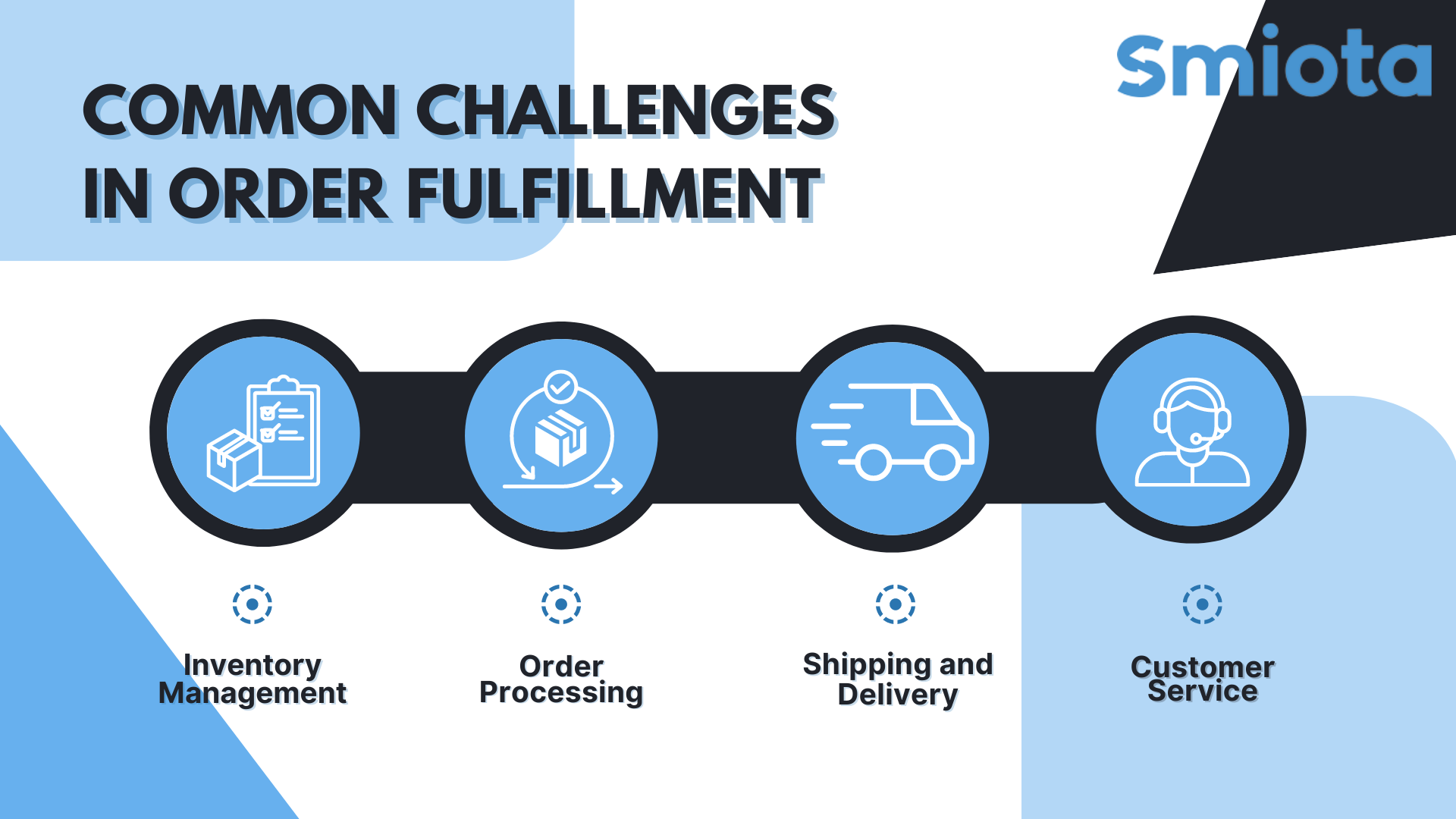
Inventory Management:
- Inaccurate Inventory: Outdated or inaccurate inventory data can lead to stockouts, disappointing customers who expect immediate availability.
- Overstocking: Excess inventory ties up valuable resources and incurs storage costs, impacting profitability.
Order Processing:
- Order Processing Delays: Manual processing workflows can be slow and prone to errors, extending the time it takes to get orders out the door.
- Order Errors: Mistakes during order entry or picking can lead to incorrect items being delivered, requiring returns and replacements, leading to customer frustration.
Shipping and Delivery:
- Misdeliveries: Incorrect addresses or mishandling during shipment can result in packages ending up in the wrong hands, causing delays and customer inconvenience.
- Delivery Delays: Slow delivery times can reduce customer confidence and satisfaction, especially given that customers expect lightning fast delivery.
Customer Service:
- Increased Inquiries: Fulfillment issues can lead to a surge in customer service inquiries, straining resources and impacting overall customer experience.
- Negative Customer Reviews: Dissatisfied customers with poor fulfillment experiences can leave negative online reviews, damaging brand reputation and influencing potential customers.
Strategies to Improve Your Order Fulfillment Process
Now that we understand the common challenges, here are some strategies that can be implemented to optimize your order fulfillment process and create a seamless customer experience that fosters loyalty and repeat business:
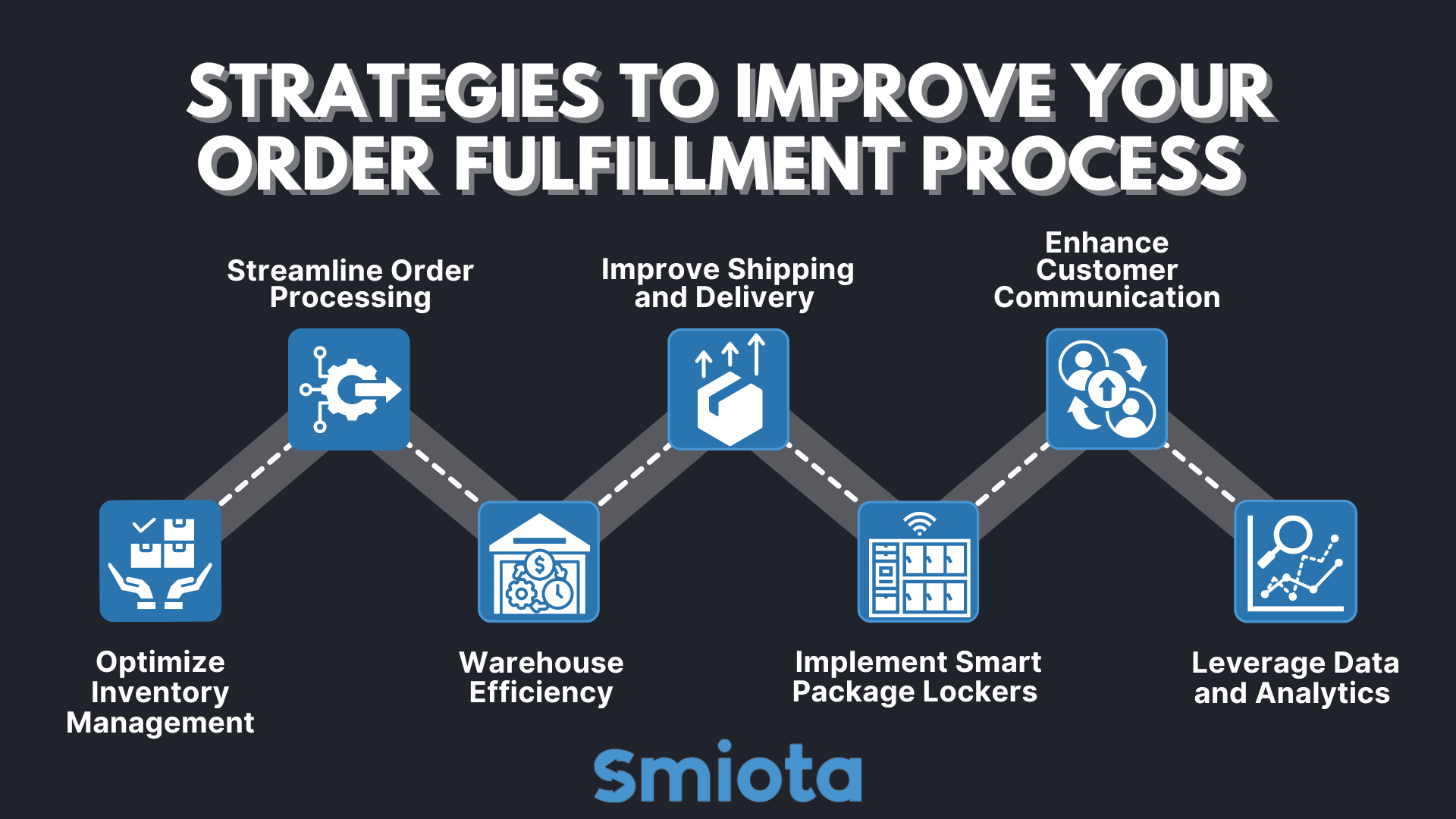
1. Optimize Inventory Management
- Real-Time Inventory Tracking: Invest in an inventory management system (IMS) that provides real-time data on stock levels. This helps you to identify potential stockouts before they happen and ensures you have the right products on hand to fulfill orders promptly.
- Automated Inventory Replenishment: Utilize automated replenishment systems that trigger purchase orders when inventory falls below a certain threshold. This ensures optimal stock levels without the risk of overstocking, reducing storage costs and improving cash flow.
2. Streamline Order Processing
- Order Management Systems (OMS): Implement an OMS that automates order processing tasks like order verification, payment processing, and order routing. This reduces manual errors, streamlines the workflow, and speeds up order fulfillment times.
- Automated Order Routing: Set up automated order routing for direct orders to allocate them to the most suitable fulfillment center based on location, inventory availability, and shipping speed. This ensures orders are fulfilled efficiently, minimizing delays and delivery costs.
3. Warehouse Efficiency
- Warehouse Management Systems (WMS): A WMS helps optimize warehouse operations by managing inventory location, picking routes, and labor allocation. This system can significantly improve picking accuracy and efficiency, leading to faster order fulfillment.
- Efficient Picking and Packing Strategies: Strategies such as batch picking (picking multiple orders at once) and zone picking (assigning specific zones for different items) can help optimize picking and packing processes. This can significantly reduce the time it takes to fulfill orders and get them out the door.
4. Improve Shipping and Delivery
- Carrier Management: Partner with reliable carriers known for efficiency and timely delivery. Negotiate competitive rates and prioritize carrier options based on customer preferences (e.g., expedited shipping vs. standard).
- Shipping Software: Shipping software can be used to compare rates from different carriers, generate shipping labels, and track shipments in real-time. This provides transparency for both you and your customers, allowing for proactive communication and improved delivery experiences.
5. Implement Smart Package Lockers
Smart package lockers offer a secure and convenient solution for both businesses and customers:
- Overview: Smart lockers are self-service kiosks strategically placed in high-traffic areas like grocery stores, shopping malls, or apartment buildings. Customers can choose locker delivery at checkout and receive a unique code to access their package once it arrives.
- Stages it can be incorporated into: Smart lockers can be integrated with various aspects of your order fulfillment process, including:
- Inventory Management: Inventory specifically designated for locker fulfillment can be maintained and tracked within the locker system.
- Order Management Systems (OMS): The OMS can be configured to automatically route orders to designated lockers based on customer selection.
- Warehouse Management Systems (WMS): WMS can be integrated to optimize picking and packing for locker fulfillment, ensuring items are prepped and ready for delivery to the lockers.
- Fulfillment Centers: Smart lockers can be strategically placed near fulfillment centers to streamline the delivery process for locker orders.
- BOPIS (Buy Online, Pickup In-Store): Lockers can be used as convenient pickup points for BOPIS orders, offering customers flexibility and reducing in-store congestion.
- Package Tracking Data and Analytics: Locker delivery data can be integrated with your analytics platform, providing valuable insights into customer preferences and optimizing locker placement strategies.
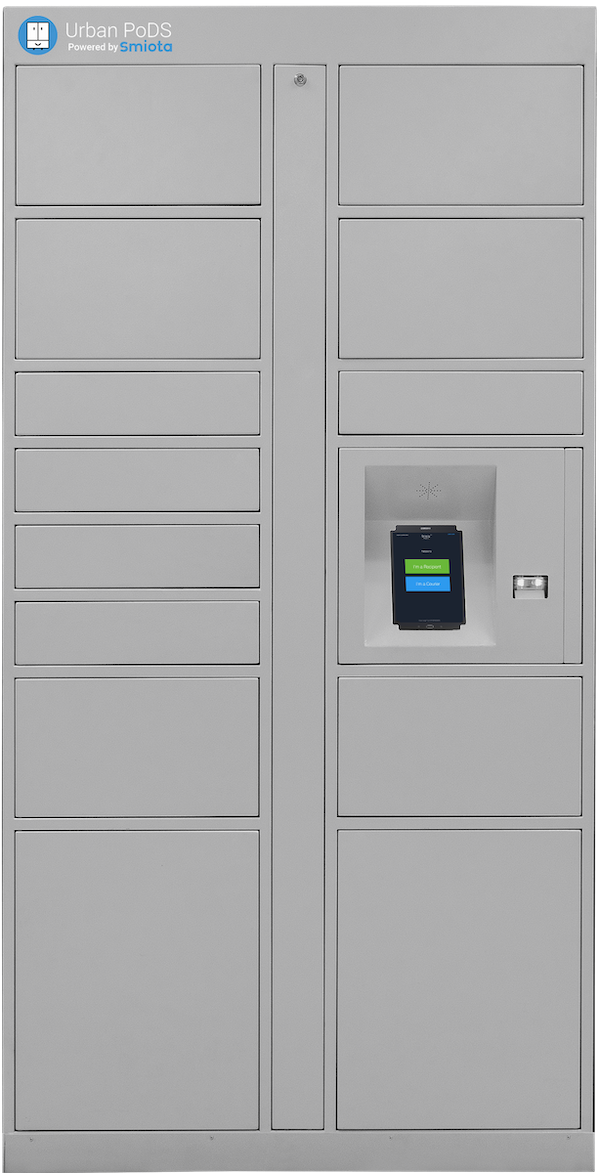
Benefits:
- Secure Storage: Packages are securely stored in the lockers until retrieved by the customer, eliminating porch piracy concerns.
- Convenient Pickup: Customers can pick up their orders at any time, 24/7, reducing missed deliveries and offering greater flexibility.
- Reduced Last-Mile Delivery Issues: Smart lockers strategically placed in high-traffic areas can significantly reduce the burden on last-mile delivery services, minimizing associated costs and potential delays.
- Easy Return Process: Smart lockers can be incorporated into the return process, allowing customers to easily return unwanted items at their convenience. This enhances the overall customer experience and encourages repeat business.
- Tools storage and tracking: In a warehouse, managing the storage and tracking of tools required for various purposes is a challenge. Manual processes often make it difficult to ensure accountability and easy exchange. Smart lockers make the entire process convenient by offering a safe place to store them. With information on who keeps and picks up tools, warehouse managers can monitor tools usage and make sure they are not lost during usage or exchange.
6. Enhance Customer Communication
- Order Confirmation and Updates: Keep customers informed every step of the way. Provide immediate order confirmation with estimated delivery times and send regular updates on order status. This transparency builds trust and reduces customer anxiety about their orders.
- Customer Support: Have a responsive customer service team available to address any fulfillment issues promptly and professionally. A proactive approach can turn a negative experience into a positive one by demonstrating your commitment to customer satisfaction.
7. Leverage Data and Analytics
- Performance Metrics: Track key metrics throughout the fulfillment process, such as order accuracy, fulfillment speed (time from order to delivery), and customer satisfaction scores.
- Continuous Improvement: Analyzing data could involve optimizing warehouse layouts, adjusting picking and packing strategies, negotiating better shipping rates, or strategically placing smart lockers based on customer demographics and order volumes. By continually evaluating data, businesses can refine their fulfillment process for maximum efficiency and customer satisfaction.
Conclusion
By implementing the strategies outlined above, you can create an order fulfillment system that delivers exceptional customer experiences consistently. This can be your gateway to standing out in the intensely competitive e-commerce market.
Smiota’s smart lockers can be a game-changing solution in this regard. Whether you are an e-commerce company, warehouse owner, or retail store offering BOPIS experiences, using smart lockers is a great way to ease the purchase journey. With key features such as sensor-based chain of custody, customizability, superior security, temperature control, etc., Smiota’s smart lockers can ensure your packages are delivered to the right customers without loss.
Contact us today to learn how our smart locker solutions can enhance your order fulfillment process.
The post 7 Strategies to Improve your Order Fulfillment Process appeared first on Smiota.
]]>The post Warehouse Lockers: Streamlining Operations for Optimal Workflow appeared first on Smiota.
]]>These aren’t your traditional lockers – they’re completely digitized systems that can be integrated seamlessly with your warehouse management system, offering a ton of benefits such as convenient package management, timely delivery, and productivity improvements. Let’s get deeper into the world of warehouse lockers, exploring their advantages, implementation process, and how they can enable optimal workflow at your warehouses.
Benefits of Warehouse Lockers
Warehouse lockers offer a multitude of advantages over traditional storage methods. Let’s explore some of the key benefits:
- Increased Efficiency: Warehouse lockers minimize picking and packing times to improve warehouse efficiency. Items can be pre-sorted and stored in designated lockers, allowing pickers to quickly locate and retrieve them, eliminating the need to navigate aisles and search for inventory.
- Improved Order Accuracy: Warehouse lockers equipped with barcode scanners or RFID tags enable real-time tracking of inventory. This reduces the risk of errors and ensures you’re sending the right items to your customers every time, making it an efficient warehouse.
- Enhanced Security: Warehouse lockers provide a secure storage solution for high-value items, sensitive materials, or controlled substances. Access can be restricted by user permissions, and audit trails can be generated for enhanced accountability.
- Space Optimization: Warehouse lockers often have a modular design, allowing you to maximize vertical space utilization within your facility. This is particularly valuable in warehouses with limited square footage.
- Scalability: As your business grows, your warehouse needs can evolve. Locker systems are easily scalable. You can add or remove lockers as needed to adapt to fluctuating inventory levels.
- Improved Inventory Management: Inventory data can be automatically updated with every item placed in or retrieved from a locker. This provides real-time insight into stock levels and helps prevent stockouts and overstocking situations.
Integrating Smart Warehouse Lockers
Integrating smart lockers into your existing warehouse operations requires meticulous planning. Here’s a breakdown of the steps involved: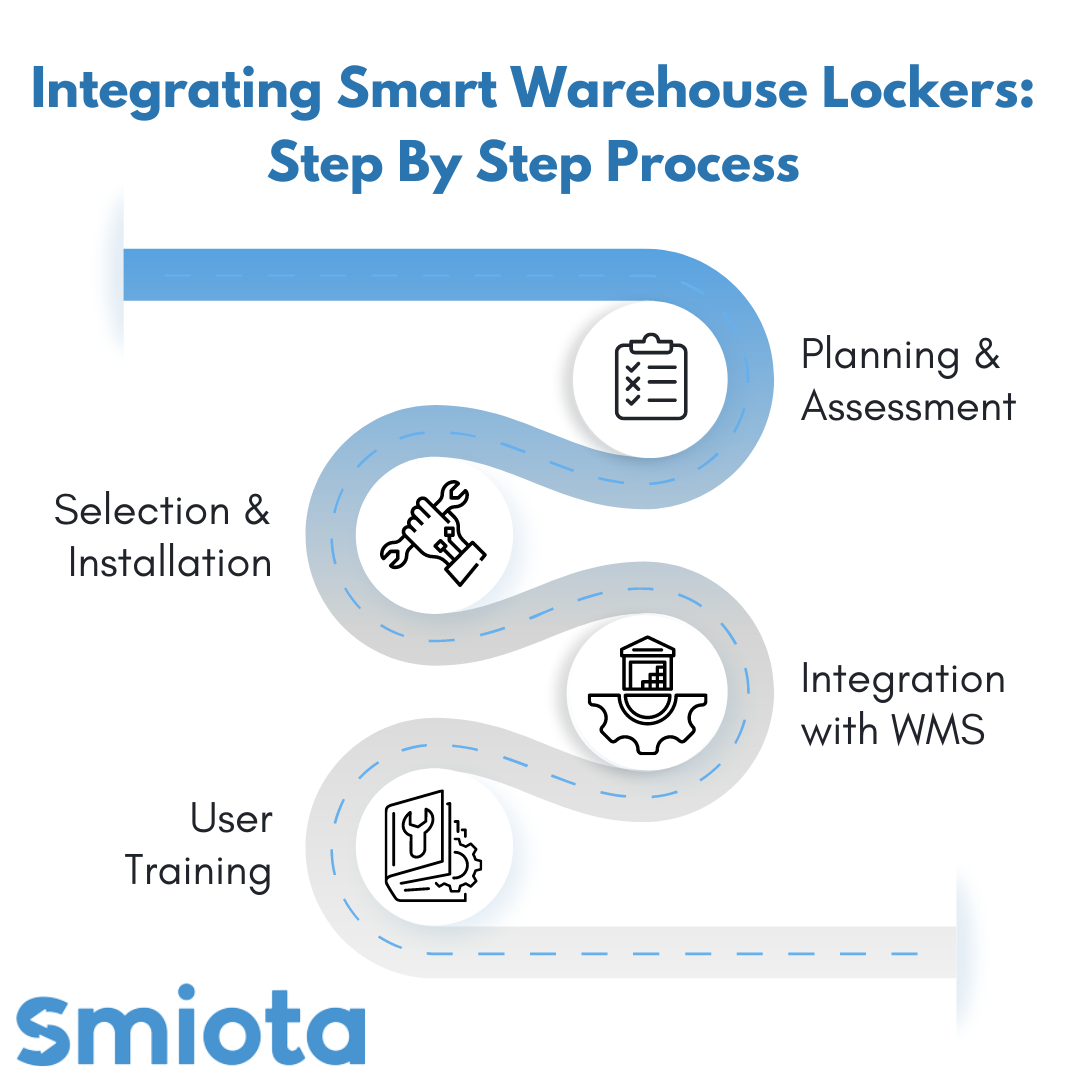
- Planning & Assessment: Evaluate your current storage needs, identify inventory types that would benefit most from locker storage, and determine the optimal number and size of lockers required.
- Selection & Installation: Choose a reputable locker solution provider like Smiota that offers features tailored to your needs. The installation process can be completed with minimal disruption to your existing operation.
- Integration with WMS: Ensure seamless integration of the locker system with your existing warehouse management system (WMS). This allows for automatic data flow between the locker software and your WMS, maintaining accurate inventory records and optimizing picking processes.
- User Training: Provide training for your warehouse staff on how to operate the automated lockers, access specific compartments, and utilize associated features like item retrieval confirmation and real-time tracking.
Using Smart Lockers for Optimal Workflow
Smart warehouse lockers are improving warehouse operations and offer a variety of use cases beyond just storage:
- Storage of Picked Orders: Following picking, items can be placed in designated lockers for order fulfillment personnel who then pack and ship the orders. This reduces the risk of misplaced or lost items.
- Staged Storage: High-demand or frequently shipped items can be stored in easily accessible lockers, reducing travel time for pickers and expediting order fulfillment.
- Returns Management: Dedicated lockers can be used for customer returns, allowing for secure collection and streamlined return processing.
- Staff Management: Lockers can be assigned for employee belongings or tools, enhancing security and organization.
The benefits extend beyond standard use cases. Real-time tracking and analytics provided by smart lockers offer valuable insights for optimizing warehouse operations. Track inventory movement, identify areas for improvement in picking and packing times, and make data-driven decisions to further streamline your workflow.
Smiota’s Smart Warehouse Lockers: Features & Use Cases
Smiota, one of the leaders in smart locker solutions, offers innovative warehouse locker systems designed to enhance your operations. Here are some of Smiota’s locker features and how they can benefit your warehouse:
- Modular Design: Smiota lockers feature a modular design, allowing customization to suit your specific space and storage needs.
- Scalability: Easily add or remove lockers as your business grows, ensuring your storage solution adapts to your changing requirements.
- Access Control: Restrict access to specific lockers based on user permissions, ensuring the security of sensitive items.
- Real-time Tracking: Track inventory movement within the lockers in real-time, providing complete visibility into stock levels and streamlining picking processes.
- Data & Analytics: Gain valuable insights into inventory movement, picking times, and staff activity through comprehensive reports and analytics.
Smiota’s smart locker solutions cater to a variety of applications within your warehouse. Here are some specific use cases for Smiota’s smart lockers:
- High-Value Inventory Management: Securely store high-value inventory in designated lockers with restricted access control. Real-time tracking provides peace of mind and ensures accountability.
- Kitting & Assembly: Pre-assemble kits for specific orders within designated lockers, streamlining the picking and packing process for large or complex orders.
- Work-in-Progress (WIP) Management: Dedicate lockers for storing work-in-progress items, ensuring clear organization and efficient production flow.
- Climate-Controlled Lockers: Smiota offers climate-controlled locker options for storing temperature-sensitive inventory, maintaining product quality and ensuring compliance with regulations.
By leveraging Smiota’s smart locker features, you’ll experience:
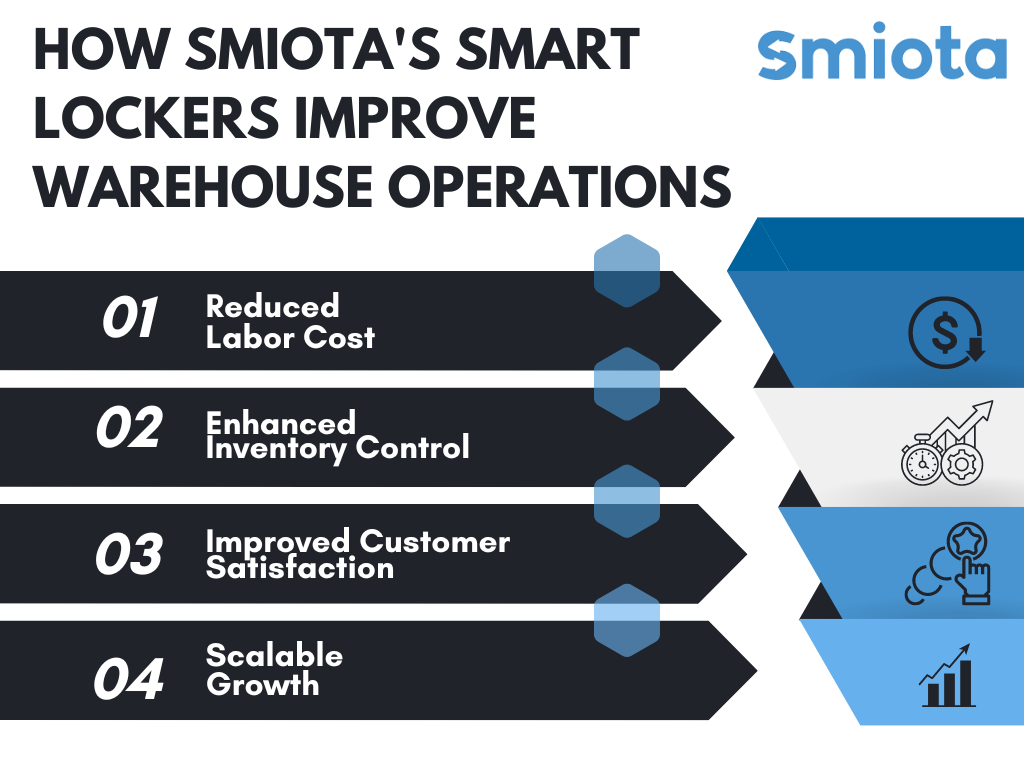
- Reduced Labor Costs: Improved picking efficiency and reduced picking errors translate to lower labor costs associated with order fulfillment.
- Enhanced Inventory Control: Real-time tracking and data insights minimize stockouts and overstocking, reducing inventory carrying costs.
- Improved Customer Satisfaction: Faster picking and packing times lead to faster order fulfillment and happier customers.
- Scalable Growth: The modular and scalable nature of Smiota’s lockers allows your storage solution to adapt as your business grows.
Conclusion
Warehouse lockers are no longer a futuristic concept, but a practical and impactful solution for optimizing warehouse operations. By integrating smart lockers into your workflow, you can unlock a range of benefits – from increased efficiency and improved accuracy to enhanced security and data-driven decision making.
Smiota’s smart locker systems, with their customizable features and diverse use cases, offer a compelling solution for warehouses of all sizes and complexities.
Ready to take your warehouse operations to the next level? Contact Smiota today to discuss your specific needs and explore how our innovative smart locker solutions can transform your workflow.
The post Warehouse Lockers: Streamlining Operations for Optimal Workflow appeared first on Smiota.
]]>