The post 7 Strategies to Improve your Order Fulfillment Process appeared first on Smiota.
]]>Think of order fulfillment as the bridge between your online store and a happy customer. A shaky bridge with cracks and gaps leads to frustration and lost sales. But a strong, well-maintained bridge ensures a smooth crossing, leading to customer satisfaction and loyalty.
This blog post dives deep into the world of order fulfillment, exploring 7 effective strategies to build a sturdy, customer-centric bridge that you need to ensure you always meet delivery timelines.
Understanding Order Fulfillment
Order fulfillment is the entire process involved in delivering customer orders. It’s a crucial link in the supply chain, directly impacting customer satisfaction and brand loyalty. Here’s a breakdown of the key stages involved in a typical order fulfillment process:
- Order Receipt: This is where the customer’s order enters your system, triggering the fulfillment process.
- Order Processing: The order is verified, checked against inventory availability, and payment is processed.
- Picking and Packing: Warehouse staff locate, pick, and package the ordered items.
- Shipping: The package is handed off to a chosen carrier for delivery.
- Delivery: The customer receives the ordered items.
Common Challenges in Order Fulfillment
Even with the best intentions, businesses can encounter challenges that can hinder their order fulfillment process. Here are some of the most common roadblocks:
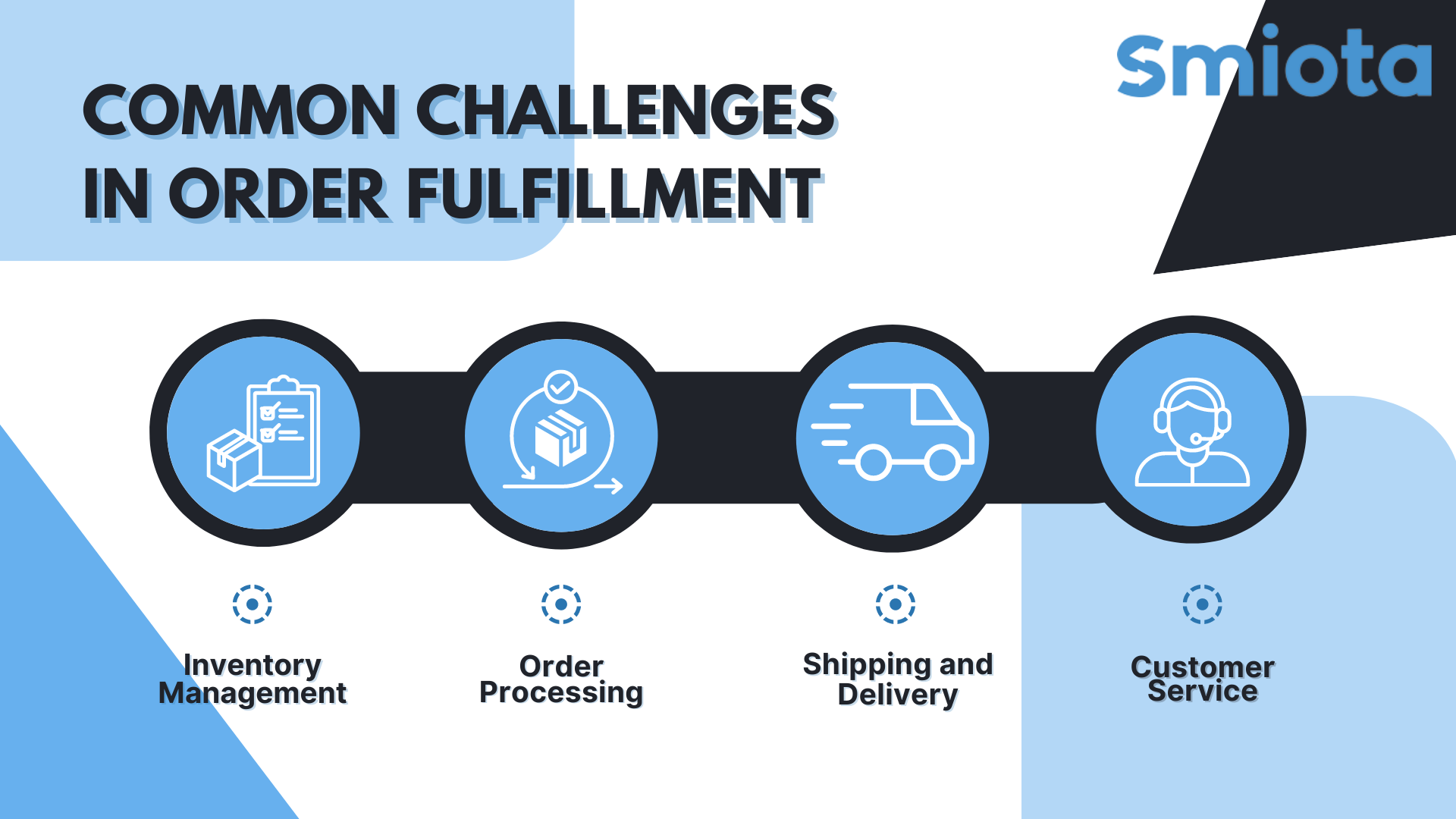
Inventory Management:
- Inaccurate Inventory: Outdated or inaccurate inventory data can lead to stockouts, disappointing customers who expect immediate availability.
- Overstocking: Excess inventory ties up valuable resources and incurs storage costs, impacting profitability.
Order Processing:
- Order Processing Delays: Manual processing workflows can be slow and prone to errors, extending the time it takes to get orders out the door.
- Order Errors: Mistakes during order entry or picking can lead to incorrect items being delivered, requiring returns and replacements, leading to customer frustration.
Shipping and Delivery:
- Misdeliveries: Incorrect addresses or mishandling during shipment can result in packages ending up in the wrong hands, causing delays and customer inconvenience.
- Delivery Delays: Slow delivery times can reduce customer confidence and satisfaction, especially given that customers expect lightning fast delivery.
Customer Service:
- Increased Inquiries: Fulfillment issues can lead to a surge in customer service inquiries, straining resources and impacting overall customer experience.
- Negative Customer Reviews: Dissatisfied customers with poor fulfillment experiences can leave negative online reviews, damaging brand reputation and influencing potential customers.
Strategies to Improve Your Order Fulfillment Process
Now that we understand the common challenges, here are some strategies that can be implemented to optimize your order fulfillment process and create a seamless customer experience that fosters loyalty and repeat business:
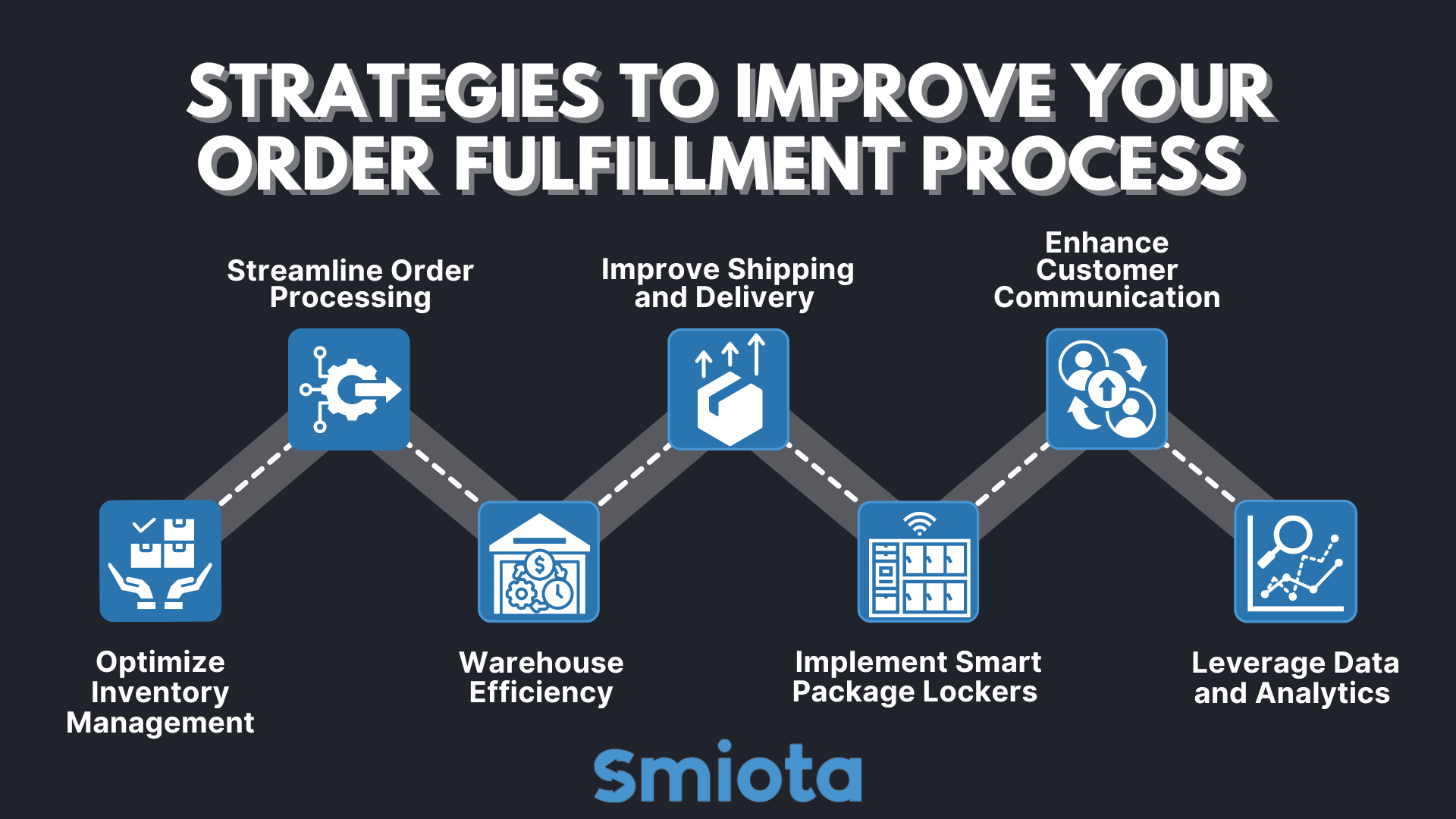
1. Optimize Inventory Management
- Real-Time Inventory Tracking: Invest in an inventory management system (IMS) that provides real-time data on stock levels. This helps you to identify potential stockouts before they happen and ensures you have the right products on hand to fulfill orders promptly.
- Automated Inventory Replenishment: Utilize automated replenishment systems that trigger purchase orders when inventory falls below a certain threshold. This ensures optimal stock levels without the risk of overstocking, reducing storage costs and improving cash flow.
2. Streamline Order Processing
- Order Management Systems (OMS): Implement an OMS that automates order processing tasks like order verification, payment processing, and order routing. This reduces manual errors, streamlines the workflow, and speeds up order fulfillment times.
- Automated Order Routing: Set up automated order routing for direct orders to allocate them to the most suitable fulfillment center based on location, inventory availability, and shipping speed. This ensures orders are fulfilled efficiently, minimizing delays and delivery costs.
3. Warehouse Efficiency
- Warehouse Management Systems (WMS): A WMS helps optimize warehouse operations by managing inventory location, picking routes, and labor allocation. This system can significantly improve picking accuracy and efficiency, leading to faster order fulfillment.
- Efficient Picking and Packing Strategies: Strategies such as batch picking (picking multiple orders at once) and zone picking (assigning specific zones for different items) can help optimize picking and packing processes. This can significantly reduce the time it takes to fulfill orders and get them out the door.
4. Improve Shipping and Delivery
- Carrier Management: Partner with reliable carriers known for efficiency and timely delivery. Negotiate competitive rates and prioritize carrier options based on customer preferences (e.g., expedited shipping vs. standard).
- Shipping Software: Shipping software can be used to compare rates from different carriers, generate shipping labels, and track shipments in real-time. This provides transparency for both you and your customers, allowing for proactive communication and improved delivery experiences.
5. Implement Smart Package Lockers
Smart package lockers offer a secure and convenient solution for both businesses and customers:
- Overview: Smart lockers are self-service kiosks strategically placed in high-traffic areas like grocery stores, shopping malls, or apartment buildings. Customers can choose locker delivery at checkout and receive a unique code to access their package once it arrives.
- Stages it can be incorporated into: Smart lockers can be integrated with various aspects of your order fulfillment process, including:
- Inventory Management: Inventory specifically designated for locker fulfillment can be maintained and tracked within the locker system.
- Order Management Systems (OMS): The OMS can be configured to automatically route orders to designated lockers based on customer selection.
- Warehouse Management Systems (WMS): WMS can be integrated to optimize picking and packing for locker fulfillment, ensuring items are prepped and ready for delivery to the lockers.
- Fulfillment Centers: Smart lockers can be strategically placed near fulfillment centers to streamline the delivery process for locker orders.
- BOPIS (Buy Online, Pickup In-Store): Lockers can be used as convenient pickup points for BOPIS orders, offering customers flexibility and reducing in-store congestion.
- Package Tracking Data and Analytics: Locker delivery data can be integrated with your analytics platform, providing valuable insights into customer preferences and optimizing locker placement strategies.
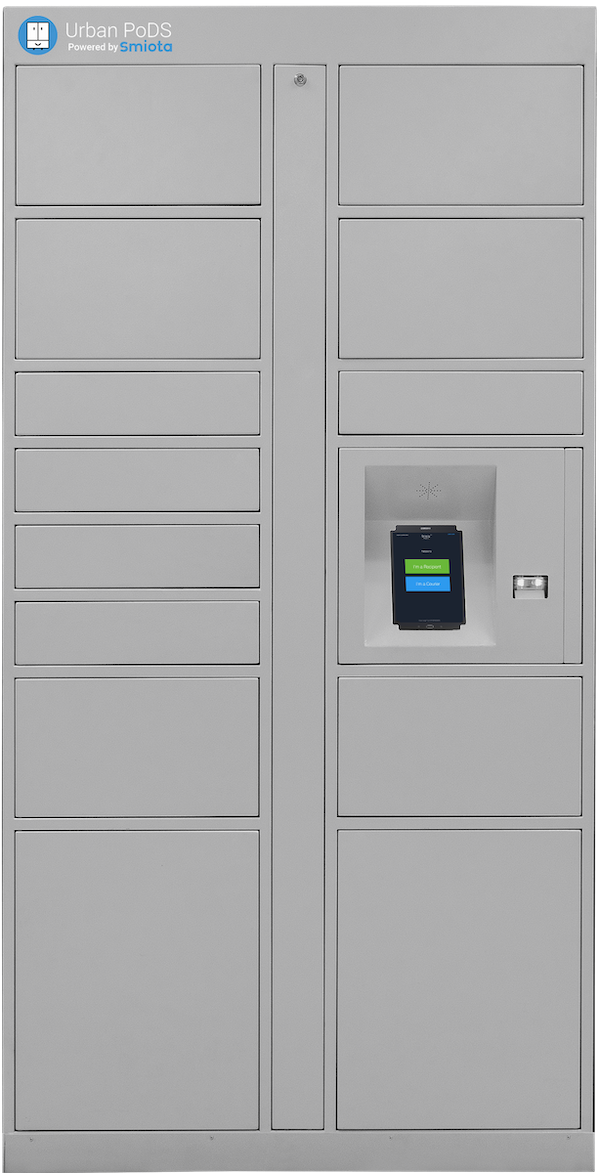
Benefits:
- Secure Storage: Packages are securely stored in the lockers until retrieved by the customer, eliminating porch piracy concerns.
- Convenient Pickup: Customers can pick up their orders at any time, 24/7, reducing missed deliveries and offering greater flexibility.
- Reduced Last-Mile Delivery Issues: Smart lockers strategically placed in high-traffic areas can significantly reduce the burden on last-mile delivery services, minimizing associated costs and potential delays.
- Easy Return Process: Smart lockers can be incorporated into the return process, allowing customers to easily return unwanted items at their convenience. This enhances the overall customer experience and encourages repeat business.
- Tools storage and tracking: In a warehouse, managing the storage and tracking of tools required for various purposes is a challenge. Manual processes often make it difficult to ensure accountability and easy exchange. Smart lockers make the entire process convenient by offering a safe place to store them. With information on who keeps and picks up tools, warehouse managers can monitor tools usage and make sure they are not lost during usage or exchange.
6. Enhance Customer Communication
- Order Confirmation and Updates: Keep customers informed every step of the way. Provide immediate order confirmation with estimated delivery times and send regular updates on order status. This transparency builds trust and reduces customer anxiety about their orders.
- Customer Support: Have a responsive customer service team available to address any fulfillment issues promptly and professionally. A proactive approach can turn a negative experience into a positive one by demonstrating your commitment to customer satisfaction.
7. Leverage Data and Analytics
- Performance Metrics: Track key metrics throughout the fulfillment process, such as order accuracy, fulfillment speed (time from order to delivery), and customer satisfaction scores.
- Continuous Improvement: Analyzing data could involve optimizing warehouse layouts, adjusting picking and packing strategies, negotiating better shipping rates, or strategically placing smart lockers based on customer demographics and order volumes. By continually evaluating data, businesses can refine their fulfillment process for maximum efficiency and customer satisfaction.
Conclusion
By implementing the strategies outlined above, you can create an order fulfillment system that delivers exceptional customer experiences consistently. This can be your gateway to standing out in the intensely competitive e-commerce market.
Smiota’s smart lockers can be a game-changing solution in this regard. Whether you are an e-commerce company, warehouse owner, or retail store offering BOPIS experiences, using smart lockers is a great way to ease the purchase journey. With key features such as sensor-based chain of custody, customizability, superior security, temperature control, etc., Smiota’s smart lockers can ensure your packages are delivered to the right customers without loss.
Contact us today to learn how our smart locker solutions can enhance your order fulfillment process.
The post 7 Strategies to Improve your Order Fulfillment Process appeared first on Smiota.
]]>The post Warehouse Lockers: Streamlining Operations for Optimal Workflow appeared first on Smiota.
]]>These aren’t your traditional lockers – they’re completely digitized systems that can be integrated seamlessly with your warehouse management system, offering a ton of benefits such as convenient package management, timely delivery, and productivity improvements. Let’s get deeper into the world of warehouse lockers, exploring their advantages, implementation process, and how they can enable optimal workflow at your warehouses.
Benefits of Warehouse Lockers
Warehouse lockers offer a multitude of advantages over traditional storage methods. Let’s explore some of the key benefits:
- Increased Efficiency: Warehouse lockers minimize picking and packing times to improve warehouse efficiency. Items can be pre-sorted and stored in designated lockers, allowing pickers to quickly locate and retrieve them, eliminating the need to navigate aisles and search for inventory.
- Improved Order Accuracy: Warehouse lockers equipped with barcode scanners or RFID tags enable real-time tracking of inventory. This reduces the risk of errors and ensures you’re sending the right items to your customers every time, making it an efficient warehouse.
- Enhanced Security: Warehouse lockers provide a secure storage solution for high-value items, sensitive materials, or controlled substances. Access can be restricted by user permissions, and audit trails can be generated for enhanced accountability.
- Space Optimization: Warehouse lockers often have a modular design, allowing you to maximize vertical space utilization within your facility. This is particularly valuable in warehouses with limited square footage.
- Scalability: As your business grows, your warehouse needs can evolve. Locker systems are easily scalable. You can add or remove lockers as needed to adapt to fluctuating inventory levels.
- Improved Inventory Management: Inventory data can be automatically updated with every item placed in or retrieved from a locker. This provides real-time insight into stock levels and helps prevent stockouts and overstocking situations.
Integrating Smart Warehouse Lockers
Integrating smart lockers into your existing warehouse operations requires meticulous planning. Here’s a breakdown of the steps involved: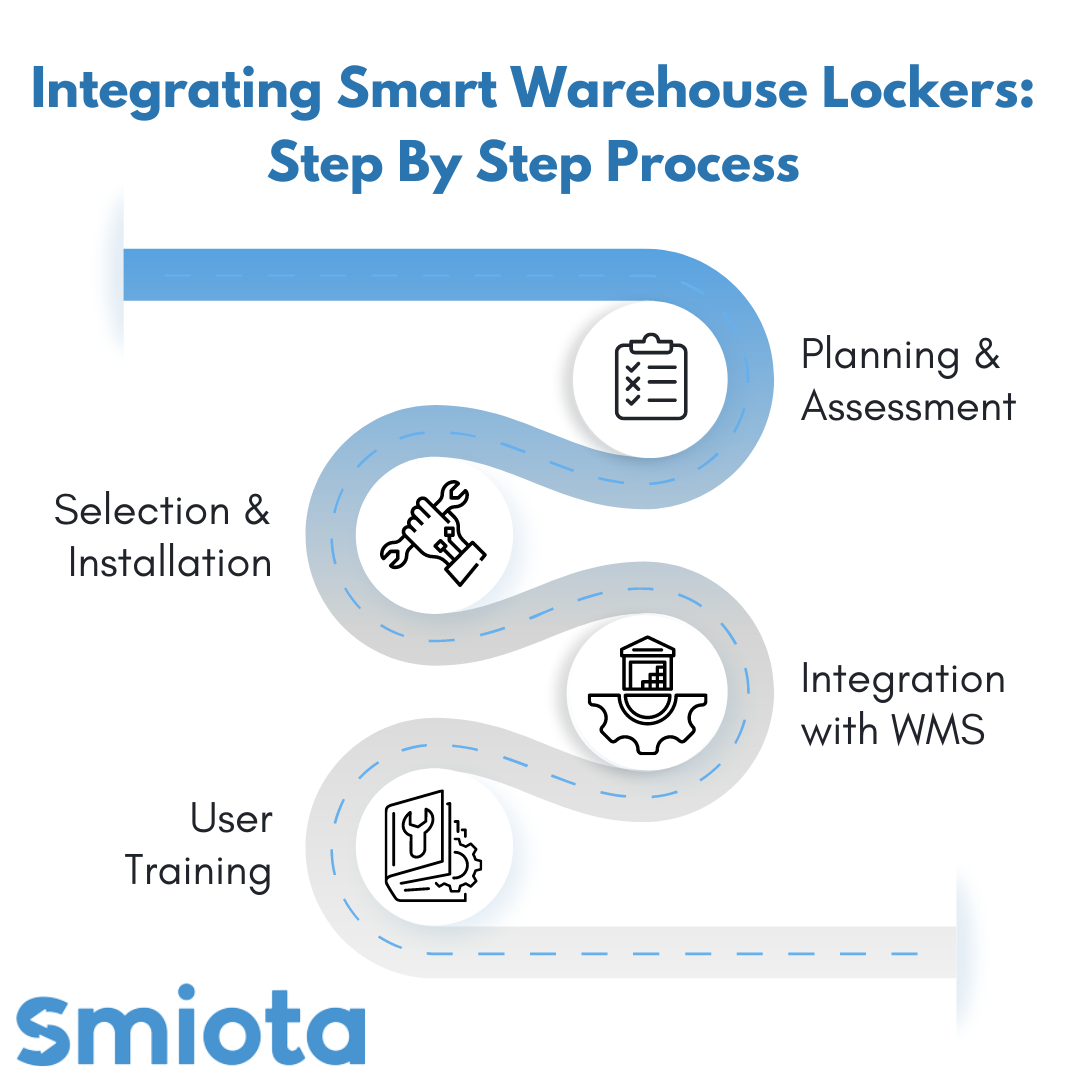
- Planning & Assessment: Evaluate your current storage needs, identify inventory types that would benefit most from locker storage, and determine the optimal number and size of lockers required.
- Selection & Installation: Choose a reputable locker solution provider like Smiota that offers features tailored to your needs. The installation process can be completed with minimal disruption to your existing operation.
- Integration with WMS: Ensure seamless integration of the locker system with your existing warehouse management system (WMS). This allows for automatic data flow between the locker software and your WMS, maintaining accurate inventory records and optimizing picking processes.
- User Training: Provide training for your warehouse staff on how to operate the automated lockers, access specific compartments, and utilize associated features like item retrieval confirmation and real-time tracking.
Using Smart Lockers for Optimal Workflow
Smart warehouse lockers are improving warehouse operations and offer a variety of use cases beyond just storage:
- Storage of Picked Orders: Following picking, items can be placed in designated lockers for order fulfillment personnel who then pack and ship the orders. This reduces the risk of misplaced or lost items.
- Staged Storage: High-demand or frequently shipped items can be stored in easily accessible lockers, reducing travel time for pickers and expediting order fulfillment.
- Returns Management: Dedicated lockers can be used for customer returns, allowing for secure collection and streamlined return processing.
- Staff Management: Lockers can be assigned for employee belongings or tools, enhancing security and organization.
The benefits extend beyond standard use cases. Real-time tracking and analytics provided by smart lockers offer valuable insights for optimizing warehouse operations. Track inventory movement, identify areas for improvement in picking and packing times, and make data-driven decisions to further streamline your workflow.
Smiota’s Smart Warehouse Lockers: Features & Use Cases
Smiota, one of the leaders in smart locker solutions, offers innovative warehouse locker systems designed to enhance your operations. Here are some of Smiota’s locker features and how they can benefit your warehouse:
- Modular Design: Smiota lockers feature a modular design, allowing customization to suit your specific space and storage needs.
- Scalability: Easily add or remove lockers as your business grows, ensuring your storage solution adapts to your changing requirements.
- Access Control: Restrict access to specific lockers based on user permissions, ensuring the security of sensitive items.
- Real-time Tracking: Track inventory movement within the lockers in real-time, providing complete visibility into stock levels and streamlining picking processes.
- Data & Analytics: Gain valuable insights into inventory movement, picking times, and staff activity through comprehensive reports and analytics.
Smiota’s smart locker solutions cater to a variety of applications within your warehouse. Here are some specific use cases for Smiota’s smart lockers:
- High-Value Inventory Management: Securely store high-value inventory in designated lockers with restricted access control. Real-time tracking provides peace of mind and ensures accountability.
- Kitting & Assembly: Pre-assemble kits for specific orders within designated lockers, streamlining the picking and packing process for large or complex orders.
- Work-in-Progress (WIP) Management: Dedicate lockers for storing work-in-progress items, ensuring clear organization and efficient production flow.
- Climate-Controlled Lockers: Smiota offers climate-controlled locker options for storing temperature-sensitive inventory, maintaining product quality and ensuring compliance with regulations.
By leveraging Smiota’s smart locker features, you’ll experience:
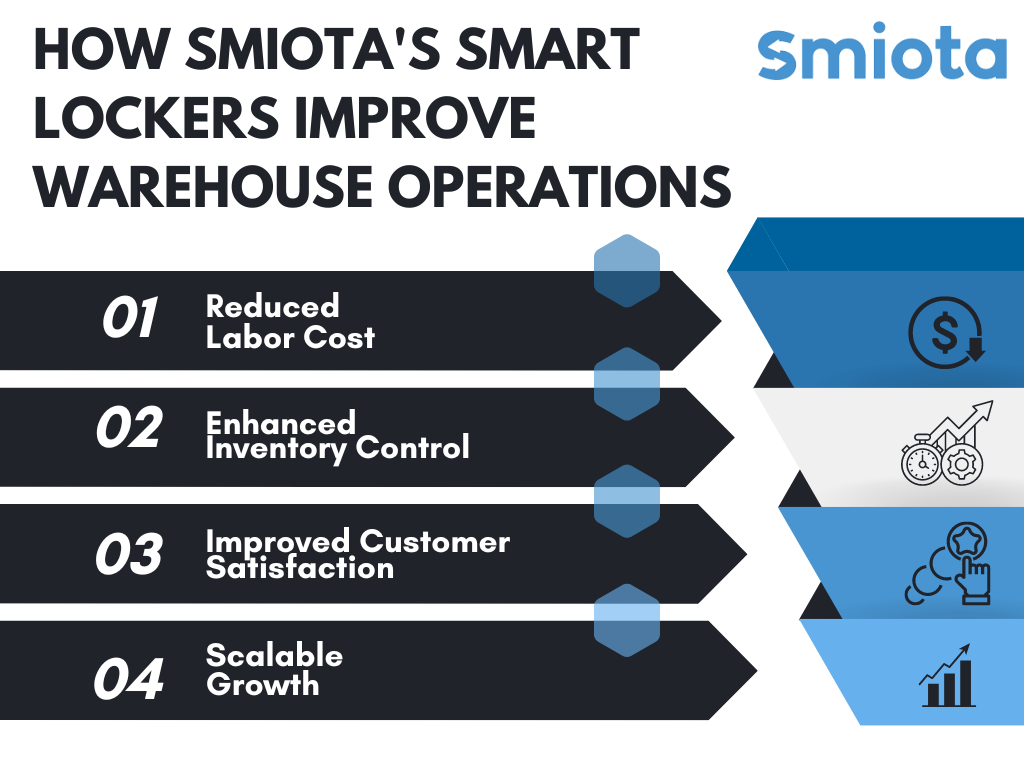
- Reduced Labor Costs: Improved picking efficiency and reduced picking errors translate to lower labor costs associated with order fulfillment.
- Enhanced Inventory Control: Real-time tracking and data insights minimize stockouts and overstocking, reducing inventory carrying costs.
- Improved Customer Satisfaction: Faster picking and packing times lead to faster order fulfillment and happier customers.
- Scalable Growth: The modular and scalable nature of Smiota’s lockers allows your storage solution to adapt as your business grows.
Conclusion
Warehouse lockers are no longer a futuristic concept, but a practical and impactful solution for optimizing warehouse operations. By integrating smart lockers into your workflow, you can unlock a range of benefits – from increased efficiency and improved accuracy to enhanced security and data-driven decision making.
Smiota’s smart locker systems, with their customizable features and diverse use cases, offer a compelling solution for warehouses of all sizes and complexities.
Ready to take your warehouse operations to the next level? Contact Smiota today to discuss your specific needs and explore how our innovative smart locker solutions can transform your workflow.
The post Warehouse Lockers: Streamlining Operations for Optimal Workflow appeared first on Smiota.
]]>The post 4 Actionable Tips to Improve Warehouse Efficiency and Reduce Costs appeared first on Smiota.
]]>However, cluttered layouts, manual processes, and inefficient picking methods can create bottlenecks, slowing everything down. This blog post is your guide to maximizing warehouse output. We’ll talk about warehouse efficiency tips, leveraging technology, and implementing smarter picking and layout strategies to improve warehouse operations, thereby reducing the TCO (Total Cost of Ownership) for warehouse owners.
Measuring Warehouse Productivity: The Key Performance Indicators (KPIs) that Matter
An efficient warehouse is all about doing more with less. It’s about minimizing time, cost, and errors while maximizing order fulfillment rates. Here are some key metrics to track for improving warehouse efficiency:
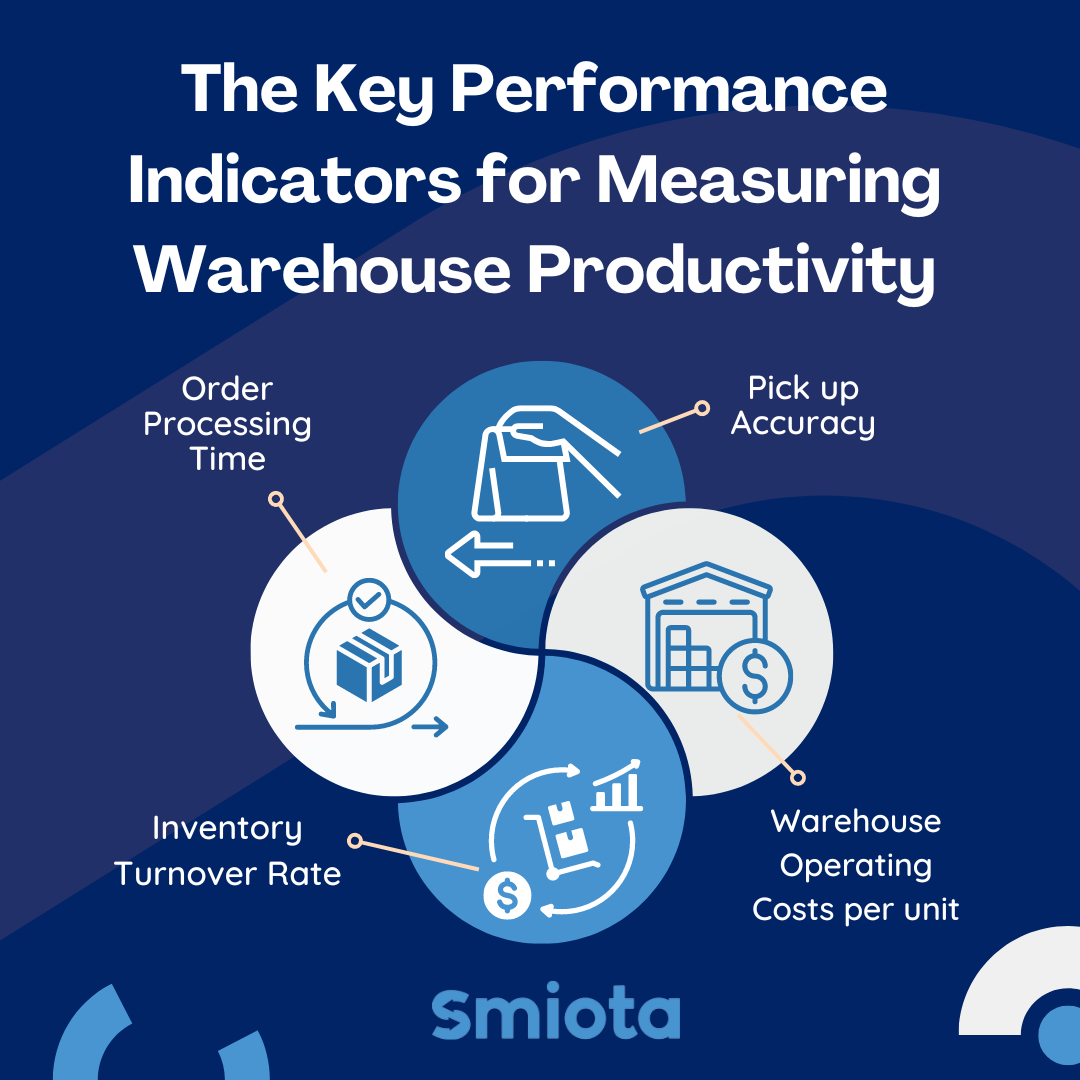
- Picking Accuracy: Measured as a percentage of orders picked without errors. High accuracy translates to fewer returns and happier customers.
- Order Processing Time: The time it takes to process an order from receipt to shipment. Faster processing times lead to quicker deliveries.
- Inventory Turnover Rate: The number of times inventory is sold and replaced over a period. A healthy turnover rate indicates efficient inventory management.
- Warehouse Operating Costs per Unit: The cost of operating the warehouse per unit of product. Lower costs translate to higher profitability.
The Rewards of a Well-maintained Warehouse
Streamlining your warehouse operations isn’t just about ticking boxes; it brings a wealth of benefits that impact your entire supply chain. Here are a few key advantages of maintaining a well-operated warehouse:
- Increased Customer Satisfaction: Faster order fulfillment and fewer mistakes lead to happier customers, building brand loyalty and trust.
- Reduced Labor Costs: Streamlined workflows empower your team to work smarter, not harder, saving on labor costs.
- Improved Space Utilization: A well-organized warehouse maximizes storage space, allowing you to hold more inventory without needing additional space.
- Lower Inventory Carrying Costs: Optimized inventory management reduces overstock and out-of-stock situations, minimizing storage and lost sales costs.
- Enhanced Safety: Organized layouts and efficient processes minimize accidents related to cluttered aisles or improper item handling.
Actionable Tips to Transform Your Warehouse
Now that you know the importance of a well-maintained warehouse, let’s get to the point: how to improve warehouse efficiency and reduce costs. Here are some actionable tips you can implement to improve warehouse operations:
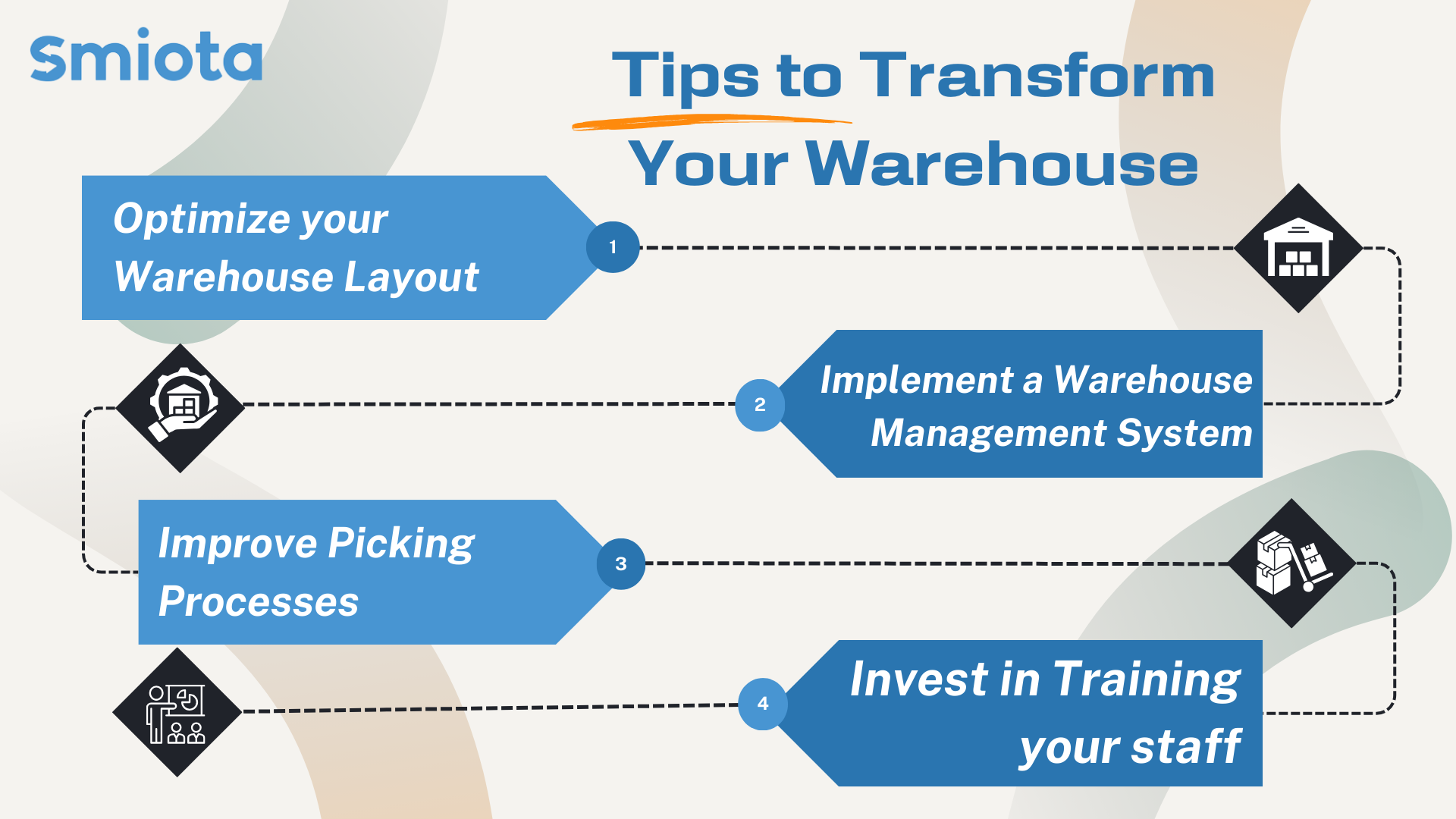
- Optimize Warehouse Layout: Analyze product movement patterns and design a layout that minimizes travel time for pickers. Using Smiota’s smart lockers is one of the ways to achieve this. By strategically placing smart lockers across the warehouse, asset handover can be finetuned in addition to optimizing device management and personal storage. Consider factors like high-demand items, pick frequencies, and product weight.
- Implement a Warehouse Management System (WMS): Implementing a WMS automates tasks like inventory management, order picking, and shipment routing. Think of it as the conductor of the warehouse orchestra, ensuring everything stays in perfect harmony.
- Improve Picking Processes: Consider zone picking, batch picking, or wave picking depending on order volume and product types. Zone picking assigns specific zones of the warehouse to pickers, while batch picking involves picking multiple orders simultaneously for related items. Wave picking involves picking items for a specific group of orders that will be shipped together. The key is to match the strategy to your workload for optimal productivity.
- Invest in Training: Train your staff on proper picking techniques, safety protocols, and efficient use of warehouse technologies. An empowered and knowledgeable workforce is essential for peak performance. For instance, Smiota offers its customers the necessary training and 24×7 customer support to operate its smart locker systems. This ensures that the staff understands how to utilize them effectively for picking, replenishment, and secure storage.
The Smiota Advantage: Smart Lockers for a Streamlined and Secure Warehouse
Smiota Smart Lockers have been a game changer for warehouses. These innovative solutions go beyond simple storage, offering a range of benefits to elevate your warehouse operations. Given below are some of the advantages of Smiota’s smart locker systems:
- Automated and Secure Access Control: Imagine a system where employees gain access to specific items using secure electronic credentials. No more lost keys or time wasted searching for the right one. Smiota’s smart lockers provide complete chain of custody and enhanced security, a key factor for warehouses handling high-value inventory. Access can be granted or revoked based on user permissions, ensuring only authorized personnel can access specific items.
- Streamlined Picking and Replenishment: Smart lockers can be designated for specific picking items. This reduces search time for pickers, ensuring accurate order fulfillment and faster processing times. Smiota’s PODs (Pickup or Drop-off) cater to a variety of needs, from dry packages to temperature-controlled environments, offering a versatile solution.
- Inventory Management and Control: Smiota’s smart lockers provide real-time inventory tracking, allowing for better management and preventing stockouts. Our Cloud Platform offers seamless integration with existing systems, allowing for easy data access and control. It helps to keep an eye on your inventory, preventing any surprises.
- Improved Staff Productivity: With smart lockers, staff spend less time searching for tools or equipment. They create a centralized and secure storage solution, boosting staff productivity and overall efficiency. Tools and equipment can be assigned to specific lockers, ensuring staff know exactly where to find what they need, minimizing time wastage.
- Enhanced Scalability: Smiota’s smart locker system is designed to grow with your business. Additional locker units can be easily integrated as your storage needs evolve. This scalability ensures your warehouse can adapt to fluctuations in order volume and product types.
The Smiota Difference: Beyond Just Hardware
Smiota offers more than just innovative hardware. We understand that a successful warehouse solution requires a comprehensive approach. Here’s what sets Smiota apart:
- Seamless Integration: Our Cloud Platform offers secure APIs for easy integration with your existing Warehouse Management System (WMS) or other warehouse software. This ensures a smooth workflow and eliminates the need for duplicate data entry.
- Customizable Solutions: We understand that one-size-fits-all solutions rarely work in warehousing. Smiota offers customizable locker configurations and software features to meet your specific needs. Whether you require temperature-controlled lockers or a system for managing high-value inventory, we can tailor a solution to fit your requirements.
- Exceptional Customer Support: Our dedicated team is here to support you every step of the way, from initial consultation to ongoing maintenance. We offer comprehensive training for your staff and ongoing technical support to ensure you maximize the benefits of your Smiota smart locker system.
Conclusion
The future of warehousing is a blend of efficiency, security, and exceptional employee experience. By implementing innovative solutions like smart lockers, warehouse managers can unlock a new level of performance. Smiota’s smart locker systems, combined with our commitment to seamless integration, customization, and exceptional support, enable warehouses to reduce costs and improve profitability.
Ready to Transform Your Warehouse with Smart Lockers?
Contact Smiota today to learn more about how our smart locker solutions can help you streamline operations, reduce costs, and elevate your warehouse to new heights of efficiency and security. Let’s work together to build a future where warehouses are not just functional, but strategic assets that drive business success.
The post 4 Actionable Tips to Improve Warehouse Efficiency and Reduce Costs appeared first on Smiota.
]]>